Mourning Dove
Zenaida macroura
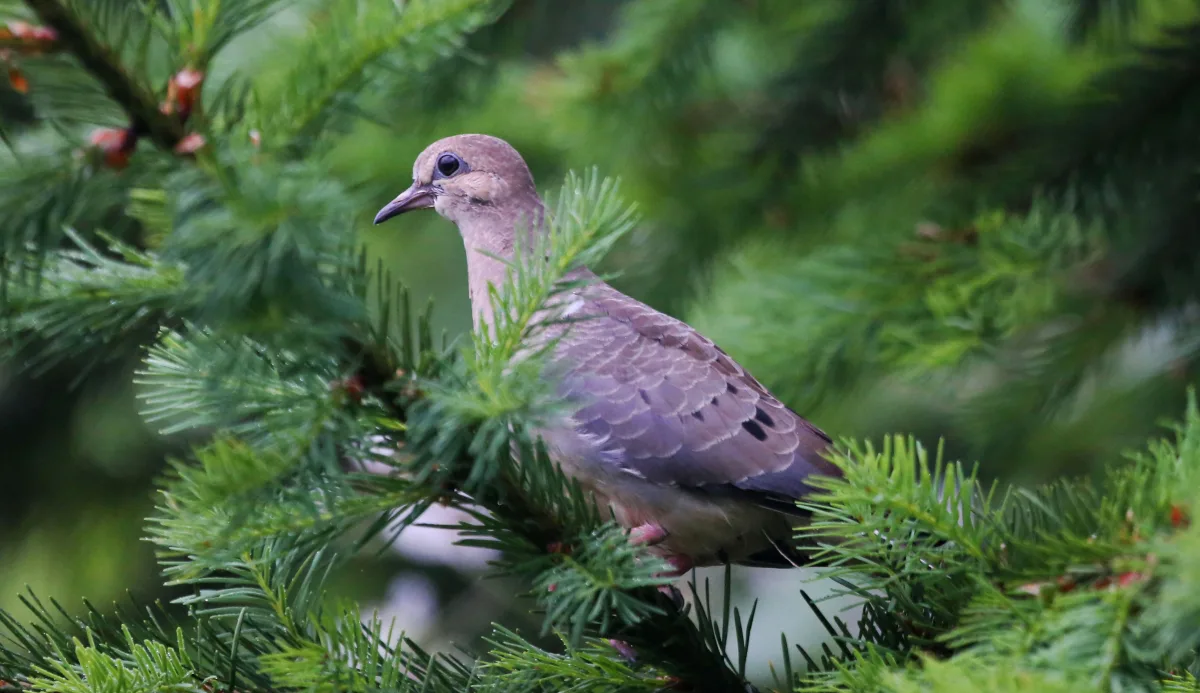
A slender tan dove known for a long pointed tail, soft cooing, and whistling wings.
What to look for
- 01
Small head on a plump, buffy-tan body
- 02
Dark spots on the wings and a small black mark on the neck
- 03
Long, pointed tail with pale edges and white tips
Where it lives
Open country, roadsides, fields, parks, neighborhoods, and woodland edges rather than deep forest.
How it moves
Feeds on seeds on open ground, rests on exposed perches, and launches with fast wingbeats that can make a high whistle.
Common lookalikes
Rock pigeons are bulkier, shorter-tailed, and often show an iridescent neck. Eurasian collared-doves are larger with a squared tail and dark neck collar.
Observe responsibly
Watch near open ground and overhead wires. Keep seed areas clean to reduce disease transmission among birds.
Young doves often leave the nest before they fly strongly; observe before intervening and contact a rehabilitator if injured.
Mourning doves are widespread, though individuals face common urban hazards such as window collisions and predation by outdoor cats.
Get Fauna and identify it in the field.
Where this guide comes from
Sources are linked below. Field marks vary with age, sex, season, region, light, and viewing distance.