Recording effort and nondetections
A zero gains meaning only when the target, place, method, timing, and effort were defined before the search. Record unsuccessful visits, separate unchecked from checked-and-not-detected, and never translate one nondetection into proof of absence.
Last updated
Define the opportunity to detect
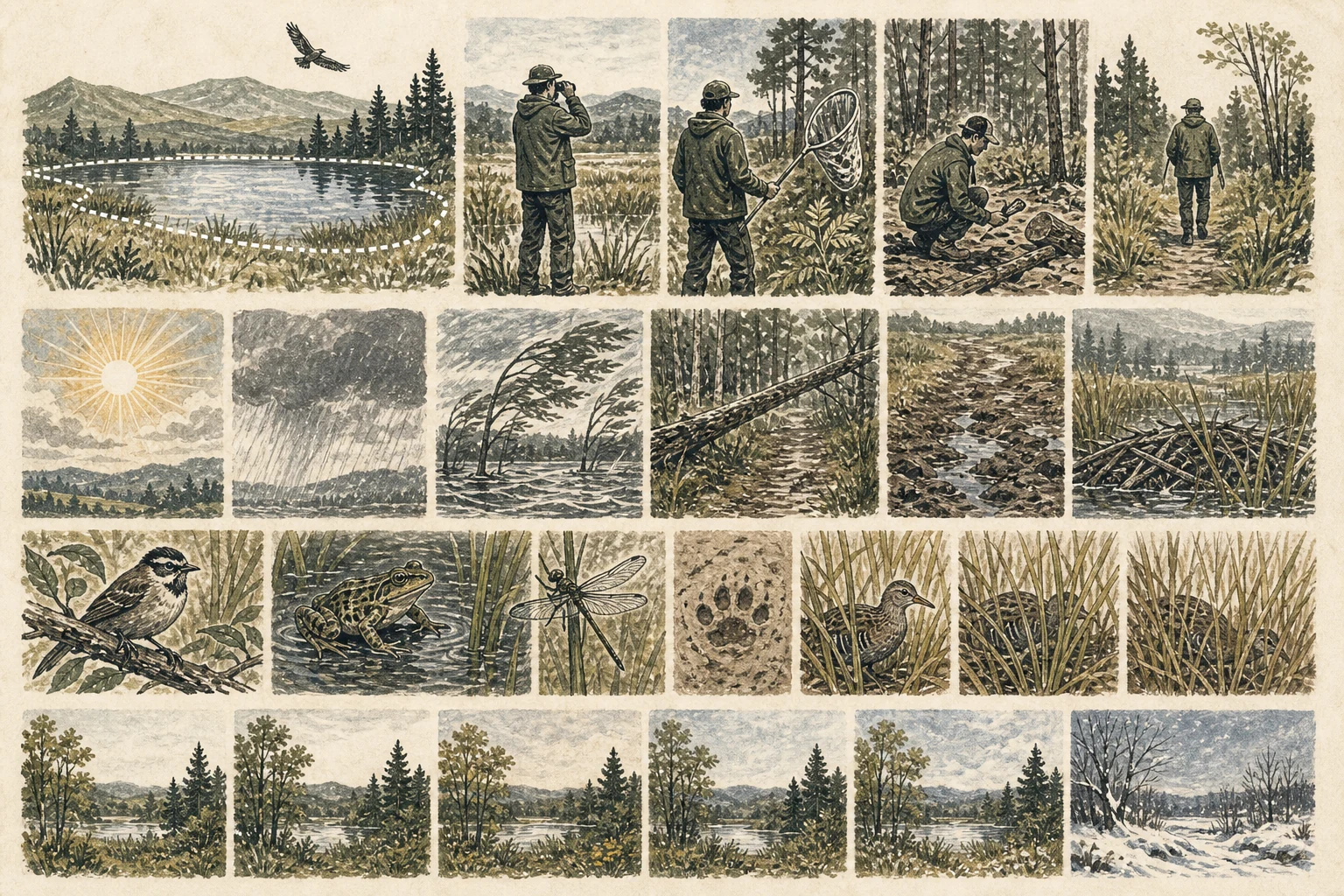
When you snap a casual photo of a monarch butterfly on roadside milkweed, that record proves a monarch was there—but it tells a future naturalist nothing about whether bumblebees, hairstreaks, or treefrogs were also present, because you were not actively looking for them. A 'zero' or nondetection only becomes meaningful field evidence when you decide before stepping onto the trail what group of organisms you are searching for, which pond or meadow boundary you are covering, and how you will look or listen. On eBird, checking the box that you are reporting all bird species you could identify turns a casual walk into a complete checklist from which scientists can infer which species went undetected. [1][2][4]
- Decide before starting your walk whether you are logging every identifiable bird or targeting a specific species or plant.
- Submit complete checklists on eBird whenever you record all bird species seen and heard without intentionally skipping common ones.
- Recognize that incidental one-off photos document presence only and cannot tell researchers what else was missing.
Record effort on every visit
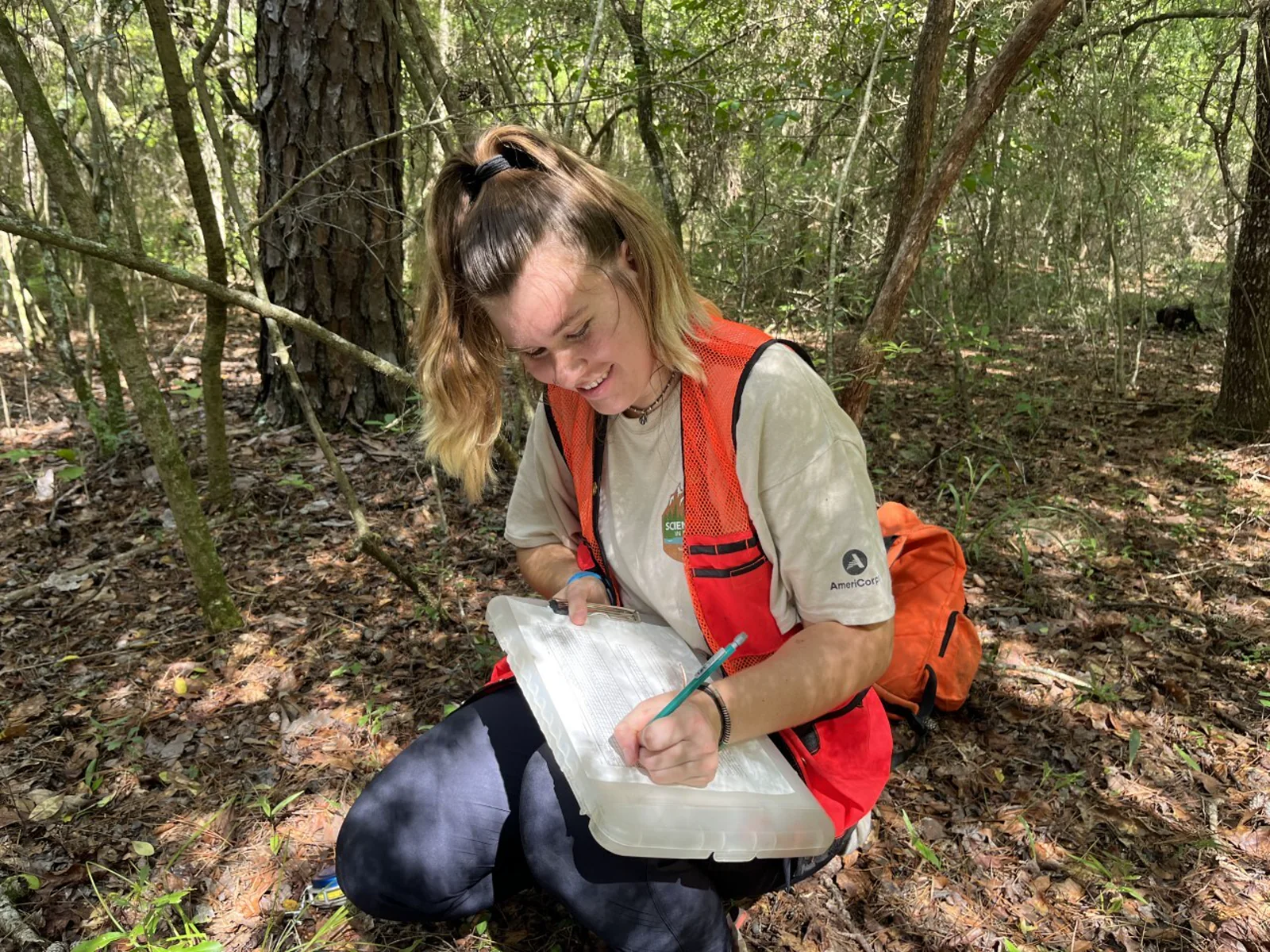
Finding zero wood frogs at a vernal pool during a five-minute midday glance in gale-force wind means something completely different from hearing zero wood frogs during a quiet thirty-minute dusk listen on a warm, rainy March evening. For every planned watch or walk, write down the start time, active search duration, distance walked (or stationary status), number of observers in your party, and basic weather conditions. If a sudden thunderstorm, barking dog, or flooded boardwalk cuts your loop in half, start a fresh checklist or note the interruption so future readers know exactly how much of the habitat was actually searched. [1][4][5]
- Log date, start time, active duration, distance traveled, and party size on every planned field outing.
- Note weather conditions and acoustic interference—such as wind in canopy leaves or rushing water—that limit hearing.
- Split your checklist when switching habitats or when a long non-birding break interrupts your active search.
Keep four states distinct
In a field notebook or phenology project like Nature's Notebook, a blank line is ambiguous: did you check the milkweed patch and find zero monarch caterpillars, or did you skip the meadow altogether because the trail was muddy? Keep four observation states cleanly separated in your records: 'detected' (you saw or heard clear diagnostic evidence), 'checked and not detected' (you looked or listened carefully in suitable habitat and found none), 'uncertain' (you glimpsed a frog splash or heard a brief chip note you could not clinch), and 'not checked' (you did not search that patch or taxon on this visit). [2][4]
- Never leave a blank space to mean both 'looked and found none' and 'did not check that patch today.'
- Mark 'checked and not detected' only when you actively searched the right microhabitat with appropriate attention.
- Use an explicit 'uncertain' note when a fleeting glimpse or partial call cannot be identified with confidence.
Interpret zeros with detection in mind
Even the sharpest field naturalist misses plenty of animals that are sitting quietly yards away. A barred owl may roost silently in dense hemlock foliage all afternoon; spotted salamanders may remain buried under forest floor root channels until the next warm night rain; a sedge wren may stop singing the week after pairing up. Because the chance of detecting an animal that is actually present is almost always less than 100 percent, treat a single zero in your notebook honestly as 'not detected during this 30-minute walk' rather than declaring the species gone from the woodlot. Repeating the same walk across multiple mornings is what gradually separates true absence from a quiet day. [2][3]
- Report a single unsuccessful search accurately as 'not detected on this visit' rather than 'absent from the site.'
- Account for season, time of day, and weather, which strongly control whether present animals vocalize or move in the open.
- Use repeated visits across the right seasonal window to build confidence about whether a species still occupies a patch.
Related guides
Get Fauna and identify it in the field.
Where this guide comes from
Source-checked editorial guide. Last updated . This guide teaches identification and field skills; it is not a substitute for expert verification when it matters.