Wildlife irruptions and nomadic movements
Map dates, numbers, age classes, direction, habitat, food crops, weather, and observer effort across a region; compare the event with normal years before calling it an irruption or a species nomadic.
Last updated
Irruption names an exceptional event
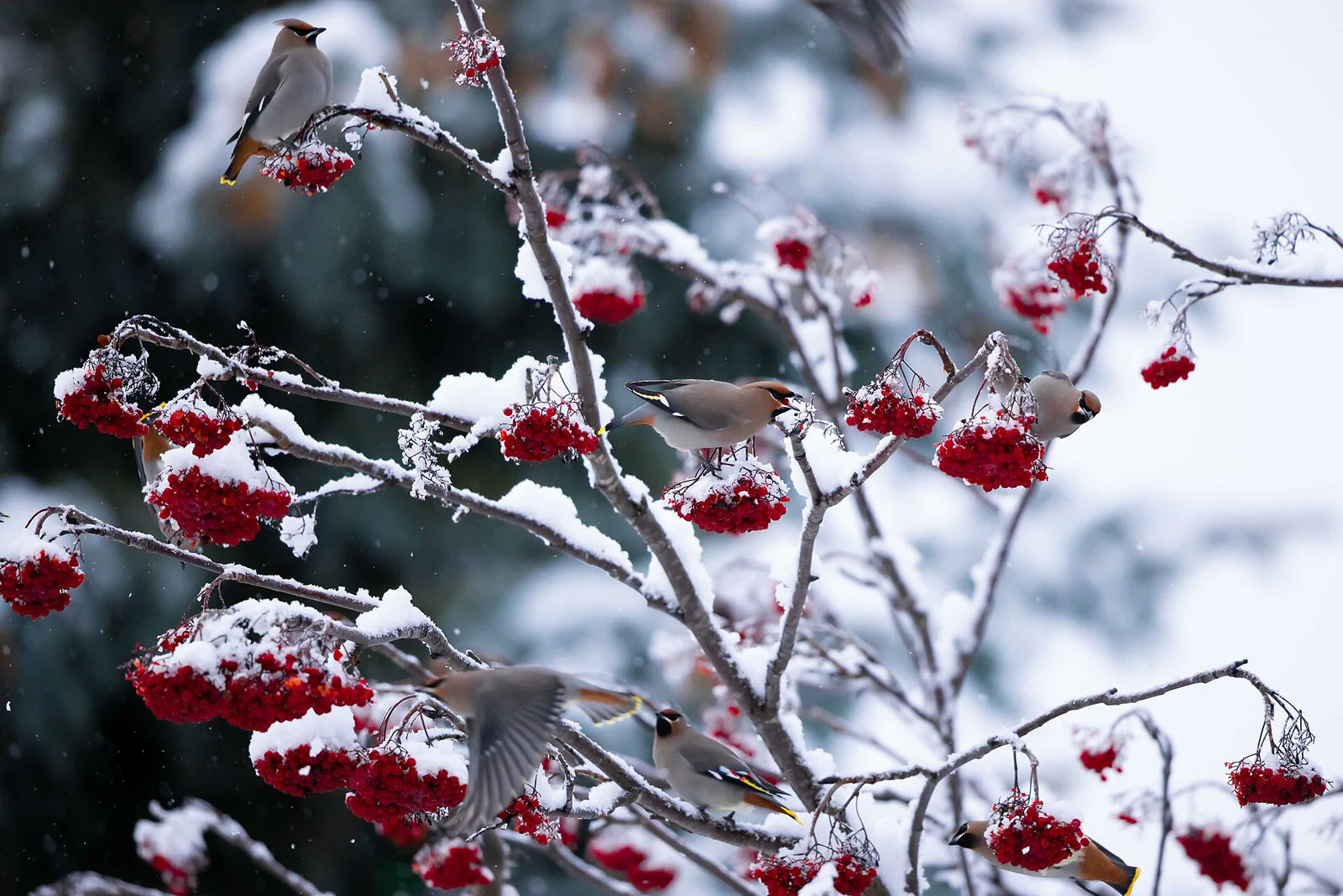
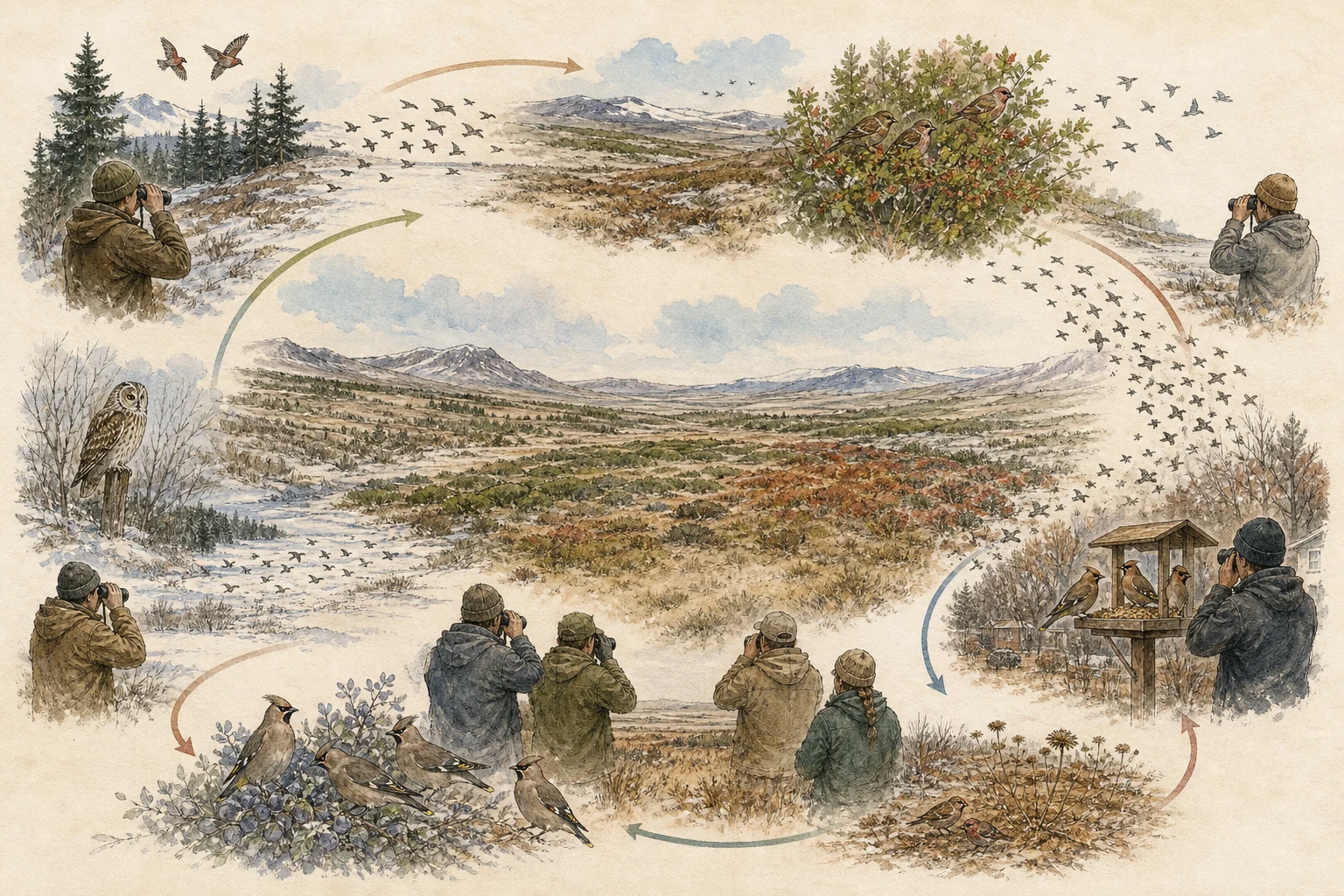
In some autumns and winters, Bohemian waxwings strip ornamental mountain-ash trees in towns where none were seen the year before, red crossbills and siskins flood lowland conifer plantings, or snowy owls and rough-legged hawks appear across mid-latitude marshes and airfields. An irruption describes that episodic, population-scale pulse beyond a species' customary seasonal range or abundance baseline. Often the setup combines a productive breeding season with a subsequent regional crash in conifer seeds, birch catkins, berries, or boreal microtine rodents—creating high population density right as local food runs short—though weather and species-specific life histories make each irruption year distinct. [1][2]
- Define an irruption against multi-year regional abundance and range baselines rather than a single unusual sighting.
- Look for seed-eating finches, berry-eating waxwings, and vole-hunting boreal owls or raptors during major irruption years.
- Note that high summer breeding success and subsequent winter food scarcity often interact to drive large outward pulses.
Nomads track opportunity without a fixed timetable
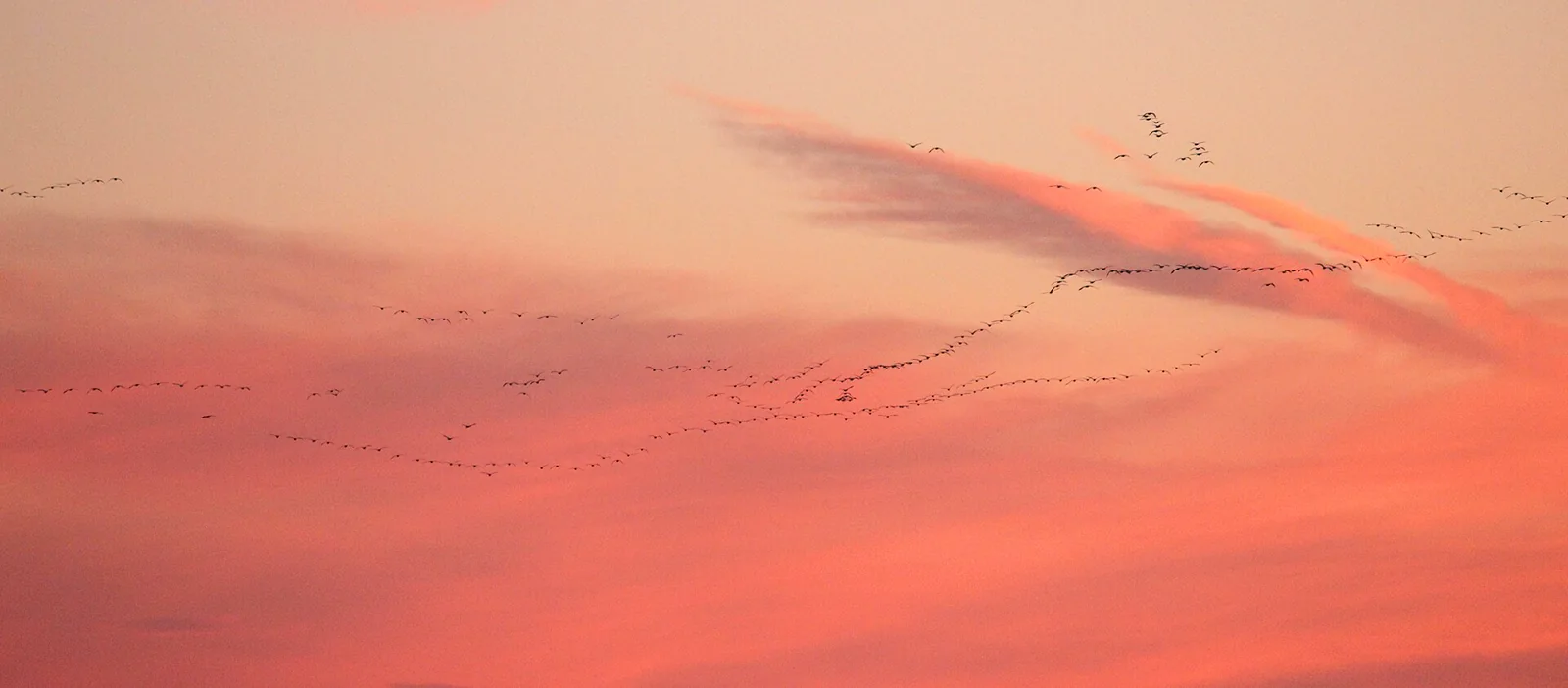
Whereas irruption labels an episodic event, nomadism describes an ongoing movement strategy evolved for landscapes where critical resources appear and vanish unpredictably across space and time. Crossbills tracking patchy spruce and pine cone crops across boreal forests, desert waterfowl arriving at freshly flooded inland basins, and arid-zone birds following erratic rainfall and grass seeding do not commute between fixed breeding and wintering addresses on a rigid calendar. Instead, nomadic animals use environmental cues, social information, and spatial memory to locate ephemeral resource booms, sometimes breeding whenever and wherever a rich patch develops before moving on when cones open or pools dry. [1][3]
- Distinguish nomadism (an ongoing strategy of tracking shifting patches) from a one-season irruptive overflow.
- Watch how crossbills, nomadic desert birds, and certain owls settle and even nest opportunistically where food peaks.
- Recognize that nomadic movements rely on sensory cues, social flocks, and decision rules rather than aimless wandering.
Separate pattern from reporting
When rare bird alerts and online maps suddenly light up with evening grosbeaks or snowy owls, observer behavior can amplify the apparent scale of the influx. A single charismatic owl perched near a coastal road can draw hundreds of repeat checklists, while growing user participation on citizen-science platforms increases raw report totals every decade. To separate a genuine biological irruption from a reporting wave, compare detections per unit of standardized effort—such as Christmas Bird Count party-hours, banding-station net hours, or long-term atlas blocks—and check whether numbers simultaneously dropped in the species' core boreal or montane source range. [2][4]
- Check effort-corrected metrics like birds per party-hour or banding totals rather than raw social-media sighting counts.
- Avoid counting repeated reports of the same lingering individual at a popular park as multiple arriving animals.
- Compare destination influxes with checklists from the core breeding or wintering range to see whether the population shifted or expanded.
Think in linked landscapes
A flock of waxwings descending on a neighborhood crabapple tree is one local snapshot of a continental-scale resource mosaic. Tree masting—synchronized boom-and-bust seed production by spruces, firs, birches, oaks, and beeches—along with rodent population cycles and snow depth can align or diverge across thousands of kilometers. When you document an irruptive or nomadic species in the field, your record becomes far more valuable if you log flock size, flight direction on departure, age and sex ratios where plumage allows, and the specific cones, samaras, berries, or prey items being consumed, helping researchers connect local arrivals to continental drivers. [3][4]
- Record the exact tree species, cone crop condition, or berry load where irruptive finches and waxwings are feeding.
- Note the proportion of juvenile versus adult plumage in flocks, which often reflects the prior summer's breeding pulse.
- Log arrival dates, peak flock sizes, and departure bearings across the season rather than only the first sighting date.
Related guides
Get Fauna and identify it in the field.
Where this guide comes from
Source-checked editorial guide. Last updated . This guide teaches identification and field skills; it is not a substitute for expert verification when it matters.