Why leaves change color
Autumn color is not a coat painted onto a green leaf. As chlorophyll production slows and chlorophyll breaks down, other pigments become visible or are produced, with species and conditions shaping the result.
Last updated
Green fades before the other colors lead
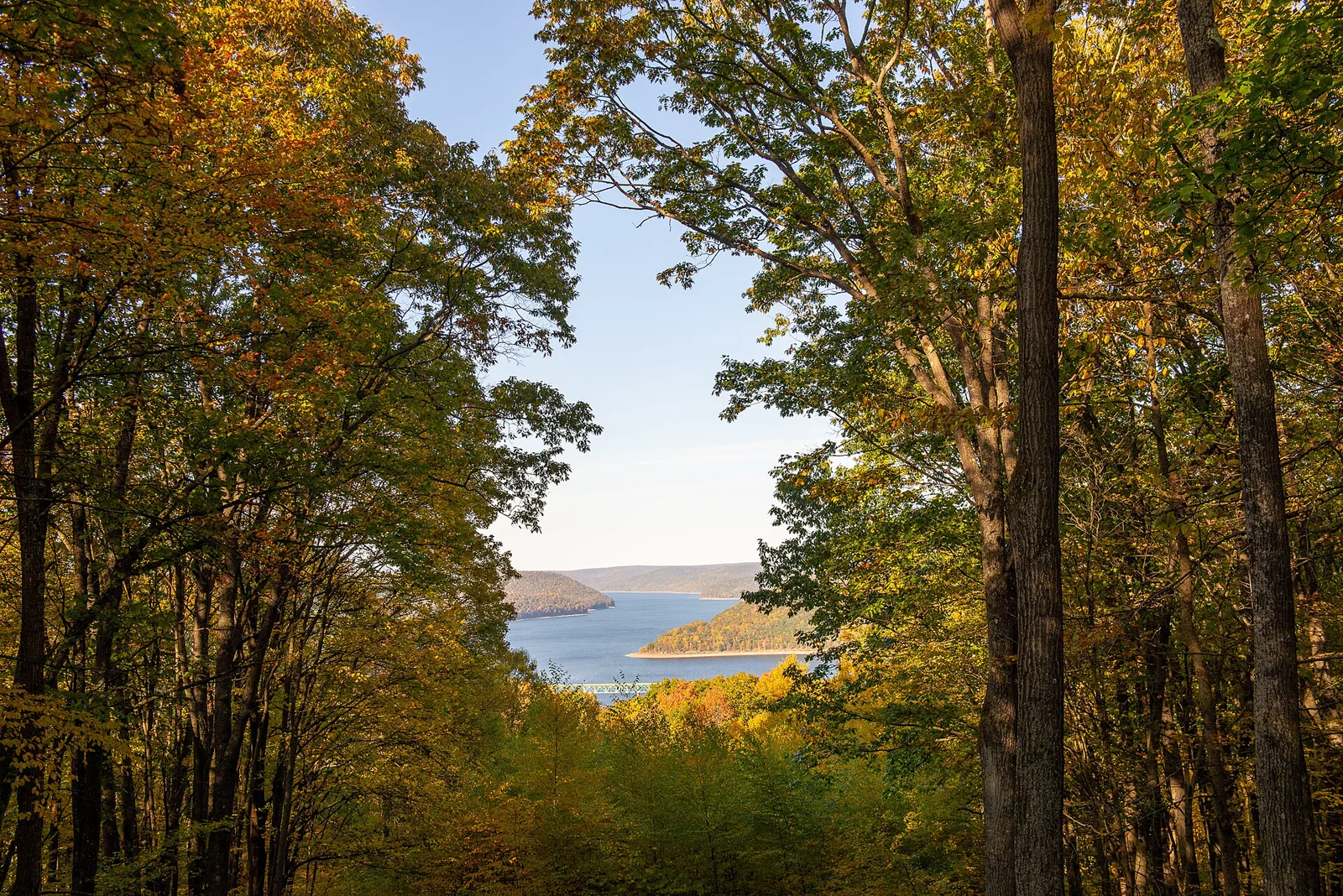
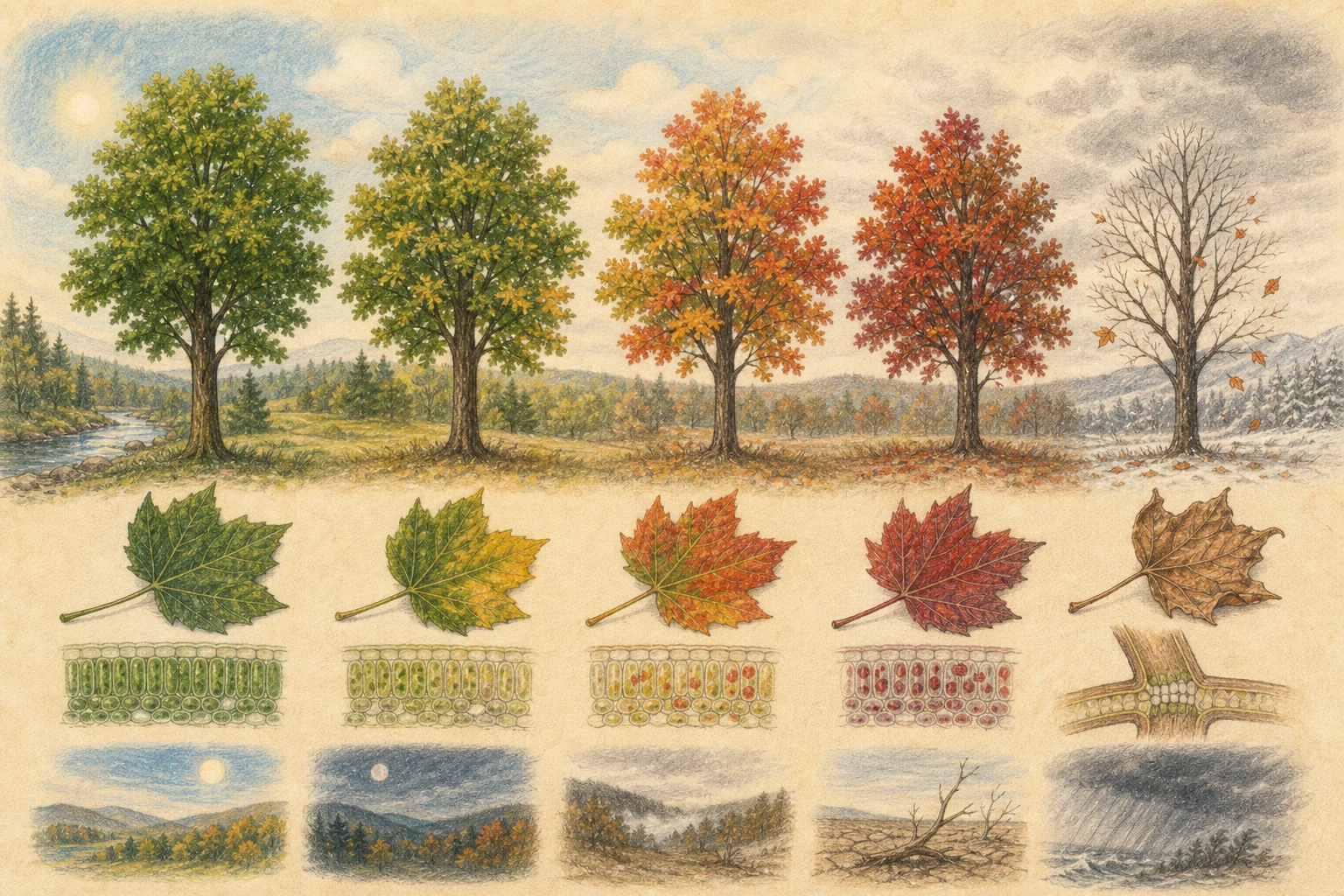
Throughout spring and summer, abundant chlorophyll inside leaf chloroplasts absorbs red and blue wavelengths for photosynthesis and masks every other pigment in the blade. Because chlorophyll is chemically unstable in bright light, plants must synthesize it continually during the growing season. As autumn nights lengthen, deciduous trees slow that synthesis and systematically dismantle existing chlorophyll so nitrogen and magnesium can be resorbed into twigs and roots. Yellow and orange carotenoids—present in the plastids all summer to assist light capture and photoprotection—are then unmasked. [1][2][3][5]
- Lengthening autumn nights cue deciduous trees to halt chlorophyll synthesis and withdraw leaf nutrients
- Yellow and orange carotenoids sit inside the leaf all summer and appear once green chlorophyll breaks down
- Aspens, birches, hickories, and ginkgos rely primarily on unmasked carotenoids for their golden autumn crowns
Red follows a different route
Unlike yellow carotenoids, the crimson, scarlet, and purple anthocyanin pigments of maples, oaks, dogwoods, and sumacs are synthesized afresh in late summer and autumn as sugars accumulate in senescing leaves. Bright sunlight drives that synthesis in the outer canopy, which is why the sunward side of a sugar or red maple often glows deep crimson while shaded interior branches on the very same trunk turn pale yellow. Plant physiologists point to photoprotection—shielding dismantling chloroplasts from excess light while nutrients are recovered—as a primary role of autumn anthocyanins. [2][3][4][5]
- Red and purple anthocyanins are newly manufactured in autumn from sugars trapped in the senescing blade
- Sunlit outer leaves on a single maple or oak often turn vivid red while shaded inner leaves stay yellow
- Tannins left behind after other pigments fade give oak and beech leaves their final russet and brown tones
Weather modifies the display
While shortening photoperiod sets the calendar window for senescence, local weather governs how vivid and prolonged a season's foliage becomes. Adequate summer soil moisture followed by crisp, sunny autumn days and cool nights that stay above freezing favors brisk sugar production and strong anthocyanin development. By contrast, severe summer drought can trigger early leaf scorch or premature drop, overcast rainy weeks mute red pigment synthesis, and an early hard freeze can kill leaf tissue before chlorophyll breakdown and nutrient withdrawal finish. [2][4][5]
- Bright autumn sun paired with crisp, frost-free nights produces the richest red anthocyanin displays
- Severe late-summer drought or an early hard freeze can brown or drop leaves before colors peak
- North-facing slopes, cold-air valley bottoms, and higher elevations often turn ahead of warm surrounding ridges
Color change is part of leaf departure
Autumn color is the visible phase of controlled leaf abscission rather than passive dying. At the base of each petiole, specialized parenchyma cells form an abscission zone: one layer weakens its cell walls with enzymes while the inner side seals the twig with suberized, corky scar tissue to block winter water loss and pathogens. Once the vascular connection closes, wind or rain snaps the leaf free. Even evergreen conifers shed needles—they simply retire older inner cohorts of needles after two to several years instead of dropping the whole crown at once. [1][3]
- A specialized abscission layer at the base of the leaf stalk seals the twig scar before the blade falls
- Oaks and beeches often delay complete abscission, holding dry brown marcescent leaves well into winter
- Evergreen pines, spruces, and firs yellow and drop their oldest inner needles each autumn while keeping younger cohorts
Watching one canopy turn
Because light exposure, branch position, and microclimate shape pigment chemistry, leaves on a single tree rarely turn in lockstep. Choose one accessible deciduous tree, note its species, slope aspect, and surrounding shade, and photograph it once a week from the exact same spot from late summer until bare twigs remain. Compare the sun-struck upper crown against shaded lower boughs, and log the dates of first color, 50 percent turn, peak color, and leaf drop across multiple years to see how weather shifts a fixed genetic schedule. [2][3][4][5]
- Compare sunlit outer branch tips with shaded inner leaves on the same tree before comparing two individuals
- Photograph one focal tree weekly from a fixed spot to track first tint, peak color, and final leaf drop
- Watch for early color along stressed branch tips, wet frost pockets, or roots compacted beside paths
Related guides
Get Fauna and identify it in the field.
Where this guide comes from
Source-checked editorial guide. Last updated . This guide teaches identification and field skills; it is not a substitute for expert verification when it matters.