Which house spiders are dangerous
The overwhelming majority of spiders found in homes are harmless to people, and the autumn surge is mostly wandering males looking for mates. Only a small number of species are medically significant, and which ones depends entirely on your region—so the useful question is local, not whether spiders in general are dangerous.
Last updated
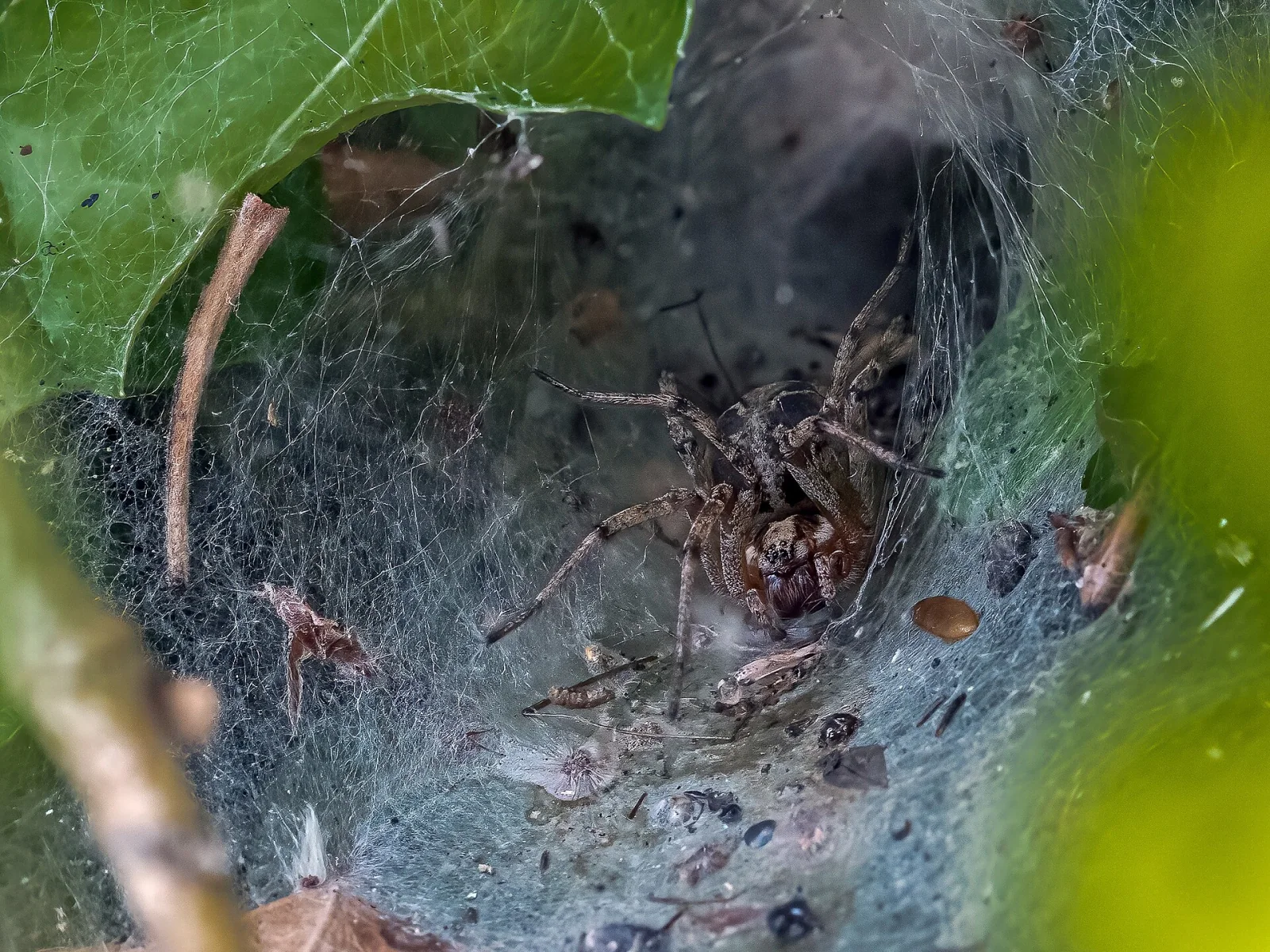
Most indoor spiders are harmless
Of the more than 50,000 described spider species worldwide, the vast majority that live inside houses—including cellar spiders (Pholcidae), cobweb weavers (Steatoda), funnel-weaving house spiders (Eratigena and Tegenaria), and jumping spiders—pose no medical threat to humans. Although nearly all spiders possess venom glands to subdue flies, silverfish, and beetles, their chelicerae are usually too short or weak to pierce human skin, and their venom is tailored to arthropod nervous systems. Arachnologists note that many skin lesions blamed on mysterious overnight spider bites are actually bacterial infections or insect bites. [1][2]
- Common indoor cellar spiders, funnel weavers, and jumping spiders have fangs or venom that pose no medical risk to people
- Indoor spiders act as quiet generalist predators of household flies, mosquitoes, clothes moths, and beetles
- Most unexplained skin bumps blamed on spiders turn out to come from biting insects, thorns, or bacterial skin infections
Autumn brings wandering males
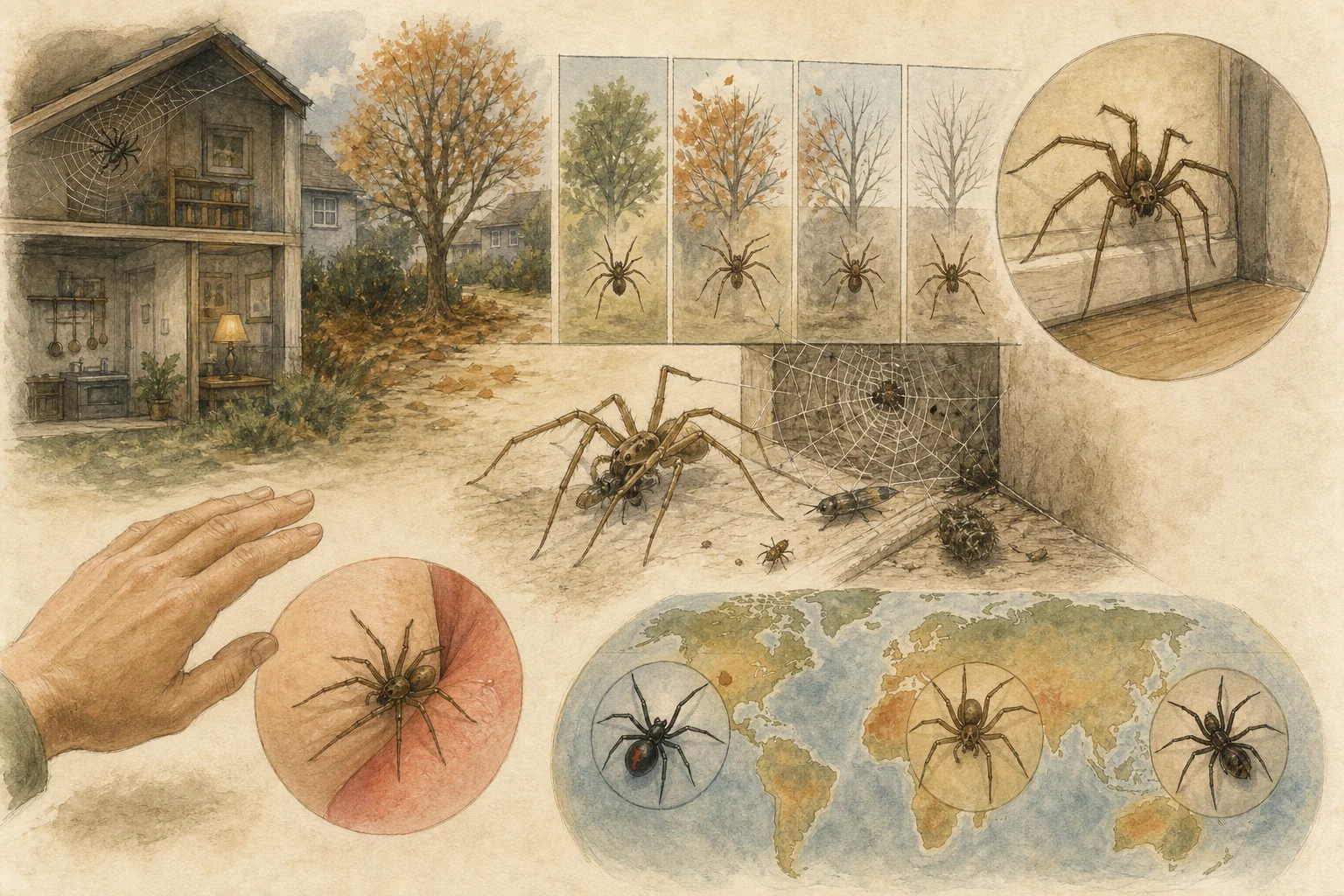
Every late summer and early autumn across temperate Europe and North America, people notice long-legged brown spiders sprinting across living-room carpets or stranded in bathtubs. Contrary to popular belief, these giant house spiders (Eratigena species) and domestic funnel weavers are not outdoor spiders fleeing cold weather; they come from resident populations already living year-round in wall voids, attics, and sheds. Having completed their final molt, adult males leave their sheet webs and wander indoors in search of sedentary females, producing a brief seasonal visibility spike. [2][3]
- Late-summer and autumn indoor sightings are mostly adult male house spiders wandering in search of females
- Noticeably enlarged pedipalps—resembling tiny boxing gloves—near the face identify a mature wandering male
- These synanthropic species live inside buildings year-round rather than invading suddenly from cold gardens
A short list of species actually matters
Only a tiny fraction of spiders carry venom of genuine medical importance to humans, and each has a bounded geographic range and diagnostic anatomy. In North America, those are widow spiders (Latrodectus)—glossy dark cobweb weavers with a ventral red or orange hourglass—and recluse spiders (Loxosceles), which have six eyes arranged in three pairs and a restricted south-central and midwestern native range. Australia adds funnel-web (Atrax, Hadronyche) and redback spiders, while parts of South America have wandering spiders (Phoneutria). Even within their ranges, these species bite people only when trapped or crushed. [3][4]
- Widow spiders build tangled three-dimensional cobwebs in dark corners and show a red or orange ventral marking
- Recluse spiders have six eyes arranged in three dyads—unlike the eight eyes of most spiders—and a violin-shaped prosoma mark
- Check museum range maps first, because recluse and funnel-web spiders are absent across vast regions where people fear them
Coexist without handling
Because medically significant bites almost always happen when a spider is accidentally pressed against bare skin inside shoes, gardening gloves, firewood piles, or long-stored clothing, simple habits eliminate nearly all risk. Shake out boots, gloves, and stored blankets before putting them on, wear work gloves when moving stacked lumber or clutter in sheds, and never pick up an unidentified spider with bare hands. To relocate an unwanted spider indoors, place a clear glass over it, slide stiff card underneath, and release it into a sheltered outdoor shrub or shed. [1][4][5]
- Shake out garden boots, work gloves, and stored linens that have sat undisturbed in garages, basements, or sheds
- Use a clear tumbler and stiff postcard to trap and release indoor spiders without ever touching them
- Seal exterior cracks, reduce porch light attraction for prey insects, and clear clutter against walls to lower indoor numbers
Related guides
Get Fauna and identify it in the field.
Where this guide comes from
Source-checked editorial guide. Last updated . This guide teaches identification and field skills; it is not a substitute for expert verification when it matters.