Ten animals that look cute and friendly until they feel threatened
Wanting to touch a wild animal is not foolishness; it is a wired response to a set of physical features, and it fires whether or not the animal is safe. The animals below are all things people reach for. Their defences run from a venomous ankle spur to a virus with an 80 per cent untreated fatality rate, and almost none of them are visible until they are used.
Scope: Mechanism plus ten worked examples, each from named guidance for its own jurisdiction: US National Park Service, NOAA Fisheries, CDC, RSPCA, Scottish Wildlife Trust, Forest Research, Western Australia DBCA, the Australian Museum, and Japan’s National Consumer Affairs Center. Species, seasons, and legal distances differ everywhere and the roster is illustrative, not a ranking. Three candidates were dropped for want of a citable authority: hippopotamus, slow loris, and koala — the Queensland handling warning appears only on a page that blocks automated retrieval. · Last updated
- Why you want to touch it[1][2]
- Your approach does not mean to them what it means to you[1][2]
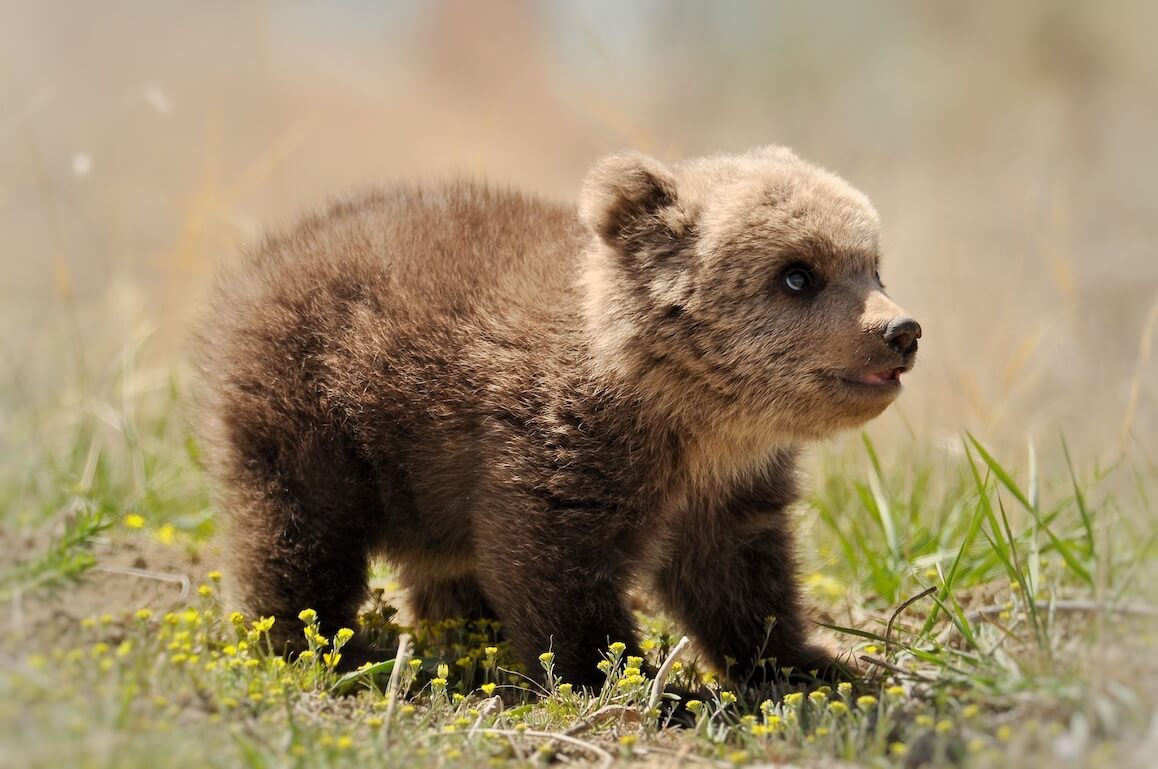
- 01 · The bear cub[1]
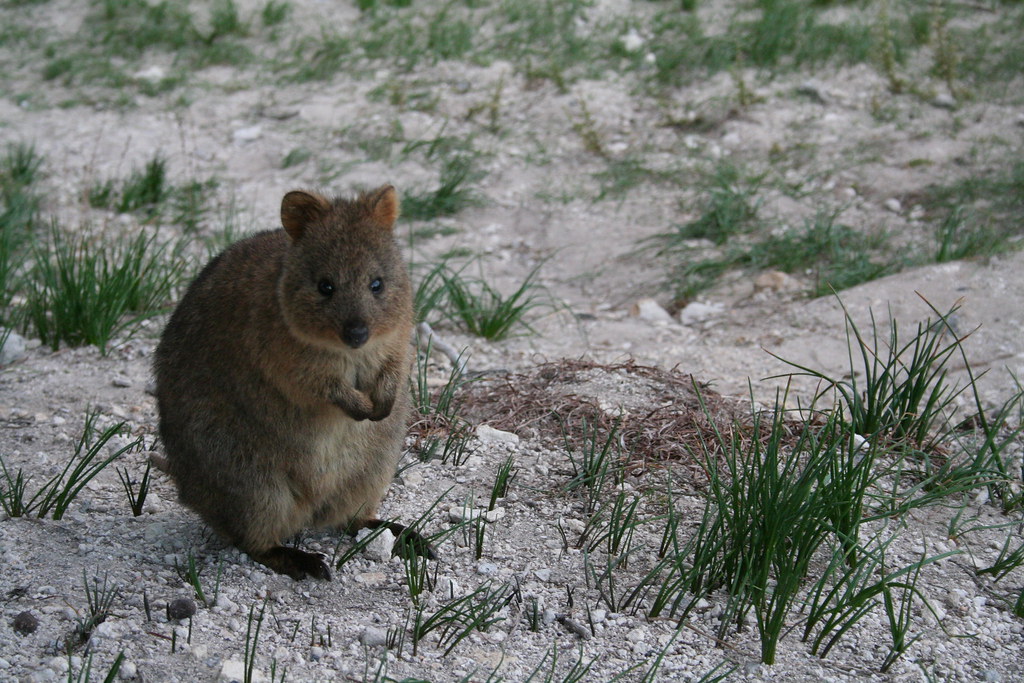
- 02 · The quokka[3]
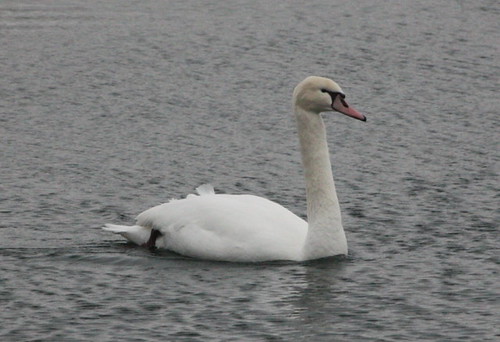
- 03 · The mute swan[4]
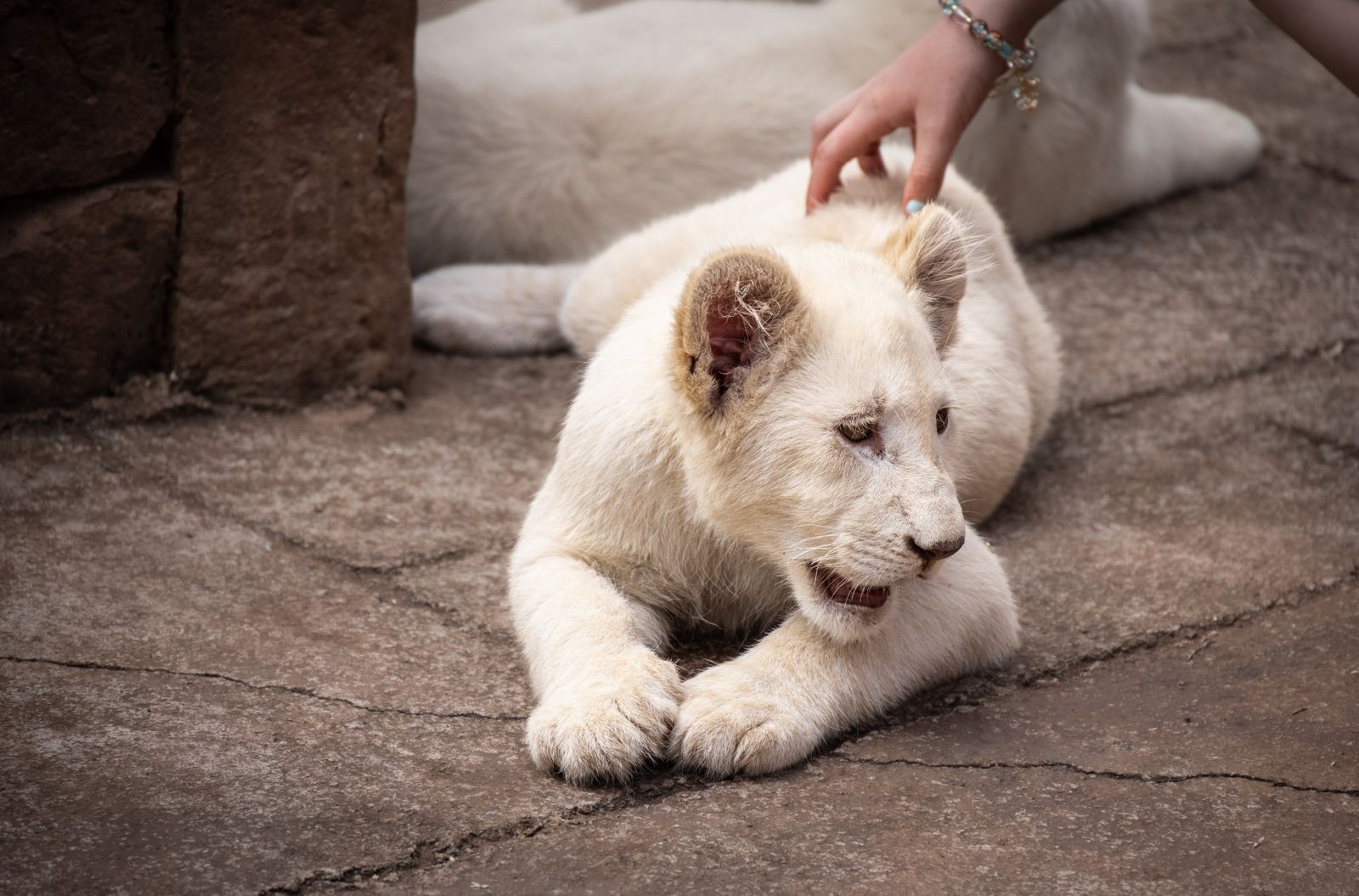
- 04 · The grey seal[5]
- 05 · The temple macaque[6]
- 06 · The sika deer at Nara[7]
- 07 · The bottlenose dolphin[8]
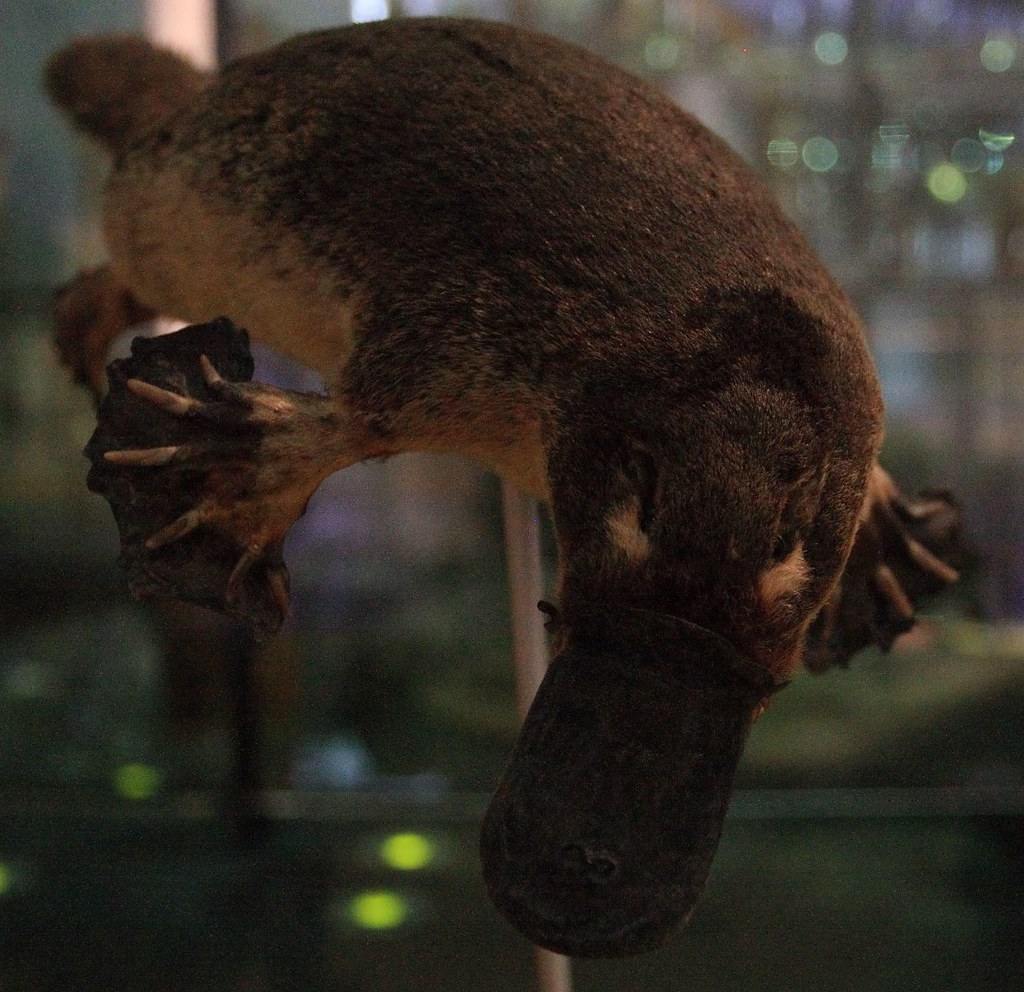
- 08 · The platypus[9]
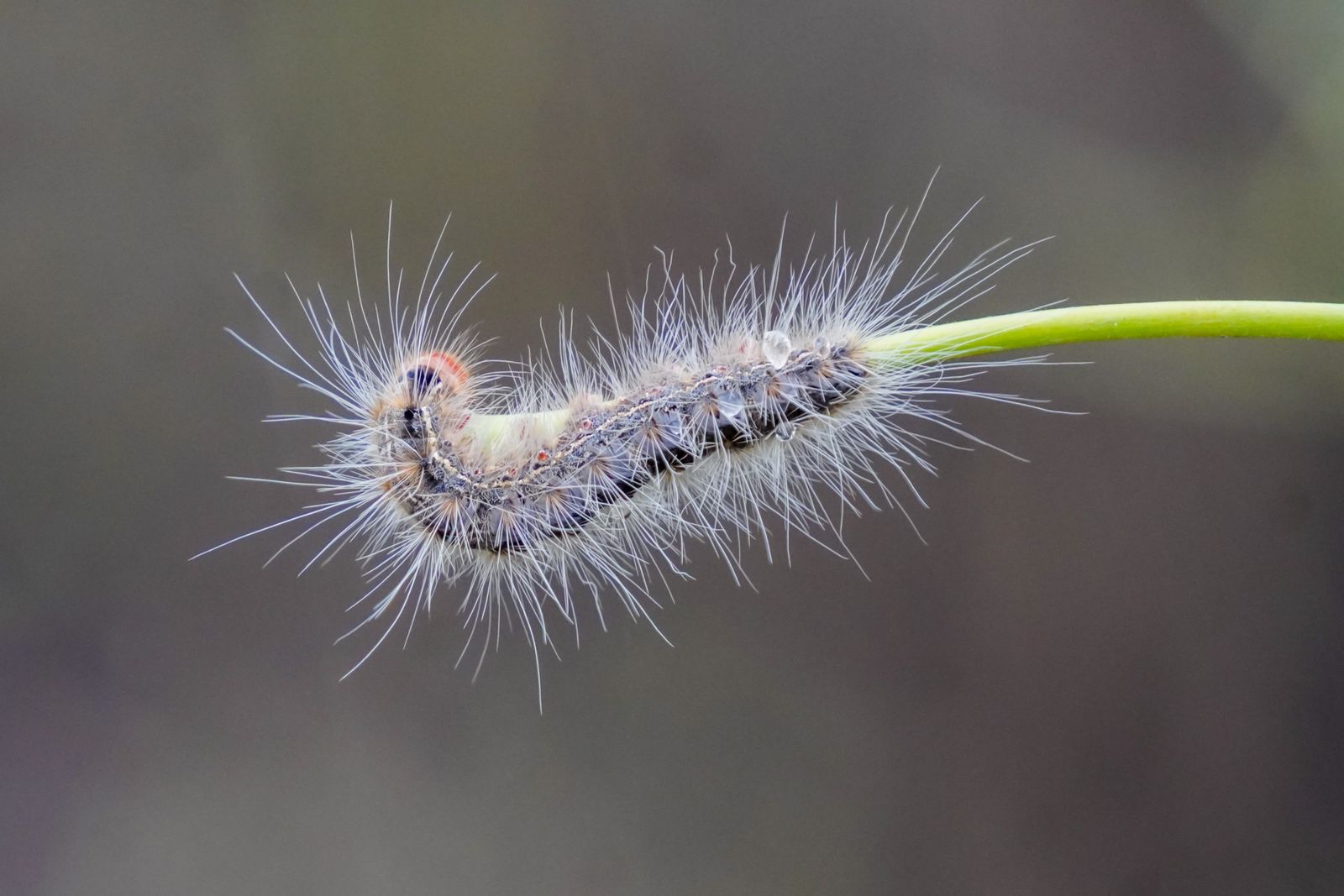
- 09 · The oak processionary caterpillar[10]
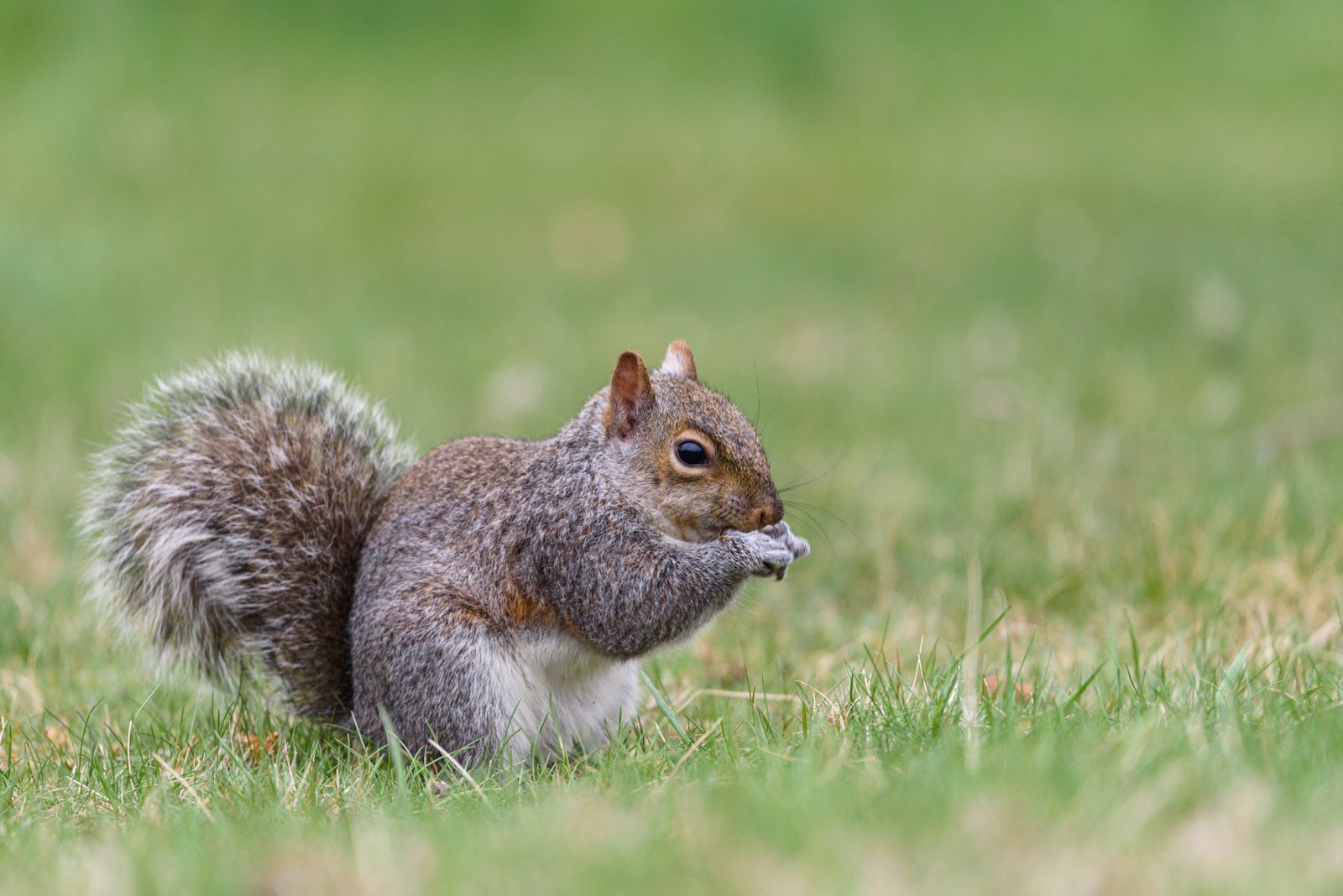
- 10 · The park squirrel[2]
- If it is already closer than you meant[1][2][6]
Why you want to touch it
The pull is a real reflex and it has a shape: large eyes low in a rounded face, a big head on a small body, soft outlines, clumsy movement. Those features evolved to make human infants impossible to abandon, and the response they trigger does not check what species it is looking at. Anything that happens to share the proportions inherits the reaction. A quokka, a seal pup, a bear cub, and a fuzzy caterpillar are not communicating anything about their temperament by looking the way they do — you are supplying the meaning. This is worth naming because the feeling is genuinely convincing from the inside. It arrives as a judgement about the animal when it is only a fact about your visual system. [1][2]
- Big eyes, round face, small body, soft edges — the trigger is geometry, not behaviour
- The response evolved for infants and does not distinguish species
- Feeling that an animal is friendly is not evidence that it is
- The reflex fires hardest on exactly the animals people are most likely to reach for
Your approach does not mean to them what it means to you
The second half of the problem is that the animal is reading you too, in a language you are not speaking. A slow, direct, face-on advance with steady eye contact is, across a very wide range of species, the signature of something hunting. Reaching a hand out extends a limb into its space; crouching to be at its level closes the distance further; a phone held up is one more object moving toward the face. None of that is interpreted as affection, because affection from a human is not a category the animal has. What it has is a threshold, and when you cross it the response is defence — which is why so many injuries happen at the exact moment a person believes the encounter is going well. [1][2]
- Direct approach and sustained eye contact read as predatory to most species
- An outstretched hand is a limb entering the animal’s space, not a greeting
- Crouching and phone-holding both shorten distance rather than reassure
- Defence is the animal’s answer to a crossed threshold, not to your intention
- The bite frequently lands while the person still thinks it is friendly
01 · The bear cub
There is no more efficient trigger for the reflex above than a bear cub, and none where the arithmetic is worse. The cub is the thing you can see; the sow is the thing you cannot, and she is usually close. The Park Service is unambiguous — never place yourself between a mother and her cub, never attempt to approach them, and the chance of an attack escalates greatly if she perceives you as a danger to her cubs. Two further facts make improvising badly a poor plan: bears run as fast as a racehorse both uphill and down, and both grizzlies and black bears climb trees. Running and climbing are the two instincts to override. [1]
- A visible cub means an unseen mother nearby — leave immediately
- Never position yourself between a sow and her cubs
- Do not run: bears run as fast as a racehorse, uphill and down
- Do not climb: both black and grizzly bears climb
- Speak calmly, make yourself look large, back away sideways with the bear in view
02 · The quokka
The animal whose face launched a genre of selfie, and whose apparent smile is the fixed shape of its jaw rather than a mood. Quokkas approach people readily on Rottnest Island, which visitors reasonably read as friendliness and which is better understood as an absence of fear. Feeding is the mechanism that produced it: in Western Australia it is an offence to feed native wildlife without approval under the Biodiversity Conservation Act 2016, and the state’s own guidance sets out why — fed animals become dependent, get sick on food that does not suit them, and may become aggressive and pose safety risks to visitors. The smile is not consent, and the approach is a learned behaviour someone taught it. [3]
- The “smile” is jaw structure, carrying no information about mood
- Feeding native wildlife without approval is an offence in Western Australia
- Processed human food causes illness and breeding failure
- Animals conditioned to expect food turn aggressive when it stops
- Photograph from where you already are; do not lure, chase, or crouch to meet it
03 · The mute swan
Serene for most of the year, and then not. From spring the pair becomes strongly territorial, driving other wildfowl off the water entirely, and the cob’s threat display is precise enough to read once you know it: swimming toward you in jerking movements, inner wing feathers arched over the back, neck laid back on the shoulders. That posture is a warning being issued, not a pose for a photograph. Scottish Wildlife Trust guidance is to give nesting swans a wide berth when walking, and particularly when walking a dog. They are also legally protected, so an escalation is a problem in more than one direction. [4]
- Breeding season changes the animal completely; April is not January
- Threat display: arched inner wings, neck back on shoulders, jerking approach
- Give nesting pairs a wide berth — more so with a dog
- Protected by law; harming one is an offence
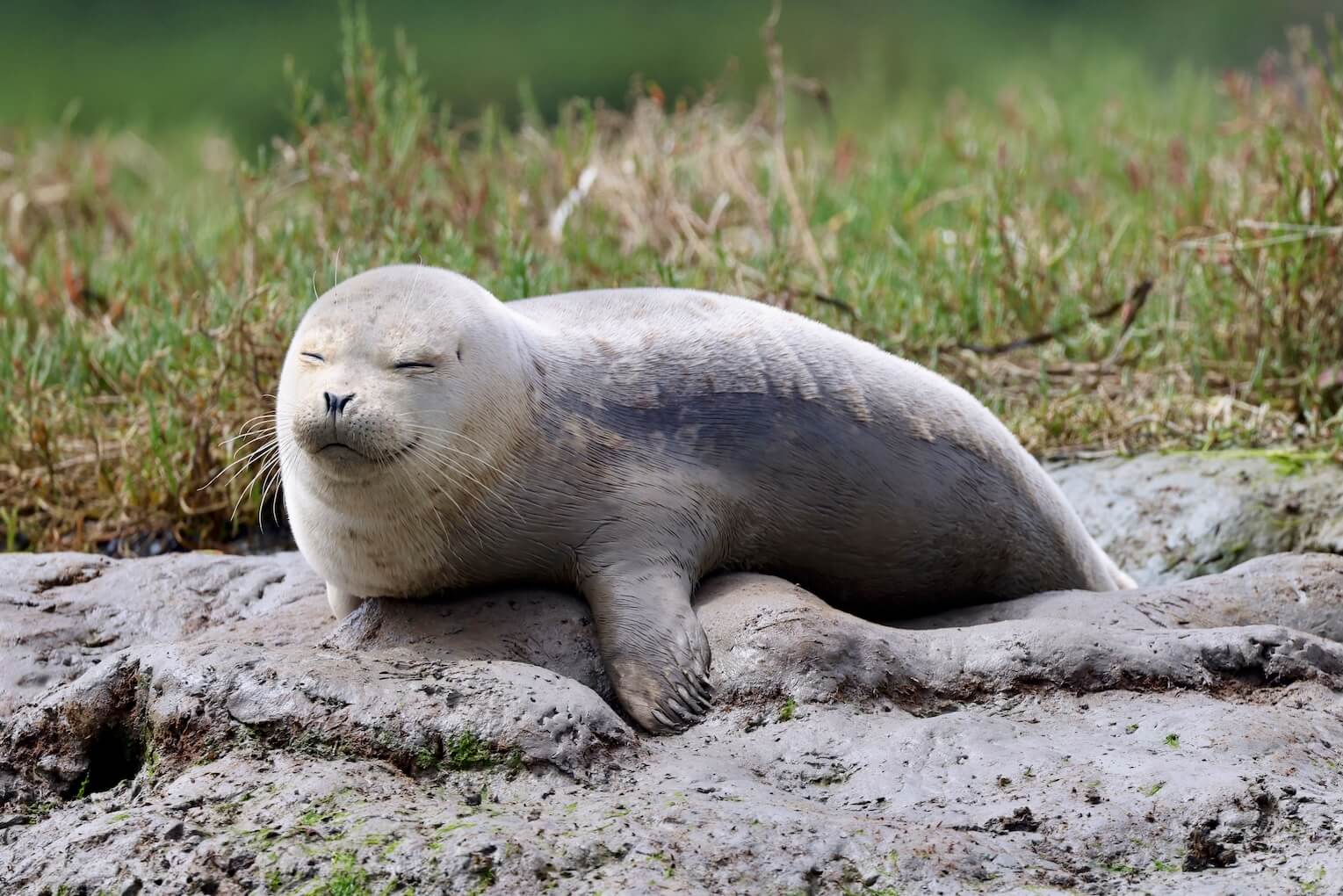
04 · The grey seal
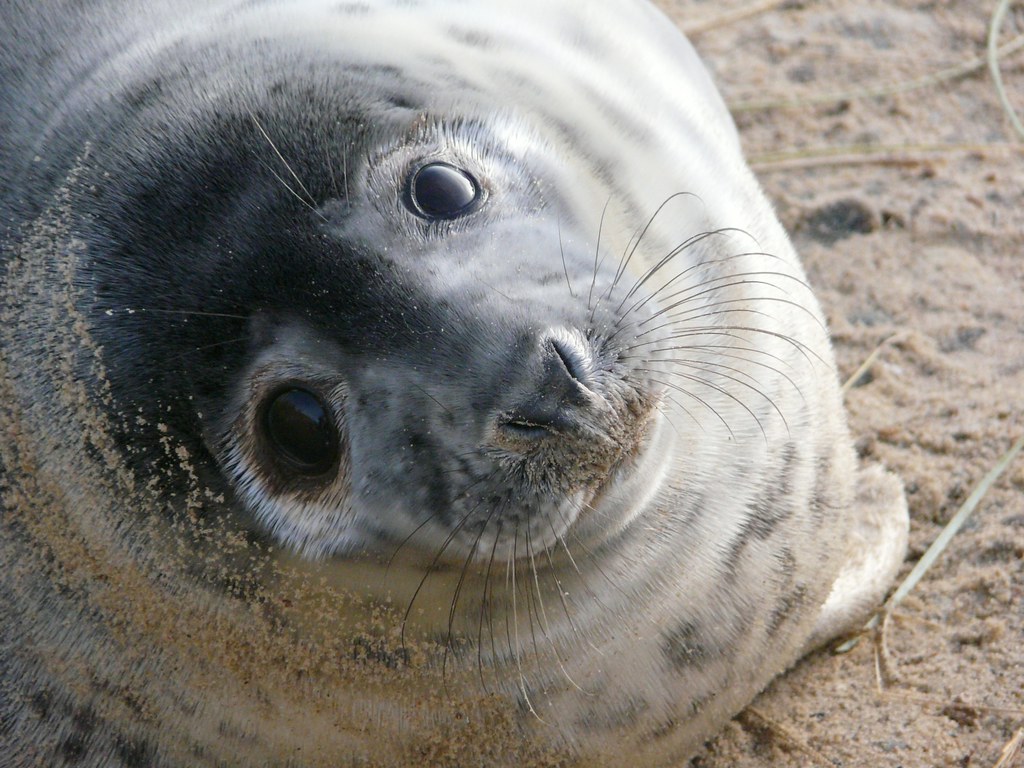
Hauled out on a beach a seal looks like a sleepy dog, and the resemblance does an enormous amount of damage. The RSPCA advises staying over 100 metres back — roughly a football pitch — and offers the single best behavioural test in this guide: if a seal turns to look at you, you have already disturbed it. They move fast over short distances on land and will bite when provoked, with strong jaws and sharp teeth. The bite is also a medical problem rather than a simple wound, so any tooth contact needs prompt attention. Disturbance carries a cost to them too: a frightened mother may leave a pup and not return. [5]
- Over 100 m; use binoculars rather than closing the gap
- A seal turning to look at you is the disturbance threshold, not a greeting
- Fast over short distances ashore, and they bite when provoked
- Dogs on leads or left at home
- Disturbed mothers may abandon a pup on the beach
05 · The temple macaque
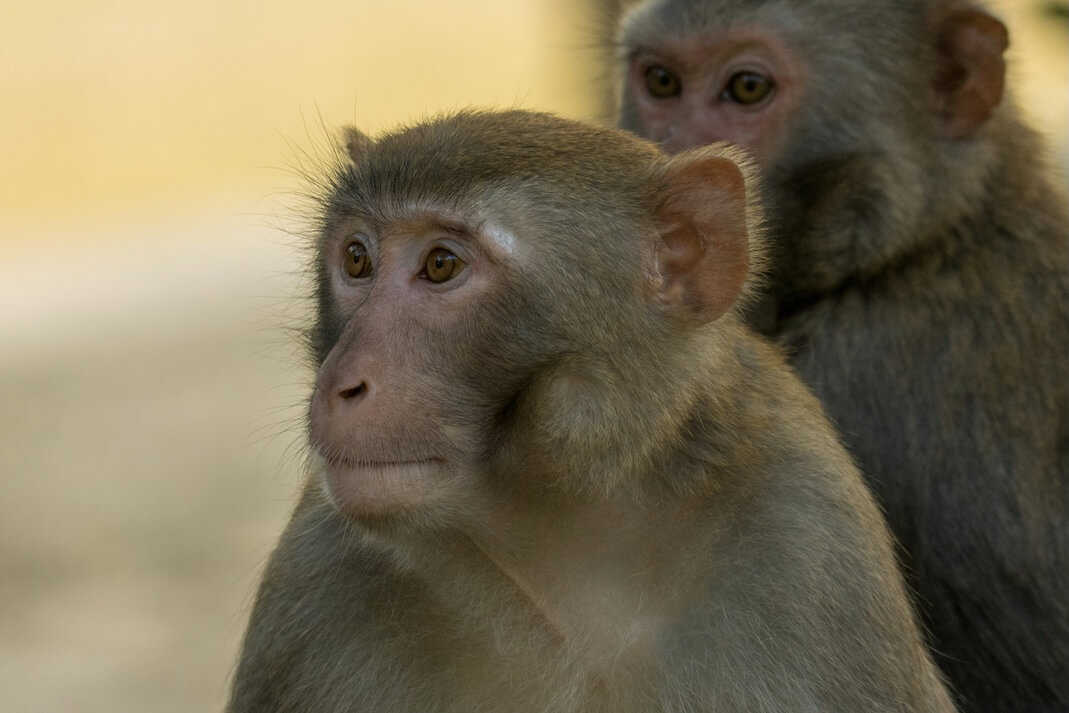
Free-roaming macaques at temples and parks across Asia are habituated, expressive, and close enough to hand-feed, which is exactly the problem. The defence here is invisible: B virus, common in macaques, which they carry and transmit without appearing ill. In humans the untreated case fatality rate approaches 80 per cent. A bite or scratch is therefore not a minor injury to clean up later. CDC guidance on wound care is unusually specific — scrub with soap, detergent, or iodine for 15 minutes, then irrigate under running water for a further 15 to 20 — and then seek medical attention immediately. Do not touch and do not feed; research at monkey temples found injury rates higher among people who fed the animals. [6]
- B virus is common in park and temple macaques and shows no outward sign
- Untreated human infection approaches 80 per cent fatality
- Scrub any bite or scratch 15 minutes, irrigate 15–20 more, then get medical care
- Feeding measurably raises your chance of being injured
- Keep bags closed and food out of sight; a grab becomes a bite
06 · The sika deer at Nara
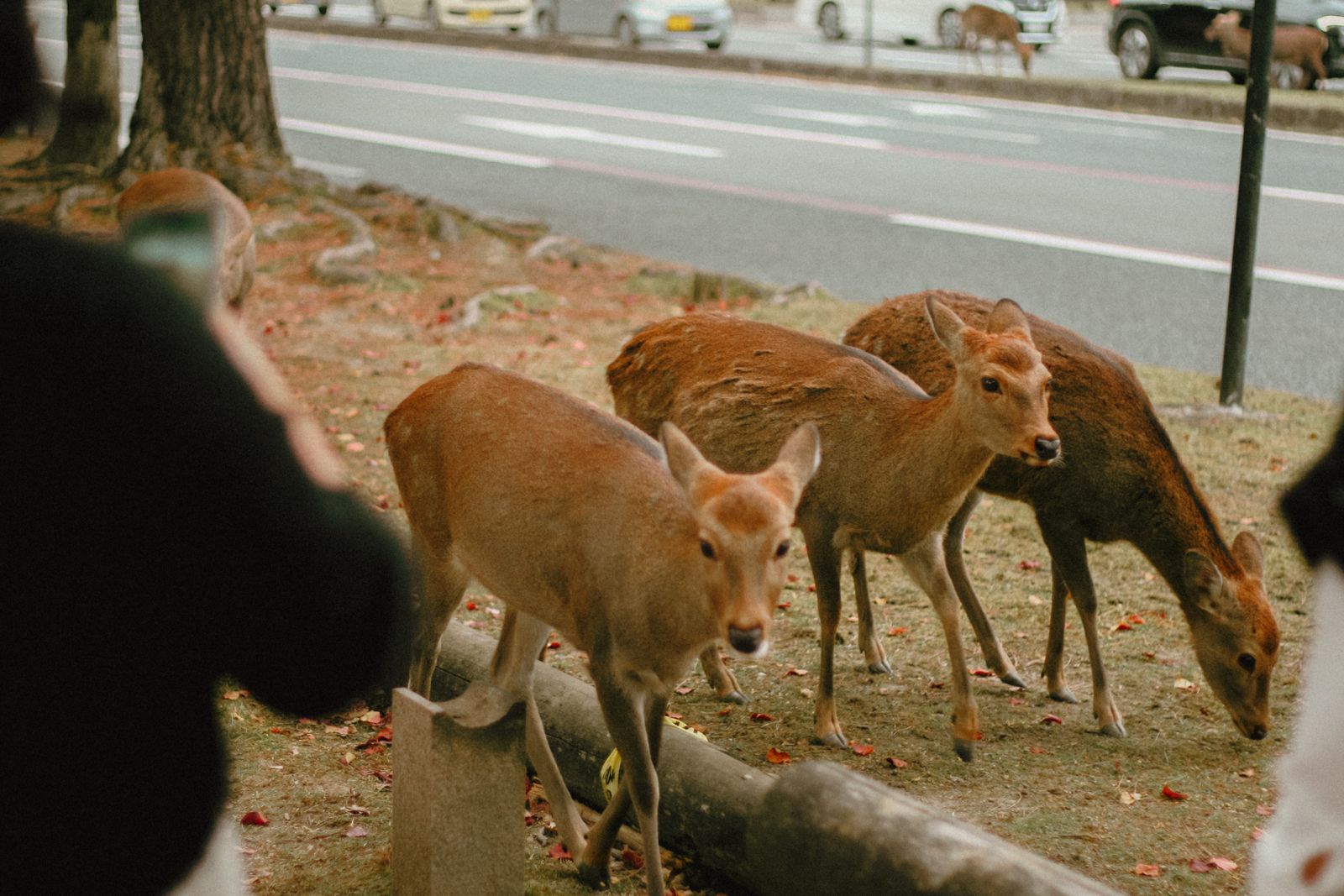
Over a thousand deer roam Nara Park and bow to visitors for crackers, which may be the purest expression of everything this guide is about — an animal performing a gesture people read as politeness. Japan’s National Consumer Affairs Center warns that they remain wild, that excessive physical contact leads to incidents, and that people are injured by deer goring or charging. The seasonal pattern is what visitors miss: stags in rut from September to November, and mothers with fawns from May to August. Only the official shika-senbei crackers should be offered, and children and older visitors need particular care around a shove. [7]
- The bow is a learned feeding behaviour, not deference
- Rutting stags September–November; mothers with fawns May–August
- Injuries come from goring and charging, not only nipping
- Feed only official shika-senbei, nothing else
- Holding a cracker back for a photograph is a common route to being bitten
07 · The bottlenose dolphin
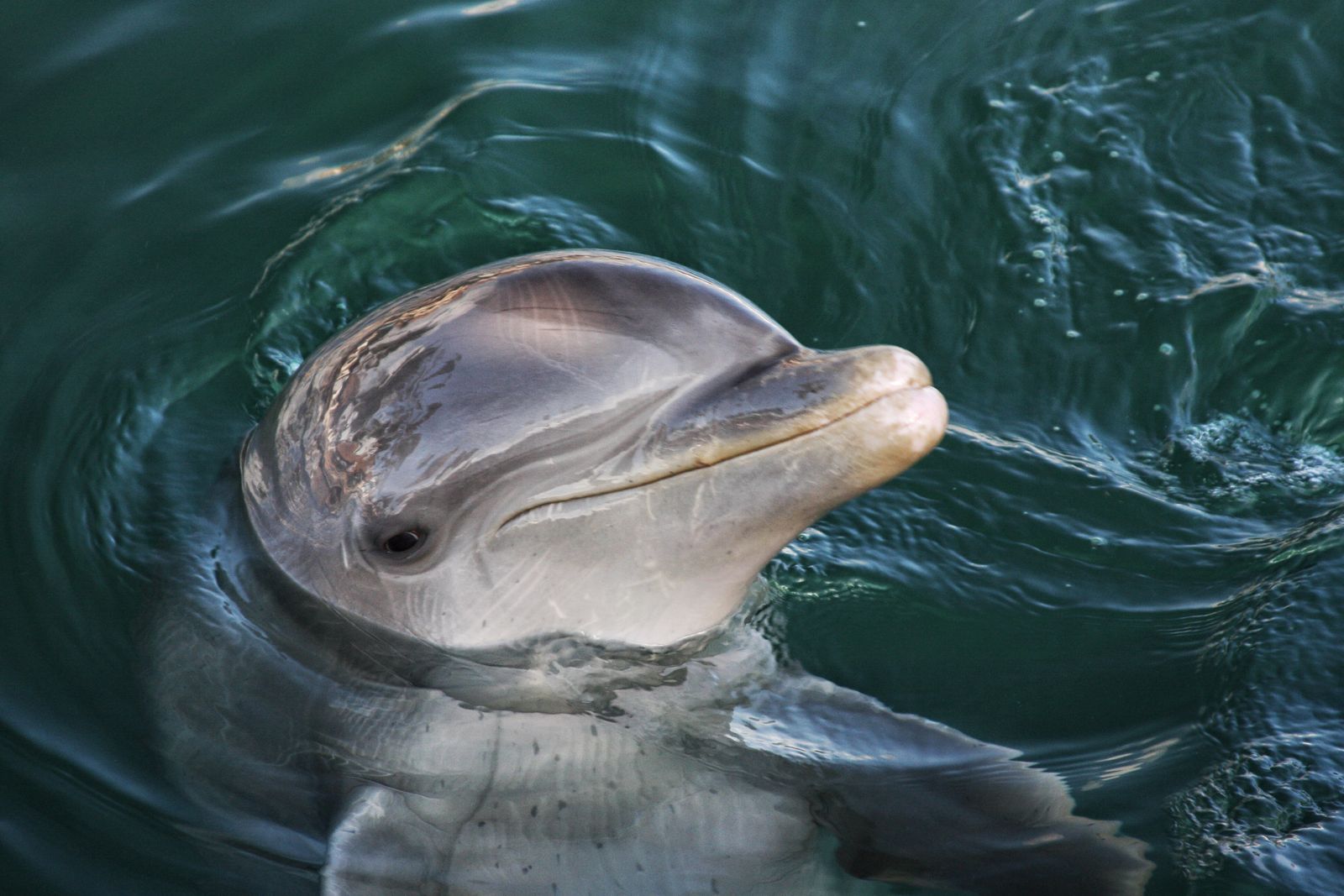
The permanent smile is anatomy — the fixed curve of the jawline — and it has probably done more to misrepresent an animal than any other feature on this list. NOAA is direct about the consequences: dozens of bites have been reported, and people have been pulled underwater. Feeding and interaction strip the wariness that keeps wild dolphins alive, leaving them begging, colliding with propellers, and eating things that make them ill. The legal position matches the biological one. Under the Marine Mammal Protection Act it is illegal to feed or harass them, penalties reach $100,000 and a year in jail, and the advised viewing distance is at least 50 yards. [8]
- The smile is jaw shape and conveys nothing about intent
- Dozens of bites recorded; people have been pulled under
- Do not swim with, touch, ride, or feed wild dolphins — all illegal in US waters
- At least 50 yards (150 feet); penalties to $100,000 and a year in jail
- Fed dolphins lose their wariness and die of it
08 · The platypus
Beloved, improbable, and shaped almost exactly like something you would want to pick up — and the male carries a venomous spur on each ankle, roughly 12 millimetres long, connected by a duct to a gland that produces venom particularly in the breeding season. Envenomation is not lethal to humans and is described as excruciating, with swelling that spreads through the limb and a long-lasting hyperalgesia that can persist for days or months. The Australian Museum notes no antivenom. It also gives the practical detail that says everything about the risk: if an injured platypus must be handled at all, pick it up by the end half of the tail, in case it is a male. [9]
- Males only: a spur on each ankle, about 12 mm, venom gland behind it
- Venom production rises in the breeding season
- Not lethal, but excruciating, with pain sensitivity lasting weeks to months
- No antivenom — the treatment is pain management
- Even rescuers handle them by the far half of the tail
09 · The oak processionary caterpillar
Fuzzy, slow, harmless-looking, moving in an orderly line — and close to irresistible to a child. A mature caterpillar carries thousands of barbed hairs loaded with an irritant called thaumetopoein, and contact causes itching skin rashes and, less often, sore throats, breathing difficulties, and eye irritation. Two details make this worse than a nettle. The hairs can be carried on the wind, so contact does not require touching anything; and they persist on old nests, which stay hazardous at any time of year even when the caterpillars are long gone. Official guidance is explicit that neither adults nor children should touch or go near the caterpillars or their nests, and that removal is a job for a qualified professional. [10]
- Thousands of barbed hairs per caterpillar, carrying thaumetopoein
- Rashes, sore throat, breathing difficulty, eye irritation
- Hairs travel on the wind — you need not touch anything
- Old nests stay hazardous year-round; greatest risk May to July
- Never let children near them; removal is a professional job
10 · The park squirrel
It closes the list because it is absurd, and because it is the animal almost nobody classifies as wildlife at all. The Park Service uses the rock squirrel as its worked example of how habituation actually forms: the squirrel scampers away the first several times a person approaches with a camera, and after enough repetitions it stops. That is the whole mechanism in one small animal. Nothing about it became braver or friendlier; it simply stopped leaving. Every larger animal in this guide arrived at tameness by the same route, and the squirrel makes it visible — which is also why hand-feeding one is not a harmless indulgence but the first repetition of that sequence. [2]
- The Park Service’s own illustration of habituation forming
- Nothing changed in the animal except that it stopped withdrawing
- Small habituated animals still bite, and hand-feeding is how it begins
- An animal approaching you for food means the damage is already done
If it is already closer than you meant
The correct response genuinely differs by animal, which is the strongest argument against carrying a single rule. Back away slowly while facing the animal for most of this list. For a bear, do not run and do not climb — speak calmly, look larger, and move sideways while keeping it in view. What is constant is the beginning and the end. Do not offer food to buy your way out of an encounter, because that teaches precisely the lesson that created it. And report a persistently bold animal to whoever manages the site: habituated animals are frequently destroyed once they injure someone, so the report is as much for the animal as for the next person. [1][2][6]
- Most of this list: face it, back away slowly, do not run
- Bears: no running, no climbing, no screaming — calm voice, large posture, sideways retreat
- Never feed an animal to defuse an encounter
- Wash and seek care for any bite or scratch, however small it looks
- Report bold animals; it is usually the animal that pays for the habit
Get Fauna and identify it in the field.
Where this guide comes from
Source-checked editorial guide. Last updated . This guide teaches identification and field skills; it is not a substitute for expert verification when it matters.
- US National Park Service — Staying safe around bears ↗
- US National Park Service, Grand Canyon — Wildlife habituation ↗
- Western Australia Department of Biodiversity, Conservation and Attractions — Public urged not to feed native wildlife ↗
- Scottish Wildlife Trust — Everything you need to know about mute swans ↗
- RSPCA — Where to watch seals in the UK ↗
- US CDC MMWR — Monkey bite in a public park and possible exposure to herpes B virus ↗
- National Consumer Affairs Center of Japan — Interacting safely with the deer in Nara ↗
- NOAA Fisheries — Protect wild dolphins: admire them from a distance ↗
- Australian Museum — Platypus ↗
- Forest Research — Oak processionary moth: public and animal health advice ↗