Whale watching without disturbance
Whales concentrate along predictable migration routes, which makes seasonal watching reliable—and makes disturbance easy if crowds press too close. Watching well means keeping legal distances, letting the animals control the encounter, and learning the behavioral cues that signal when a whale wants space.
Last updated
Time the migration
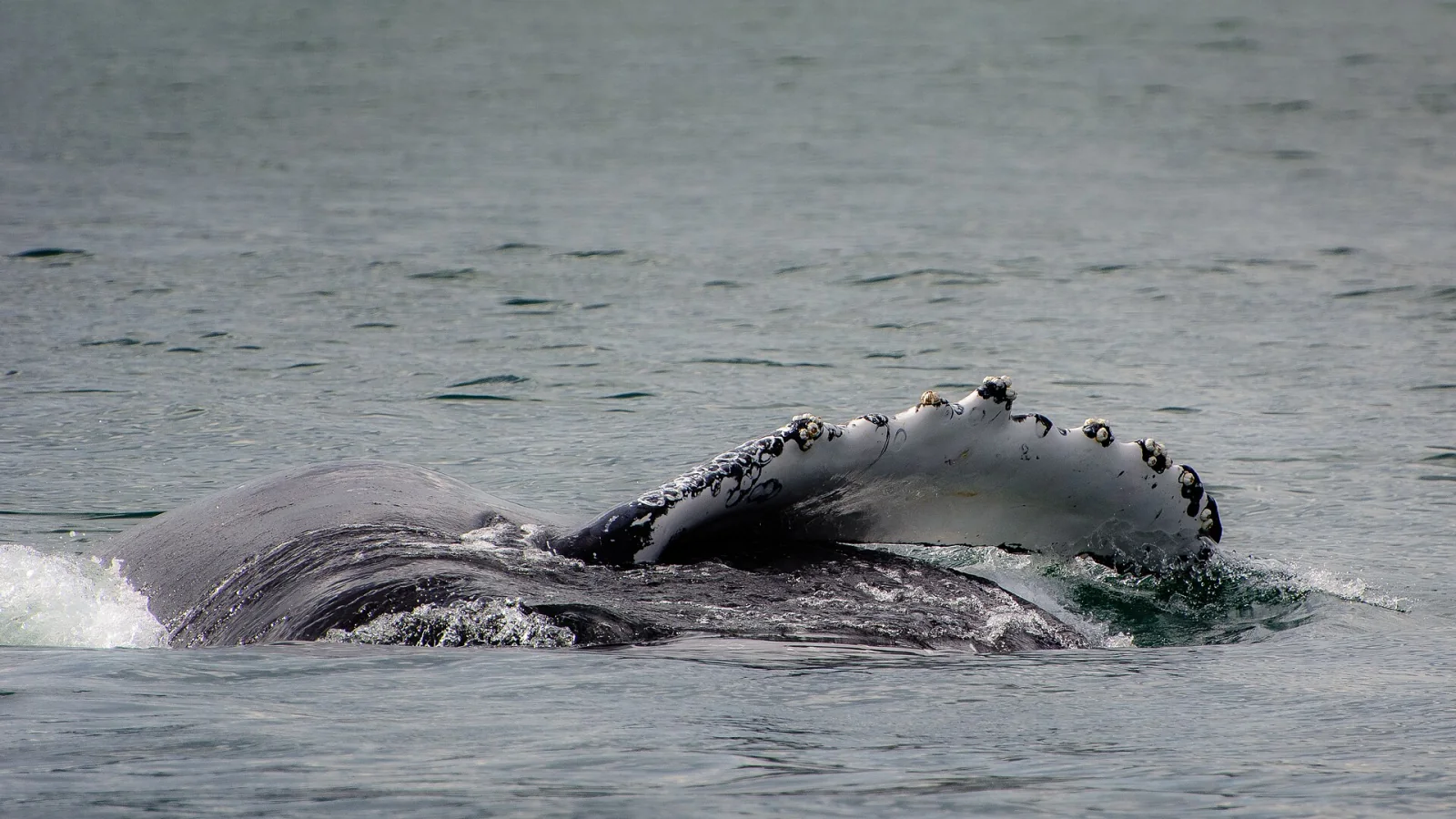
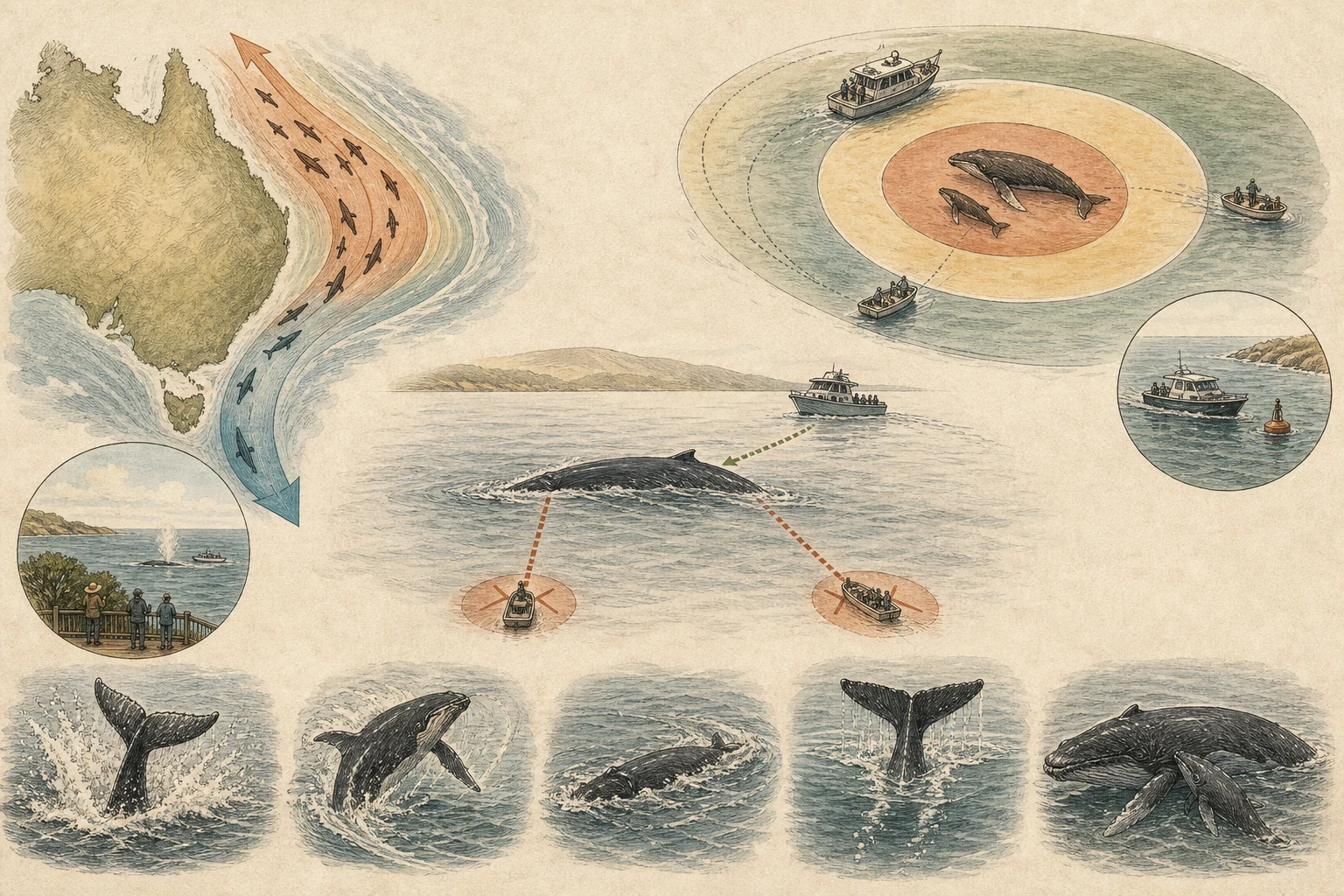
Baleen whales such as humpbacks, gray whales, and right whales travel thousands of kilometers each year between cold, food-rich high-latitude feeding grounds and warm, shallow tropical or subtropical calving waters. Where continental shelves narrow or headlands jut seaward—as along eastern and western Australia, the North American Pacific coast, or New England banks—migrating whales pass close enough to watch from coastal cliffs with binoculars as well as from boats. Timing outings to peak seasonal passages yields steady sightings without vessels needing to search aggressively. [1][2]
- Coastal headlands along migration corridors allow zero-disturbance watching with binoculars and a spotting scope
- Peak northbound and southbound passages bring whales past predictable points over several weeks each year
- Mothers escorting young calves often hug calmer nearshore waters on the return leg toward feeding grounds
Keep legal distance
National and state marine wildlife laws establish strict minimum approach distances—commonly 100 yards or 100 meters for most large whales, and 200 to 500 yards or more for endangered species such as North Atlantic right whales, Southern Resident killer whales, or mothers with calves. Surrounding caution zones require vessels to drop to no-wake speeds and post a dedicated lookout. These buffers reduce the risk of blunt-force vessel strikes and prevent propeller noise from masking the low-frequency calls mothers and calves use to stay in contact. [2][3]
- Standard regulations commonly require at least 100 meters or yards from whales, and double or more around calves
- Endangered populations such as right whales and Southern Resident orcas carry much larger mandatory buffer zones
- Slowing to no-wake speed inside the caution zone cuts underwater engine noise and reduces strike risk
Let the whales control the encounter
How a boat maneuvers matters as much as raw distance. International Whaling Commission and NOAA guidelines instruct skippers to approach slowly on a parallel course slightly behind the animal's beam, never head-on, directly from astern, or across its path of travel. Vessels should never cooperate to box whales against a shoreline, rev engines in reverse, or linger past recommended time limits—typically 30 minutes. If a curious whale chooses to approach a vessel whose engine is idling in neutral, wait until the animal moves well clear before re-engaging gear. [3][4]
- Approach slowly on a parallel course from the side and slightly astern—never head-on or across the path ahead
- Keep a clear escape corridor open and never trap whales between multiple boats or against a shoreline
- Place engines in neutral if a whale approaches on its own, and cap total viewing time with any single group
Read disturbance cues
Cetaceans show clear behavioral signs when vessel presence becomes stressful. Watch for abrupt changes in heading or travel speed, shortened surface intervals paired with longer avoidance dives, tight bunching of pod members, repeated tail lobbing or pectoral slapping directed toward a boat, trumpets or forceful exhalations, or a mother positioning her body between the vessel and her calf. Whenever any of these cues appear, the observation is already altering behavior: the responsible response is to ease away immediately at low speed. [4][5]
- Sudden course changes, prolonged dives, or tight group bunching indicate whales are actively avoiding a vessel
- Repeated tail-slapping, trumpeting blows, or a mother shielding her calf signal acute disturbance
- Book with accredited operators that follow national whale-watching codes and respect resting and nursing pods
Related guides
Get Fauna and identify it in the field.
Where this guide comes from
Source-checked editorial guide. Last updated . This guide teaches identification and field skills; it is not a substitute for expert verification when it matters.
- NOAA Fisheries — Marine life viewing guidelines and distances ↗
- NOAA Fisheries — Humpback Whale ↗
- New South Wales Environment and Heritage — Approaching marine mammals ↗
- International Whaling Commission — Whale watching handbook ↗
- International Whaling Commission — Principles for responsible whale watching ↗