What “endemic” means
An endemic taxon is native to a defined geographic area and occurs naturally nowhere else; the named area is part of the meaning.
Last updated
Keep both halves of the definition
In biogeography and field natural history, 'endemic' requires two conditions at once: the organism must be native to a specified area, and its natural distribution must be exclusively restricted to that area. Neither half works on its own. An ornamental palm or escaped cage bird that survives only inside one coastal city is restricted in range there, but because people introduced it, it is not endemic to that coast. Conversely, a Douglas-fir or peregrine falcon that grows or breeds natively in a national park while also occurring naturally across a wider continent is indigenous (native) to the park, not endemic to it. [1][2][3]
- Endemic equals native origin plus natural geographic restriction to the named area—both parts must hold true.
- Common trap: using 'endemic' as a synonym for 'indigenous' or 'native' when the species also occurs naturally elsewhere.
- Note that medical epidemiology uses 'endemic' differently (for a constantly present disease); in ecology, it strictly describes native geographic restriction.
State the geographic scale
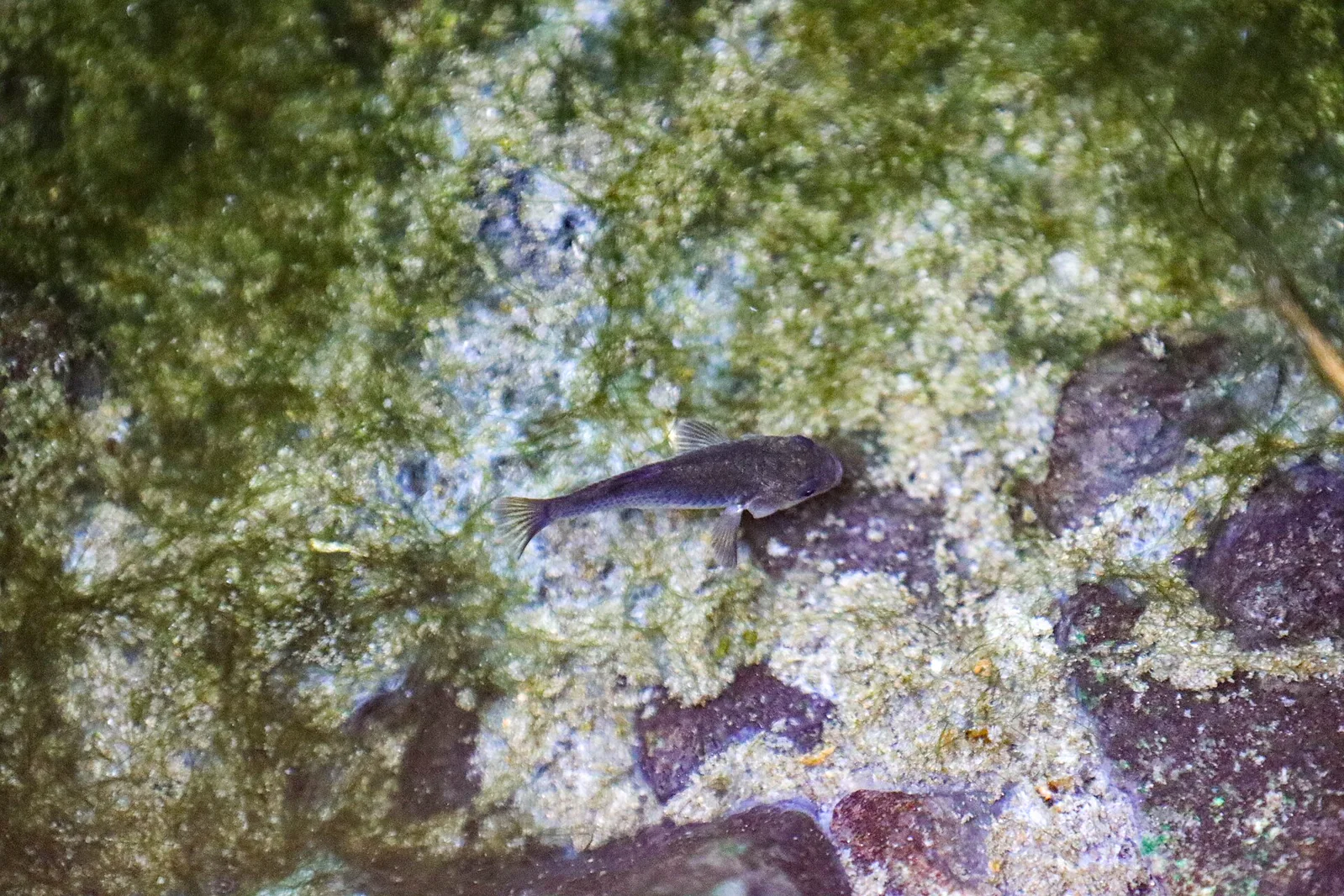
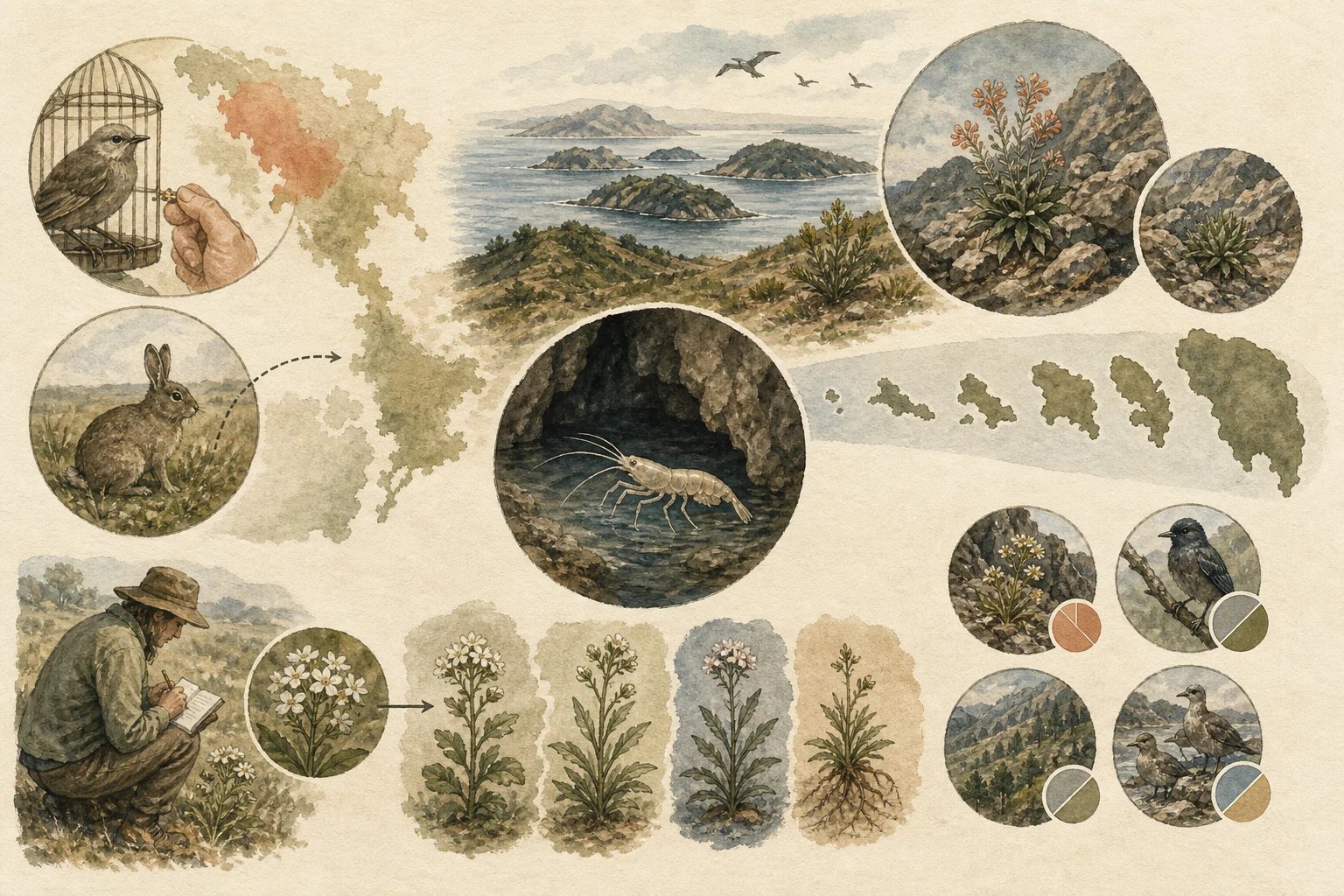
Calling a plant or animal 'endemic' in your field journal is an incomplete sentence until you state the boundary that encloses its range. That boundary can be micro-scale—like the Devils Hole pupfish, whose natural world is a single water-filled limestone cavern in Nevada, or serpentine wildflowers confined to one coastal peninsula at Point Reyes—or it can span an entire mountain chain, island archipelago, country, or continent. Because 'endemic to Ash Meadows,' 'endemic to California,' and 'endemic to North America' are all valid statements operating at nested scales, always pair the word with the exact geographic unit defined by your source. [1][2][4]
- Field check: always write 'endemic to [specific place]' so the spatial scale of the claim is explicit.
- Narrow endemics may occupy a single thermal spring, karst cave, mountain peak, or soil outcrop such as coastal serpentine.
- Broad endemics can span an entire island group, river basin, or continent while still occurring nowhere else on Earth.
Do not substitute it for conservation status
Because many famous narrow endemics—such as island birds or desert spring fishes—are imperiled, observers frequently assume that 'endemic' means rare, endangered, or legally protected. In reality, endemism is purely a statement of geographic distribution, whereas extinction risk is evaluated separately using population size, trend, and habitat threats under frameworks like the IUCN Red List. A plant endemic to a large state or island can number in the millions and be assessed as Least Concern, while a tiny range-restricted endemic can be Critically Endangered because a single wildfire, groundwater drawdown, or invasive predator can affect its entire global population. [1][2][5]
- Endemic describes where a taxon naturally lives, not how abundant, declining, or legally protected it is.
- Narrow-range endemics often face high extinction risk because one local disturbance can strike their entire global range at once.
- Field check: look up the current IUCN Red List category and state or federal protection status separately from endemism.
Expect the known boundary to be revisable
An endemic designation reflects the current state of both field exploration and taxonomic classification, and either one can shift as science advances. Targeted botanical or entomological surveys in adjacent valleys sometimes turn up overlooked populations that expand a species' known range beyond a park or county line. Equally often, genetic and morphological studies revise species boundaries: at Point Reyes National Seashore, for example, modern genetic analysis showed that some plants once thought endemic to the peninsula belong to wider-ranging species, while other local populations represent newly recognized distinct taxa. Always record the taxon name, source authority, and publication date together. [4][5]
- New field surveys can find populations outside a previously mapped boundary, changing a local endemic into a regional native.
- Genetic studies can split a widespread species into narrow endemics or merge a supposed local endemic into a broader taxon.
- Field check: note the checklist authority and date when recording an endemic claim in your field notes.
Related guides
Get Fauna and identify it in the field.
Where this guide comes from
Source-checked editorial guide. Last updated . This guide teaches identification and field skills; it is not a substitute for expert verification when it matters.