Desert heat: timing, water, and the salt nobody packs
Desert heat is not an endurance problem to be solved with willpower and a bigger bottle. Air temperatures in shade can exceed 43°C and ground temperatures run higher still, which is why the primary control is the clock rather than fitness. And water without salt has its own failure mode, one that looks like heat exhaustion and is made worse by the obvious response.
Scope: Mechanism plus worked examples from named guidance only: US National Park Service advisories for Grand Canyon, and NHS guidance on heat exhaustion and heatstroke. Figures are from those sources; conditions, water availability, and emergency response differ enormously between deserts. Education, not individual medical advice. · Last updated
You avoid the heat; you do not push through it
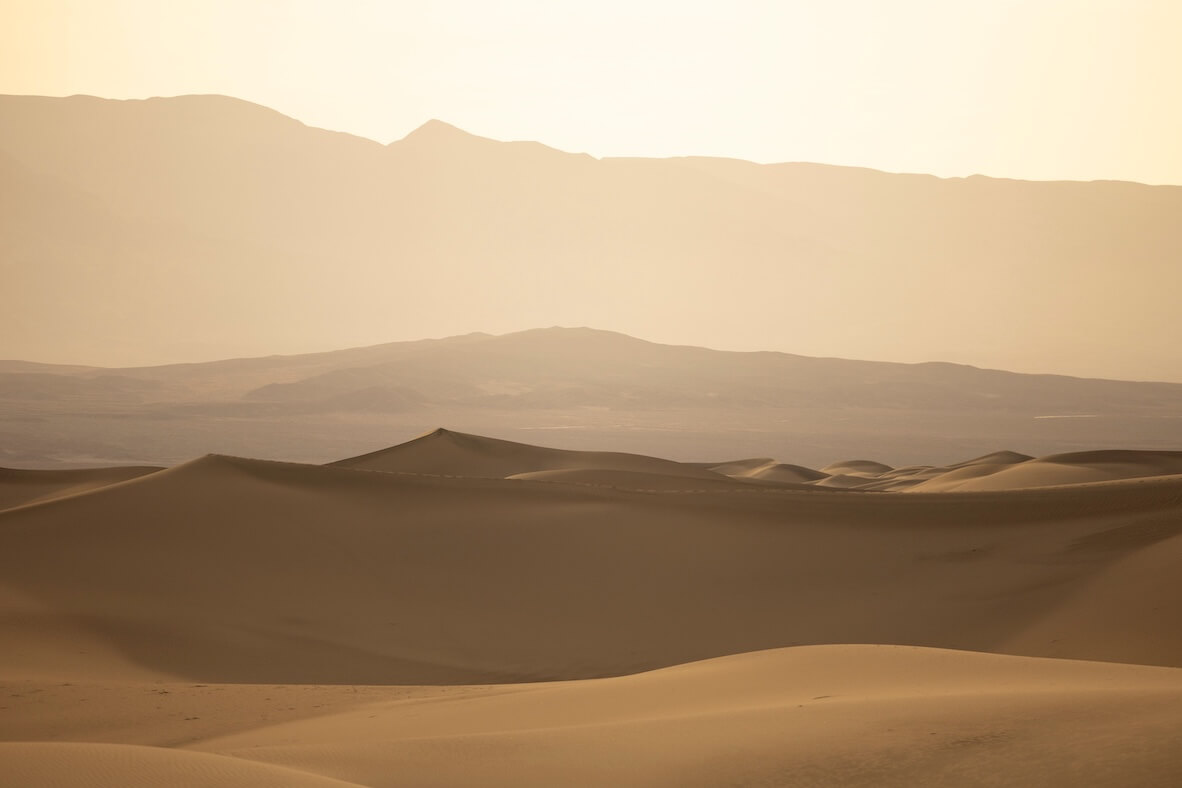
Grand Canyon's advisories are worth reading as a template because the park states the numbers plainly. Inner canyon temperatures reach 109°F (43°C) in the shade, shaded areas lower in the canyon have been recorded between 105°F (41°C) and 111°F (44°C), and ground temperatures far exceed air temperatures — which matters for anyone travelling low to the ground or with a dog. The park's response is not advice about pacing or hydration strategy; it is a curfew. Hike before 10 a.m. and after 4 p.m., and rest in shade in between. Schedule is the primary control, and it is the one most people treat as optional. [1][2]
- Move early and late; treat the middle of the day as unavailable
- Shade temperatures of 41–44°C are survivable to sit in and not to work in
- Ground temperature runs well above air temperature — relevant for dogs and for resting
- Descending into a canyon is the trap: the return leg is uphill in worse heat
Water alone is the trap
The instinct in heat is to drink more, and past a point that instinct becomes the hazard. Sweat removes salt as well as water, and replacing only the water dilutes the body's sodium — hyponatremia, which the National Park Service lists alongside heat exhaustion, heat stroke, and death among the risks of hiking in extreme heat. Its early presentation overlaps heavily with heat exhaustion: nausea, headache, confusion, weakness. That overlap is the danger, because someone who mistakes it for dehydration will drink more and get worse. The park's practical instruction is to bring salty snacks to replace electrolytes lost through sweating, balance food with water rather than water alone, and drink when thirsty rather than to a schedule. [1][2]
- Sweat costs salt as well as water; replacing only water is not neutral
- Hyponatremia looks like heat exhaustion, and drinking more makes it worse
- Eat salty food alongside water — the food is not optional in heat
- Drink to thirst rather than forcing a fixed volume
- Carry all the water you need; assume trail water sources may be out
Two conditions, and a 30-minute test that separates them
Heat exhaustion and heatstroke are not degrees of the same discomfort — one is an emergency and the other is not, and the field discriminator is simple. Cool the person properly, then time it. NHS guidance is that heat exhaustion does not usually need emergency help if they can be cooled within 30 minutes. If they are not improving in that window, treat it as heatstroke. The other route to the same conclusion is the symptom picture: a very high temperature, hot skin that is not sweating, fast heartbeat, confusion or loss of coordination, seizure, or loss of consciousness. Sweating stopping is not a sign of recovery, and confusion is never a minor symptom in heat. [3]
- Heat exhaustion: heavy sweating, tiredness, nausea — should improve in 30 minutes of cooling
- Heatstroke: very high temperature, hot skin that is not sweating, fast pulse
- Confusion, loss of coordination, seizure, or unconsciousness — call 999/911 now
- Skin going dry is deterioration, not improvement
Cooling is the treatment
Move the person somewhere cool, take off unnecessary clothing, and cool the skin actively: spray or sponge with cool water and fan them, and put cold packs wrapped in cloth under the armpits and on the neck. Give water to drink, and an isotonic sports drink or oral rehydration solution if you have one — this is the situation where the salt content earns its place. If you suspect heatstroke, call an ambulance and keep cooling while you wait: wrap them in a cool wet sheet, or keep sponging and fanning. If they lose consciousness, put them in the recovery position, check breathing, and be prepared to start CPR. [3]
- Shade or indoors, clothing off, skin actively wetted and fanned
- Cold packs in cloth to armpits and neck
- Isotonic or rehydration drink in preference to plain water where available
- Suspected heatstroke: call emergency services and keep cooling while waiting
- Unconscious: recovery position, check breathing, CPR if absent
The failures that are specific to deserts
Most desert emergencies are planning failures rather than dramatic ones. Water on the route may not be there — parks warn that sources experience outages — so the plan has to survive a dry tap. Shade may be genuinely absent rather than merely inconvenient, which turns a rest into an exposure. The classic terrain trap is the canyon: an easy downhill start in cool morning air commits you to climbing out in the afternoon, and people routinely go further down than they can come back up. Night brings its own reversal, with a large temperature drop that catches anyone who packed only for the heat. [1][2]
- Plan for the water source being dry, not for it being there
- Confirm there is real shade at your turnaround, not just a map symbol
- Downhill first means uphill in the heat — set the turnaround by time, not distance
- Pack for the night: desert temperatures fall sharply after dark
Get Fauna and identify it in the field.
Where this guide comes from
Source-checked editorial guide. Last updated . This guide teaches identification and field skills; it is not a substitute for expert verification when it matters.