Virginia Opossum
Didelphis virginiana
North America’s familiar marsupial, recognizable by a pale face and nearly bare tail.
What to look for
- 01
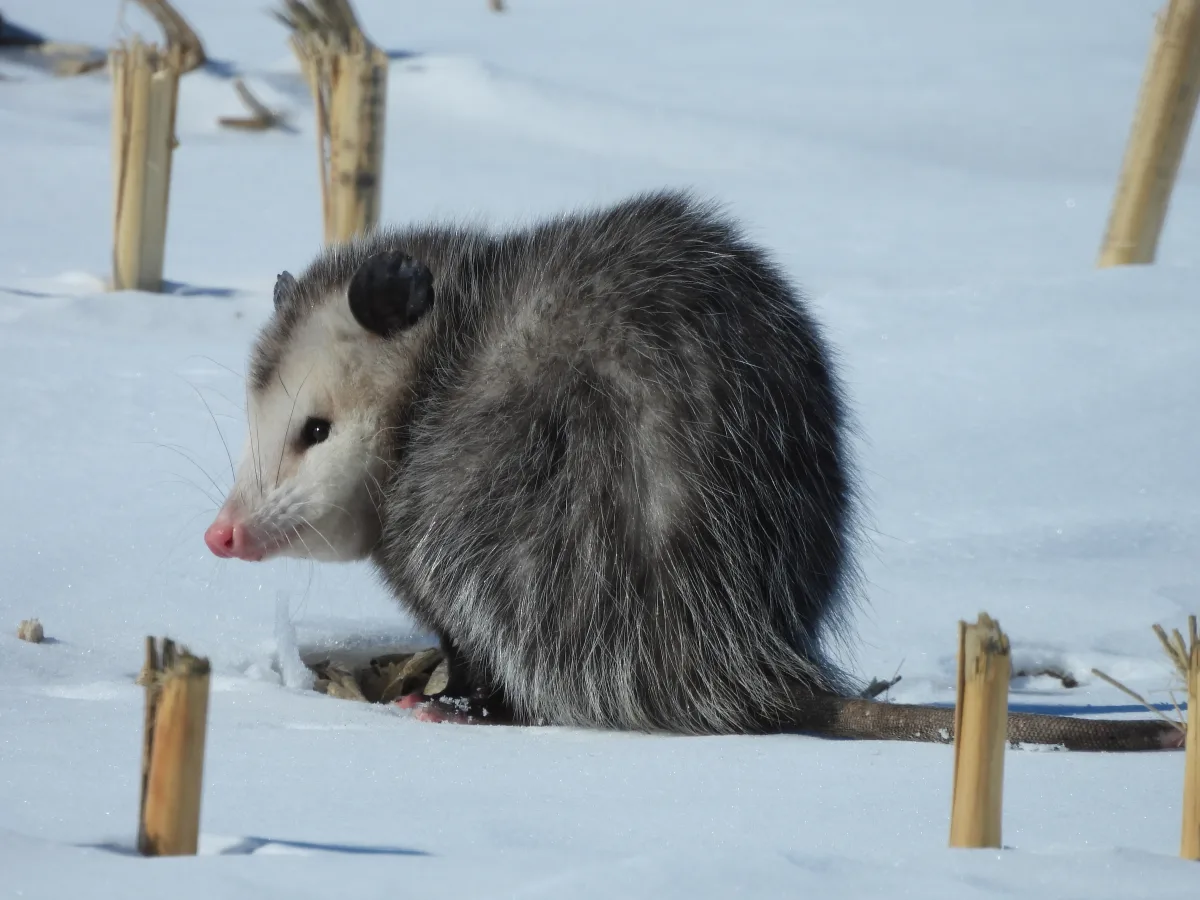
Long, pointed muzzle with a pale face and dark eyes
- 02
Small, rounded, nearly hairless ears
- 03
Coarse gray-brown coat and a long, scaly, prehensile tail
Where it lives
Woodland edges, thickets near water, farms, suburbs, and city green space where shelter and food are available.
How it moves
A slow-moving, solitary night forager. When severely stressed, an opossum may enter an involuntary catatonic state known as ‘playing possum.’
Common lookalikes
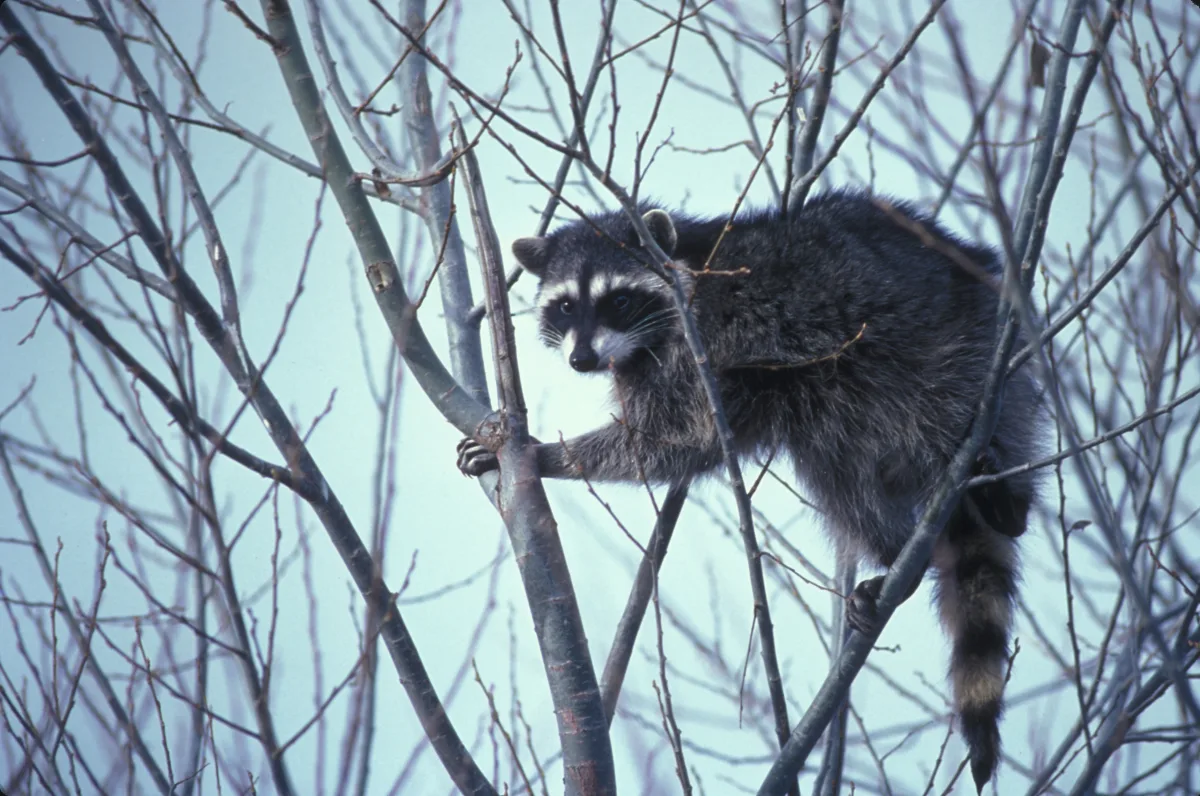
Raccoons have a black mask and a thick ringed tail. Domestic rats are far smaller and lack the opossum’s pale face and coarse body fur.
Observe responsibly
Give it a clear escape route and bring pets indoors. An opossum that appears motionless may recover once the threat has passed.
Do not handle wildlife. Use gloves and local animal-control guidance if an opossum is trapped or injured.
Virginia opossums coexist well with people and are not considered threatened or endangered in the United States.
Get Fauna and identify it in the field.
Where this guide comes from
Sources are linked below. Field marks vary with age, sex, season, region, light, and viewing distance.