How seabirds handle salt
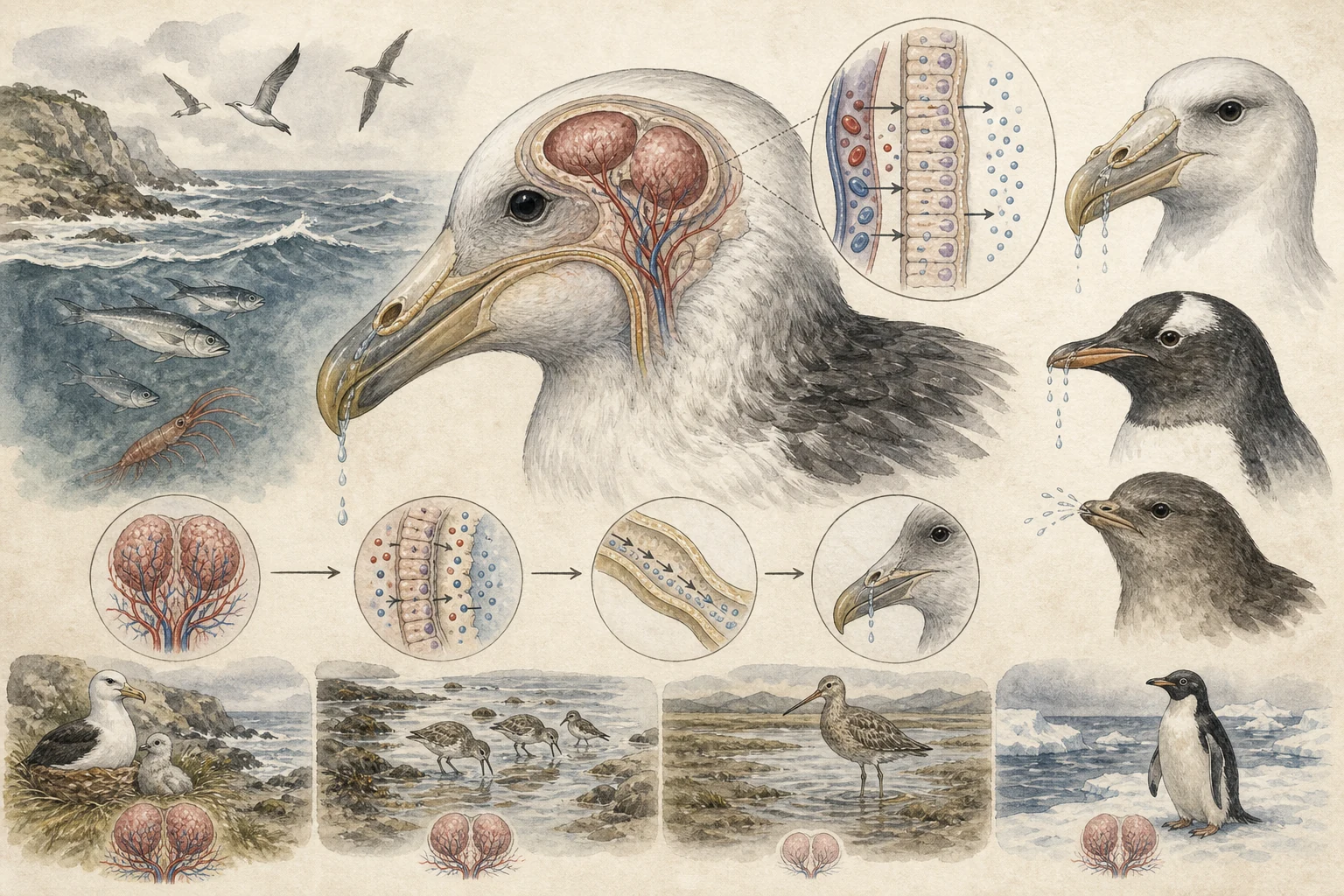
Kidneys alone cannot efficiently excrete all the salt gained from seawater and marine prey while conserving water. Nasal salt glands actively move ions into a secretion saltier than blood; ducts carry it to the nostrils, where droplets run or are shaken from the bill.
Last updated
Marine food and water create an osmotic challenge
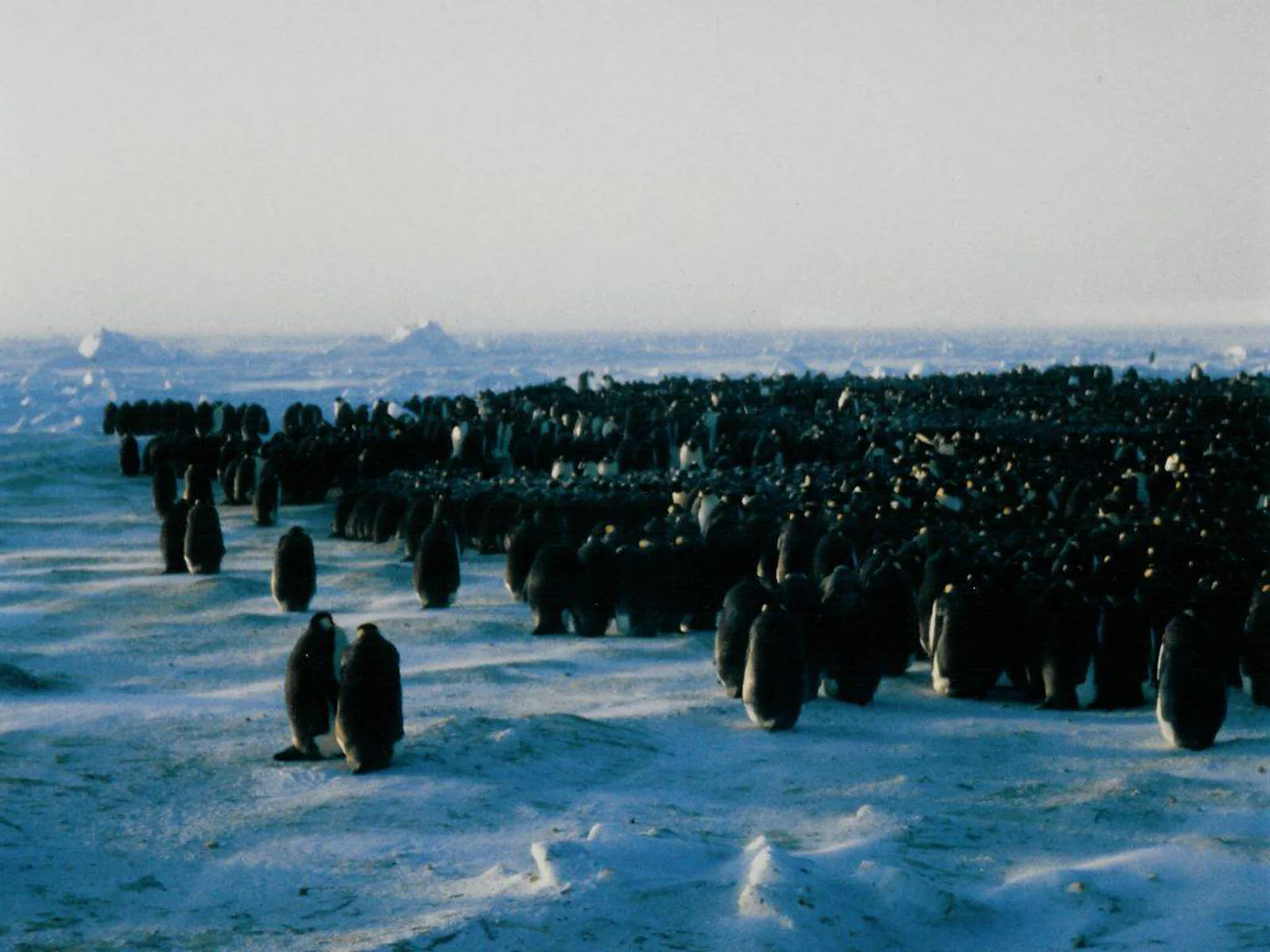
Open-ocean seawater contains roughly 3.5 percent dissolved salts—about three times the osmotic concentration of a bird's blood plasma—and marine invertebrates such as krill, squid, amphipods, and polychaete worms are nearly isotonic with the sea around them. Because avian kidneys have shorter loops of Henle than mammalian kidneys and can concentrate urine to only about twice blood osmolarity, a gull, penguin, or albatross that relied solely on renal excretion to flush ingested seawater or salty invertebrate prey would lose more body water in urine than it gained from the meal, leading to fatal dehydration. [1][2][4]
- Seawater and marine invertebrate prey carry an osmotic salt load roughly three times higher than avian blood plasma.
- Avian kidneys cannot concentrate sodium chloride strongly enough to excrete heavy marine salt loads without net water loss.
- Piscivorous seabirds ingest less salt per gram of food than krill- or clam-eating species because bony fish tissues are more dilute than seawater.
Salt glands actively concentrate brine
Marine birds solve the osmotic deficit using paired supraorbital nasal salt glands seated in shallow bony depressions of the skull just above the eyes. When osmoreceptors detect rising blood tonicity after a salty meal, parasympathetic nerves and hormones (including vasoactive intestinal peptide and corticosterone) surge blood flow through the gland's dense capillary beds, which run countercurrent to radially arranged secretory tubules. Specialized principal cells packed with mitochondria and sodium-potassium ATPase pumps actively transport sodium and chloride ions out of the blood into the tubule lumen, generating a clear brine roughly twice as salty as seawater while leaving desalinated water behind in the body. [1][3]
- Paired supraorbital salt glands sit in bony grooves above the orbits and leave visible depressions on seabird skulls.
- Countercurrent blood flow and ATP-driven ion pumps in the secretory tubules produce fluid far saltier than both blood and seawater.
- Active salt-gland secretion lets a marine bird net fresh physiological water even after swallowing seawater or salty crustaceans.
Ducts deliver the secretion to the bill
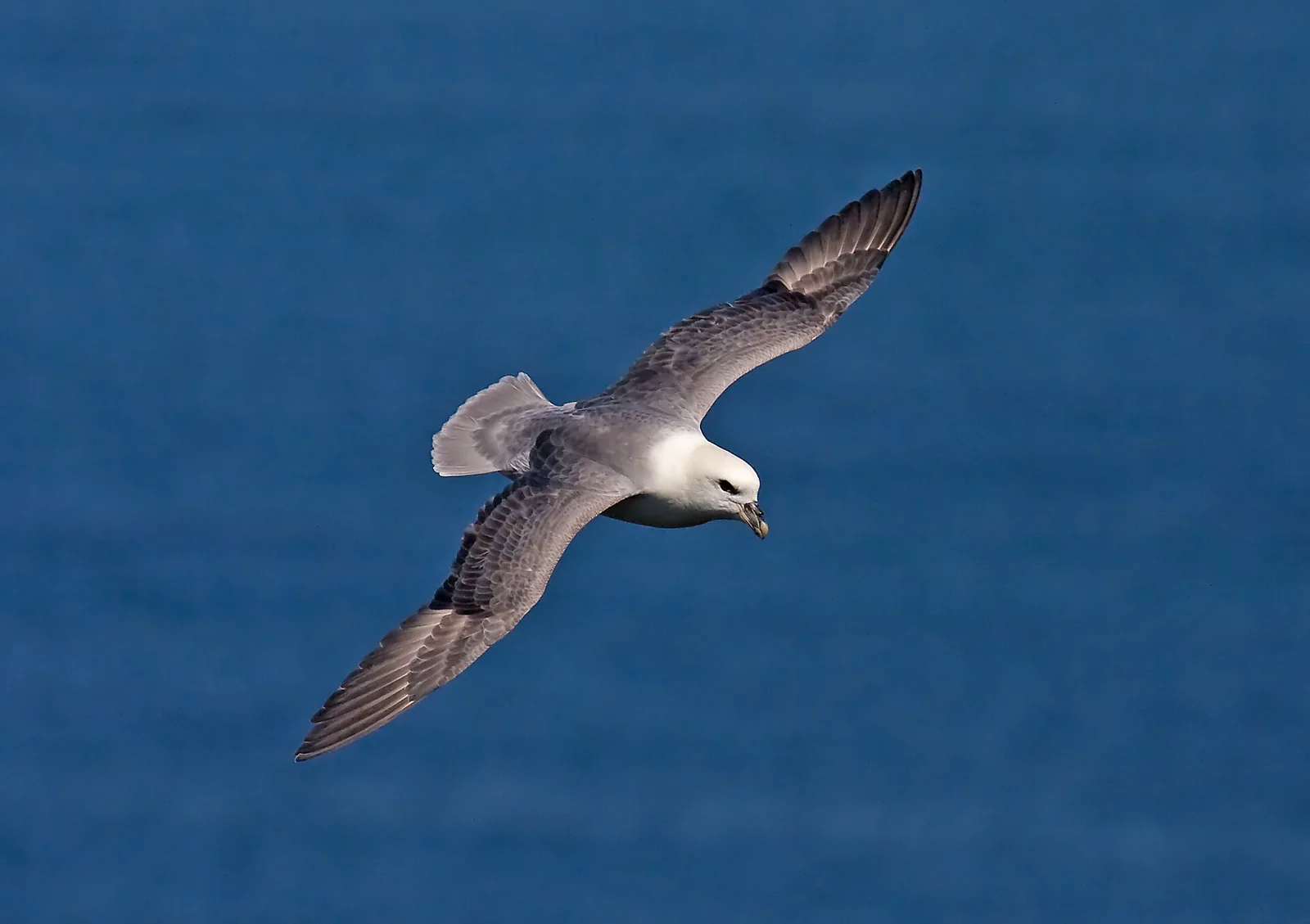
From each supraorbital gland, ducts channel the concentrated sodium chloride solution forward into the nasal cavity, where it trickles out the external nares and runs down grooves along the upper mandible to gather as a glistening bead at the bill tip. Watch a perched herring gull, cormorant, Humboldt penguin, or gliding northern fulmar (Fulmarus glacialis) through binoculars and you will often see a clear drop hanging from the hooked tip of the beak before the bird gives a brisk sideways flick of its head to fling the brine away so it is not reswallowed. In procellariiform tubenoses—albatrosses, petrels, shearwaters, and fulmars—prominent horny nasal tubes sit right atop the culmen. [3][4]
- Concentrated brine drains from the nasal passages to the tip of the upper bill and is flung off with a sharp lateral head shake.
- Clear droplets hanging on a gull, penguin, or fulmar bill tip are nasal salt-gland secretions rather than tears.
- Procellariiform seabirds (albatrosses, petrels, and fulmars) carry conspicuous tubular nostrils along the top of the bill.
Capacity changes with habitat and salt exposure
A bird's nasal salt glands are not fixed-capacity organs; they remodel rapidly in size, enzyme activity, and secretory rate as diet and habitat salinity shift across seasons. When mallards (Anas platyrhynchos), Barrow's goldeneyes, or migrating sandpipers move from freshwater marshes to coastal estuaries or hypersaline lakes, increased salt intake triggers cellular hypertrophy and hyperplasia in the supraorbital glands within days, boosting sodium-pump density; when the birds return to inland freshwater breeding grounds, the glands shrink again. Integrated osmoregulation always links the salt glands with intestinal water absorption, renal filtration, and behavioral choices such as sipping fresh rain from feathers. [1][2][3]
- Waterfowl and shorebirds moving between inland fresh water and coastal salt marshes reversibly enlarge and shrink their nasal salt glands.
- Salt-gland hypertrophy increases both gland mass and Na+/K+-ATPase pump capacity within days of high-salinity exposure.
- Even pelagic seabirds eagerly drink fresh rainwater or snowmelt at sea when available to reduce the metabolic cost of salt excretion.
Related guides
Get Fauna and identify it in the field.
Where this guide comes from
Source-checked editorial guide. Last updated . This guide teaches identification and field skills; it is not a substitute for expert verification when it matters.
- Comparative biochemistry and physiology. Part A, Molecular & integrative physiology — Regulation of salt gland, gut and kidney interactions ↗
- U.S. Geological Survey — Shorebird salt-gland flexibility ↗
- The Journal of physiology — Hypertonic fluids are secreted by medial and lateral segments in duck (Anas platyrhynchos) nasal salt glands ↗
- Smithsonian Ocean — Penguins ↗