Camera trapping responsibly
A camera trap is a sampling tool, not a neutral window. Its position changes what it detects, and its files can include people and sensitive locations, so responsible use starts before deployment and continues through removal and data handling.
Last updated
Start with a question
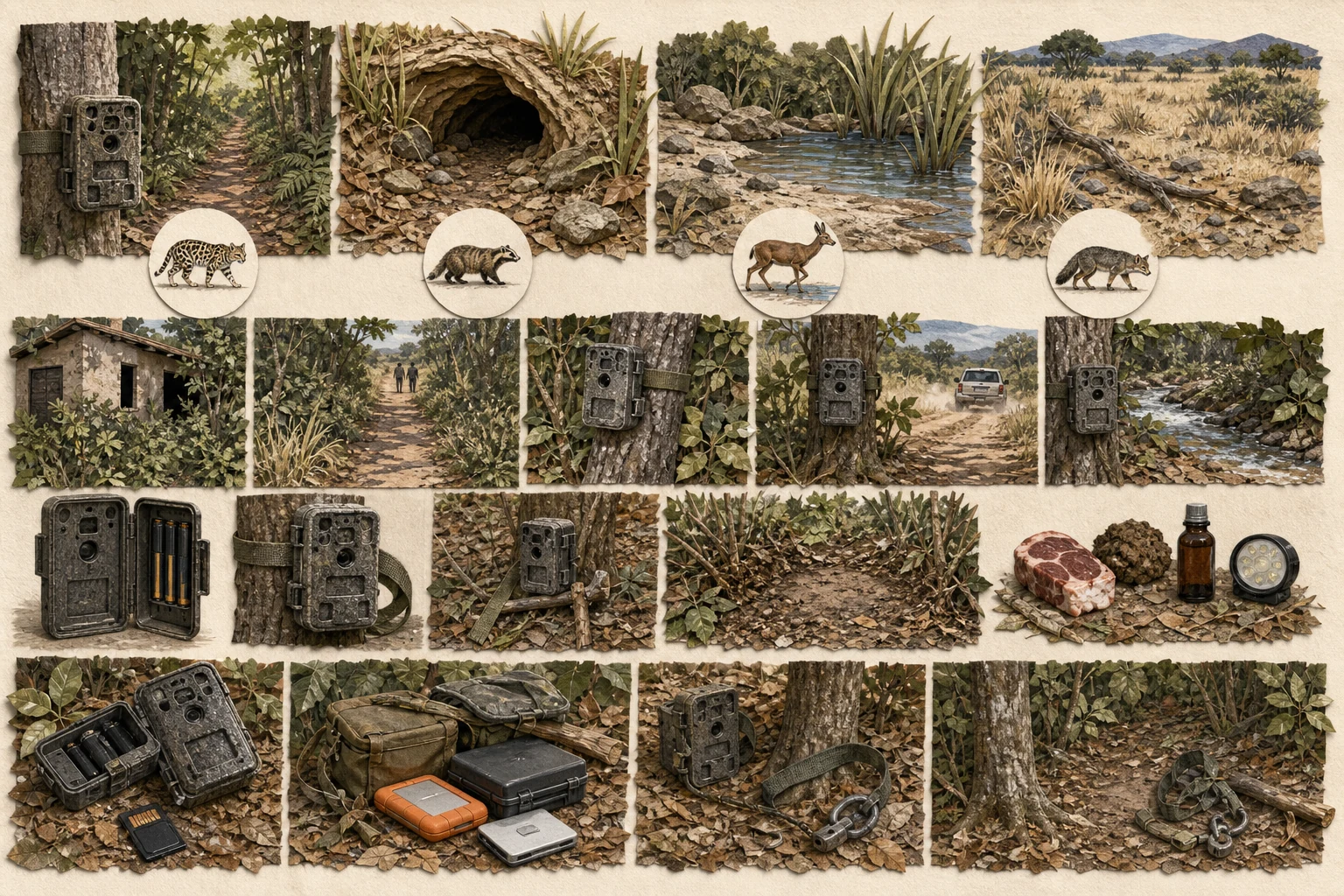
A trail camera only sees the narrow cone of air its passive infrared sensor monitors, so where you strap it determines what wildlife you detect. Mounting a unit knee-high at a 45-degree angle to a game trail captures passing coyotes, deer, and bobcats with enough side profile for identification; aiming low across a mossy log detects small forest mustelids and rodents; and facing a seasonal pool records visiting amphibians and birds. Decide whether you are compiling a backyard species inventory or comparing seasonal passage along one corridor, and write down your mounting height and distance so future deployments remain comparable. [1][3]
- Write the purpose and placement rule before going outside.
- Match camera height and angle to the target animals.
- Do not compare sites as if different setups sampled them equally.
Get permission and plan for human bycatch
Attaching unattended cameras on public parks, wildlife refuges, or shared land typically requires written landowner or agency permits, and unauthorized units are routinely confiscated. Because motion sensors trigger on hikers, field workers, and neighbors as readily as on wildlife, ethical camera-trapping protocols treat human bycatch as a primary design constraint: angle lenses away from footpaths, gates, and dwellings, post clear contact labels where required, and delete or strictly segregate any incidental human images during the first memory-card review. [2][4]
- Record the owner or manager's conditions with the deployment notes.
- Aim away from homes, camps, roads, and places where privacy is expected.
- Do not publish an incidental image of a recognizable person without consent or another lawful basis.
Test a low-impact setup
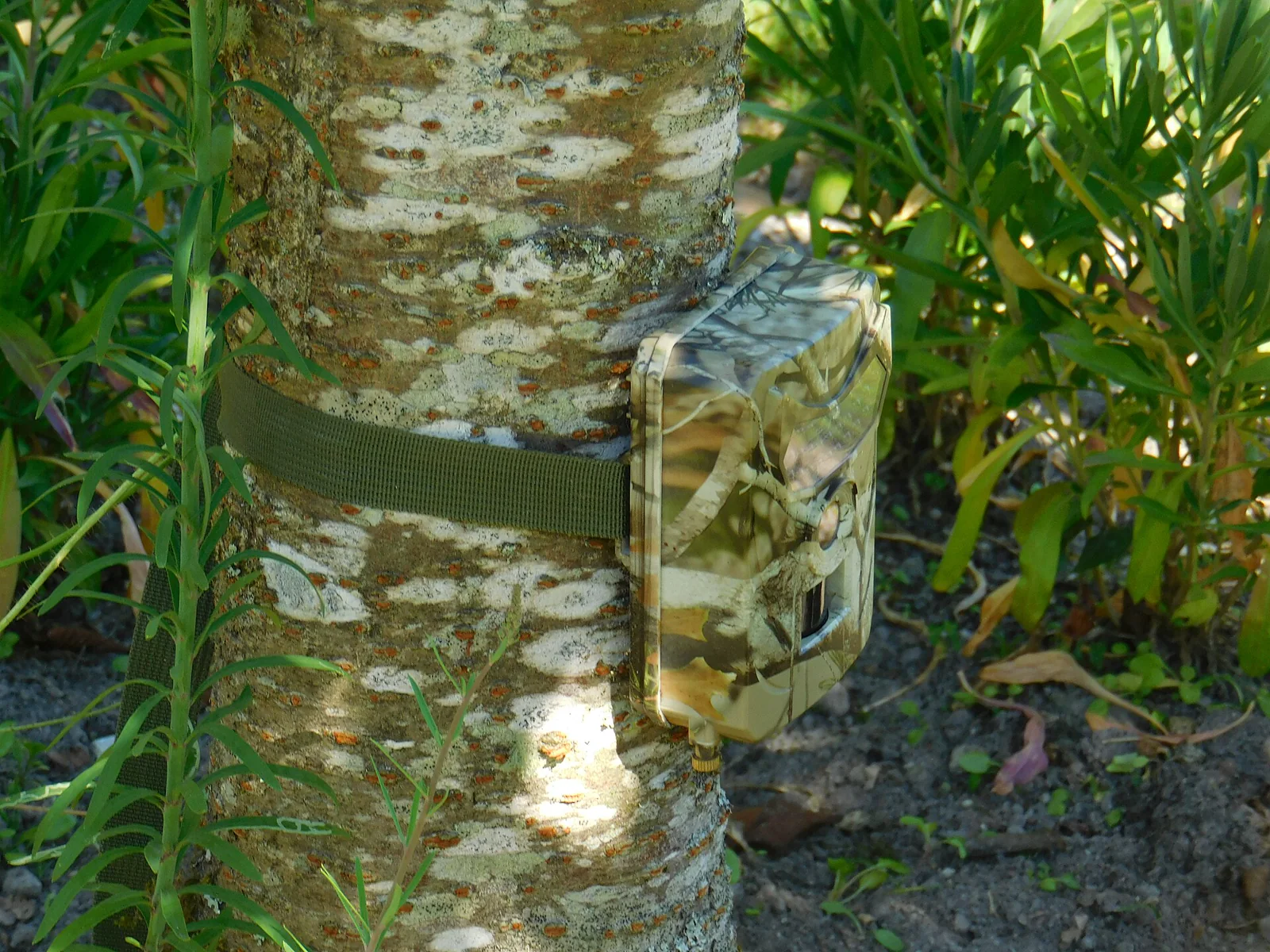
Fasten the camera with fabric straps rather than screws or nails that wound living bark, verify that the internal clock and date stamp are accurate, and crawl or walk through the target zone at the height of your focal species to check framing. Trim only the stray grass blades or twigs directly in front of the sensor that would trigger thousands of blank frames in midday wind, and avoid placing food bait, scent lures, or bright white-flash units near dens and nests where artificial attractants or night flashes can disrupt natural behavior and draw predators. [1][3][5]
- Use a test image to confirm horizon, focus area, and trigger distance.
- Choose sensitivity, delay, photo burst, or video length for the question and battery life.
- Treat baited or otherwise manipulative work as a different method requiring explicit authorization and review.
Steward the files and remove the gear
Every memory card returns with hundreds of files that quickly lose scientific and personal value unless they are tied to a deployment log recording camera ID, start and end dates, battery failures, sensor settings, and habitat notes. Strip embedded GPS coordinates before sharing images of poached, rare, or denning species online, and set a firm calendar date to retrieve the camera, mounting strap, lock cable, and site tag so no forgotten hardware remains in the woods after your project ends. [2][3][4]
- Use consistent file and camera identifiers.
- Document gaps caused by battery, card, weather, theft, or malfunction.
- Share wildlife records at a location precision appropriate to the species and project.
Related guides
Get Fauna and identify it in the field.
Where this guide comes from
Source-checked editorial guide. Last updated . This guide teaches identification and field skills; it is not a substitute for expert verification when it matters.
- University of Florida IFAS Extension — Camera Trapping for Wildlife ↗
- Wildlife Insights — privacy and camera-trap data FAQ ↗
- Alberta Biodiversity Monitoring Institute — autonomous camera field protocols ↗
- British Ecological Society — ethical code for camera-trap research ↗
- University of Victoria — field research with animals FAQ ↗