Why magpies swoop in spring
A swooping Australian magpie is not attacking a town; it is guarding its nest during a brief breeding window. Only a minority of birds swoop, usually males near young, and the behavior fades once chicks fledge—so understanding the timing and the trigger makes the season far easier to navigate.
Last updated
It is nest defense, not malice
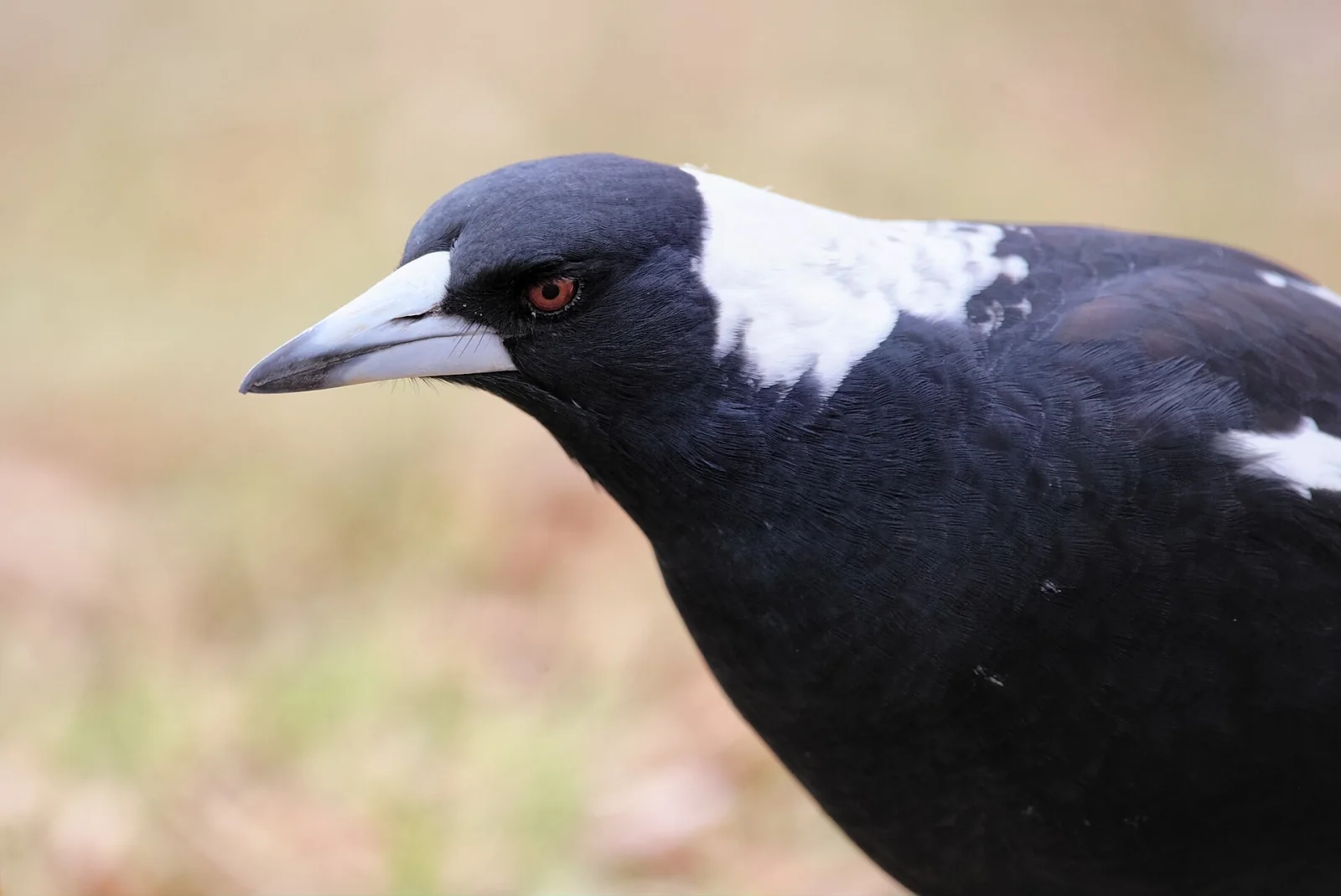
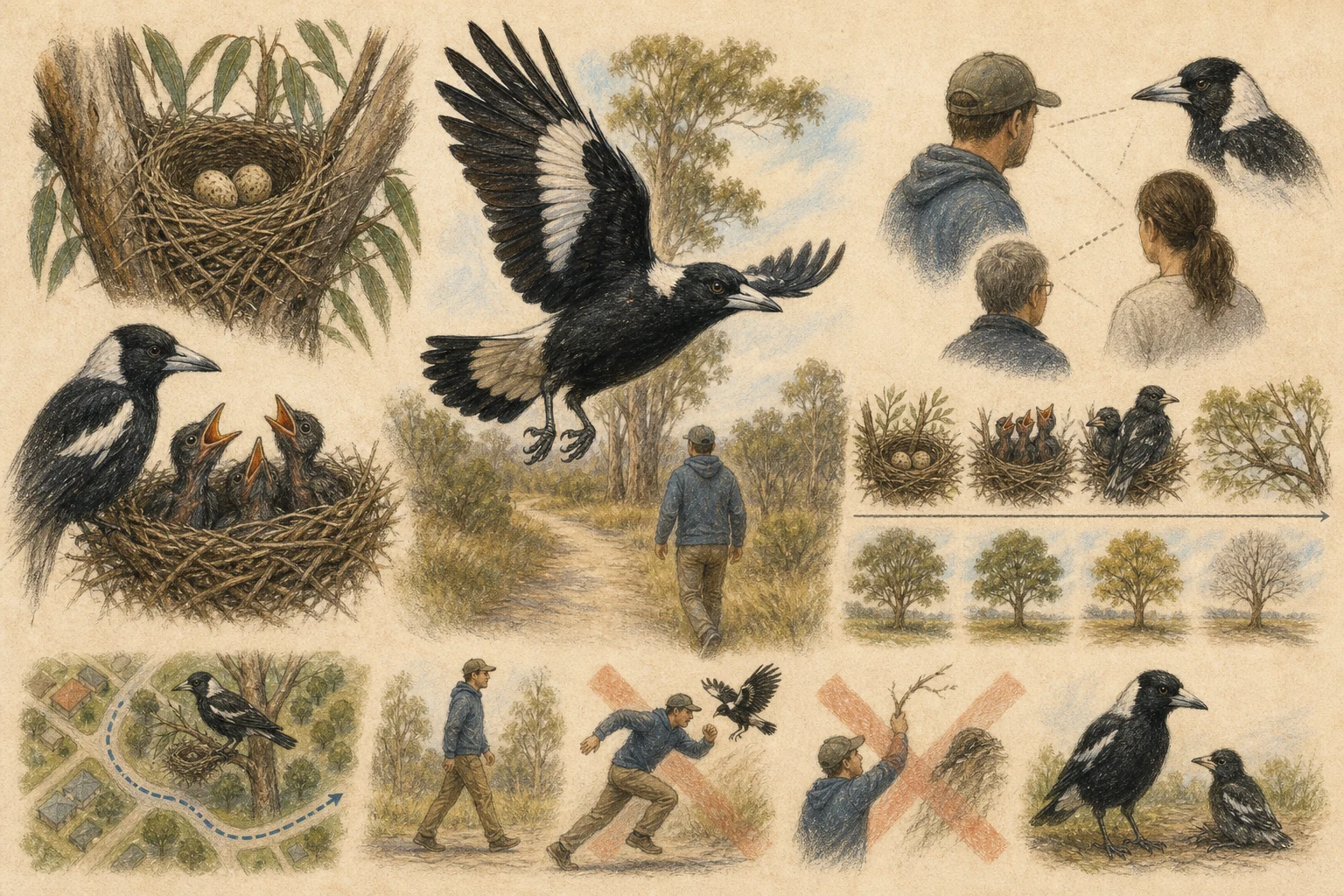
Australian magpies are long-lived, year-round territorial songbirds that nest high in eucalypts and park trees across suburbs and farmland. When eggs hatch in late winter and spring, parent birds face weeks in which helpless chicks cannot fly away from predators or perceived threats. Swooping—gliding silently from behind, clacking the bill, or whistling past a walker's or cyclist's head within a roughly 50- to 100-meter radius of the nest tree—is a graduated warning display meant to escort intruders out of that defensive circle. [1][2]
- Swooping is restricted to a defensive zone—typically 50 to 100 meters for walkers and slightly wider for cyclists—around an active nest tree
- Most flights begin as warning passes accompanied by loud bill clacking, wing whooshes, or alarm calls
- The behavior is parental nest defense during chick rearing, not unprovoked aggression across a whole suburb
Only some birds swoop, and they remember faces
Field studies across Australian cities show that fewer than one in ten breeding magpies ever swoop people, and the vast majority of those that do are breeding males guarding chicks. Magpies also possess sharp individual facial recognition: birds living in parks and streets learn to distinguish familiar, non-threatening neighbors from strangers or individuals who have previously waved sticks, thrown objects, or sped past the nest tree. Many swoopers specialize further, targeting only fast-moving cyclists, runners, or dogs while ignoring calm pedestrians. [2][3]
- Fewer than 10 percent of Australian magpies swoop humans, and almost all that do are breeding males
- Magpies recognize individual human faces over years and distinguish calm regulars from perceived threats
- Some individuals swoop only cyclists or runners whose speed and posture trigger a stronger defensive response
The season is short and self-limiting
Across most of Australia, magpie breeding peaks between August and October—running slightly earlier in northern states and extending into November in cooler southern areas—yet any single nest's swooping phase lasts only about four to six weeks. Intensity rises once eggs hatch, peaks just before the young are ready to leave the cup, and drops off abruptly once fledglings can fly up into the canopy. Recognizing that a defensive hotspot on a school path or bikeway has a built-in four-to-six-week expiration date helps communities manage it calmly. [1][4]
- At any individual nest tree, swooping typically lasts only four to six weeks between hatching and fledging
- Intensity peaks as growing chicks become more visible and vocal in the nest right before they fledge
- Once young magpies fly well enough to follow their parents into the canopy, nest-defense swooping stops
Pass a nest calmly
Wildlife agencies and BirdLife Australia recommend simple, non-confrontational adjustments during spring. If a known nest tree sits on your daily commute, detour a block around it for those few weeks; if you must pass underneath, walk briskly without running, wear a broad-brimmed hat or sunglasses, or hold an open umbrella or stick upright above your head, and dismount to walk your bicycle through the zone. Never shout, wave arms, or throw stones at a magpie—retaliation teaches the bird that humans are genuine enemies and intensifies future swooping. [2][4][5]
- Detour around signed nest zones for a few weeks, or dismount and walk your bike calmly past the tree
- Wear sunglasses and a broad hat or carry a raised umbrella; magpies rarely swoop when watched directly
- Never wave sticks, yell, or throw objects, which confirms to a face-remembering bird that people are a threat
Related guides
Get Fauna and identify it in the field.
Where this guide comes from
Source-checked editorial guide. Last updated . This guide teaches identification and field skills; it is not a substitute for expert verification when it matters.