Why hedgehogs are declining
Western European hedgehogs have declined sharply enough to be listed as Near Threatened on Europe's regional Red List. The causes are interlinked—habitat loss and fragmentation, road deaths, tidy pesticide-heavy gardens, and fewer of the invertebrates they eat—but many pull in the same direction, so joined-up, wildlife-friendly gardens can genuinely help.
Last updated
A measurable, widespread decline
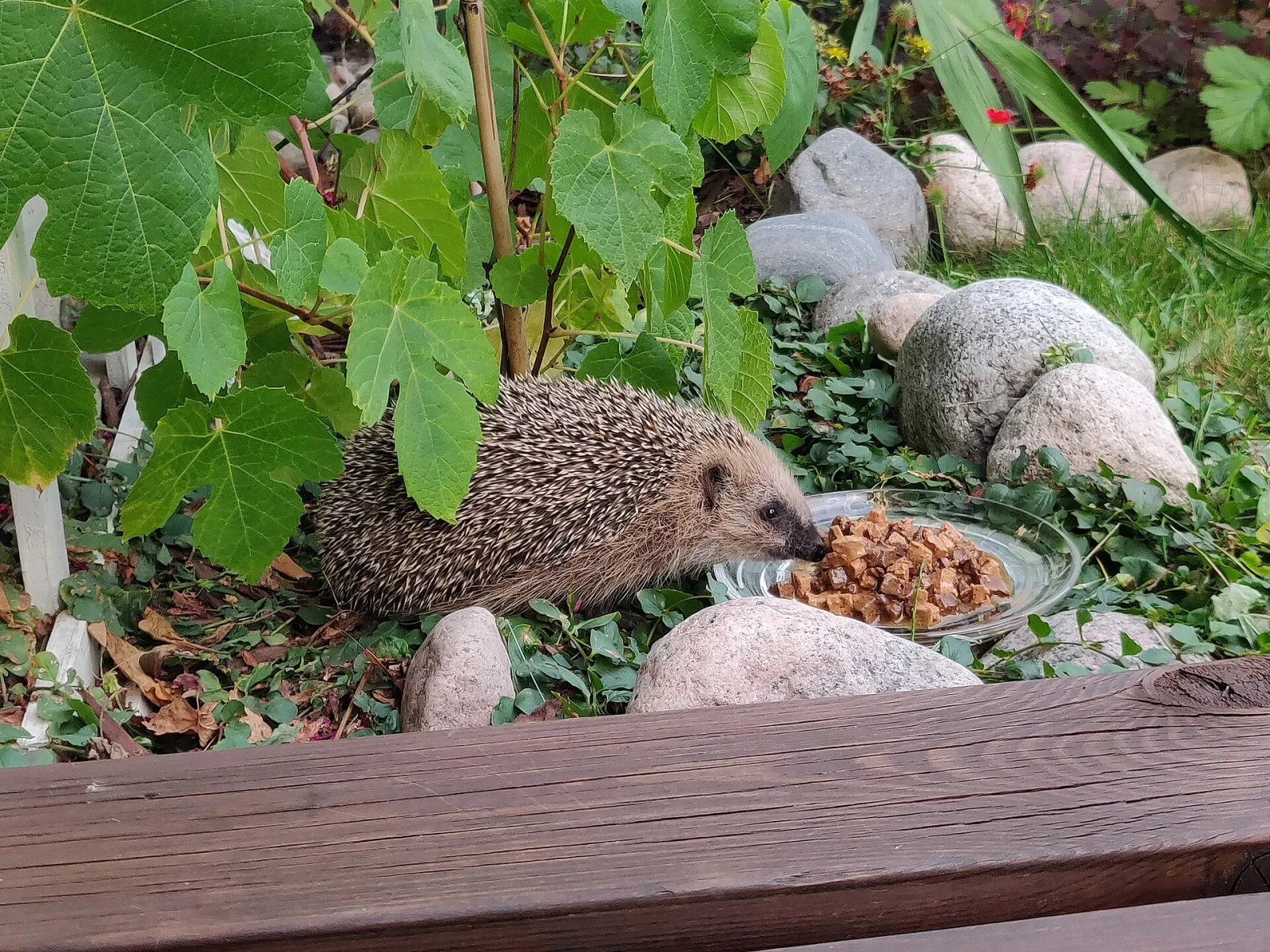
Once one of the most familiar mammals across European farmland and suburbs, the western European hedgehog (Erinaceus europaeus) has suffered steep population losses over recent decades and was uplisted to Near Threatened on the IUCN European Red List. In Britain, State of Britain's Hedgehogs assessments indicate that rural populations have fallen by between a third and three-quarters since 2000, particularly in arable eastern regions. Urban and suburban populations show signs of stabilizing where connected gardens remain, making towns an increasingly critical refuge. [1][2]
- The western European hedgehog is now classified as Near Threatened across its European range
- Rural populations in intensively farmed landscapes have experienced the steepest recent declines
- Suburban and urban gardens can support resilient local populations when connected by safe travel gaps
Food and habitat are shrinking
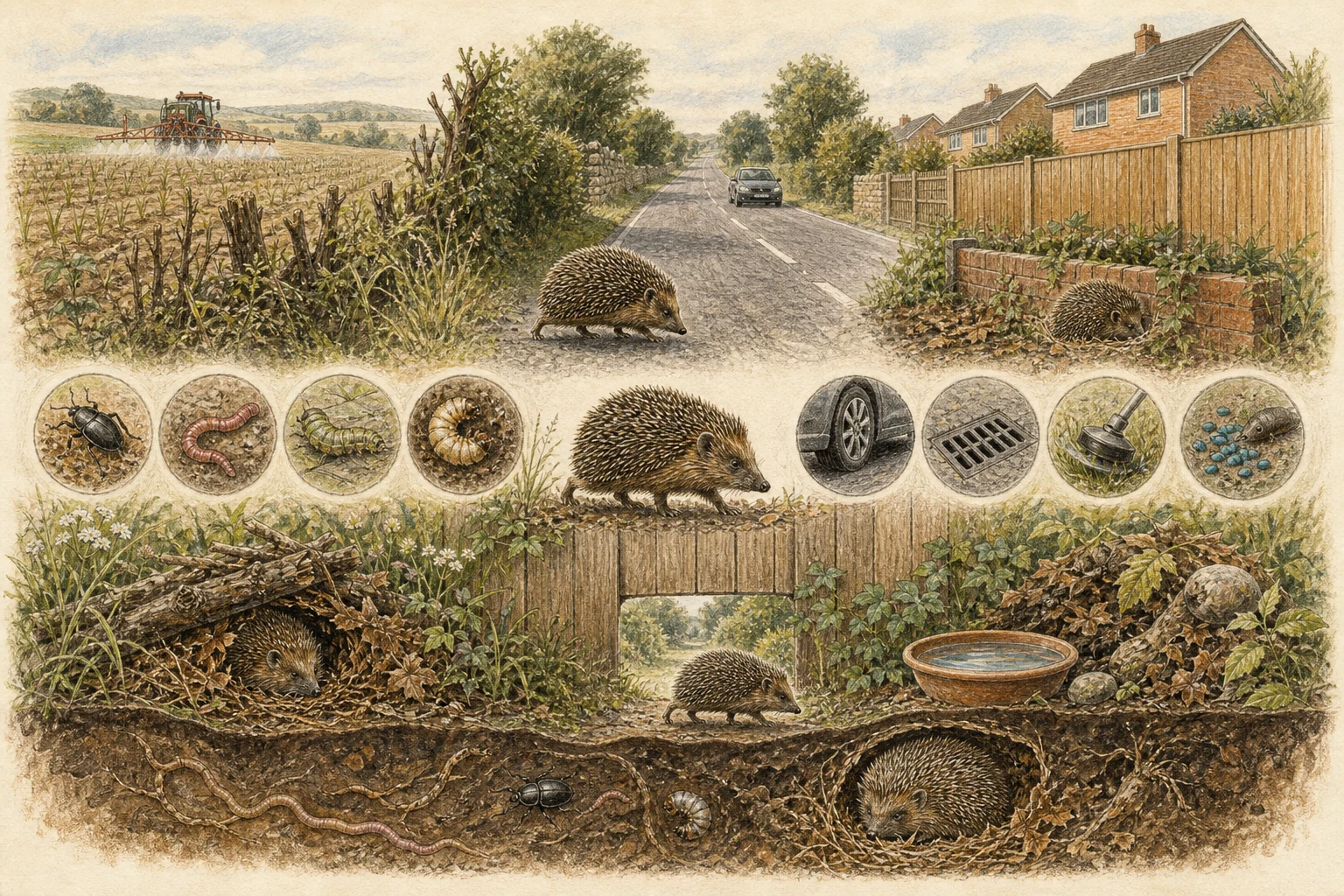
Hedgehogs are nocturnal insectivores that forage through damp grass and leaf litter for ground beetles, caterpillars, earwigs, earthworms, and millipedes, and they need dense bramble, hedgerow bases, or leaf piles for daytime nests and winter hibernacula. In the countryside, the removal of hedgerows, loss of rough field margins, larger monoculture fields, and widespread insecticide and molluscicide applications reduce both shelter and invertebrate biomass. In residential areas, paving front gardens for parking, installing artificial turf, and clearing every fallen leaf strip away foraging and nesting cover. [2][3]
- Carabid beetles, caterpillars, earthworms, and earwigs form the bulk of a wild hedgehog's natural diet
- Loss of hedgerows, rough field margins, and damp leaf litter removes both winter hibernacula and insect prey
- Artificial turf, paved driveways, and chemical slug pellets turn gardens into food deserts for insectivores
Fragmentation and roads add up
Radio-tracking shows that a single hedgehog routinely walks one to two kilometers each night—and males cover even greater distances during the spring and summer rut—to find sufficient invertebrates and mates. Modern impermeable fencing with concrete gravel boards, brick garden walls, and dense road networks slice suburban blocks and farmland into isolated pockets. When hedgehogs are forced onto roads or cut off from neighboring gardens, vehicle collisions surge while small isolated subpopulations become vulnerable to local extinction. [3][4]
- A foraging hedgehog regularly travels 1 to 2 kilometers a night across multiple gardens and green spaces
- Solid fence bases and brick walls block nightly foraging circuits and isolate small local populations
- Busy roads act as both physical barriers to dispersal and a leading source of direct adult mortality
Joined-up gardens help
Because a single garden is too small to support a hedgehog population alone, conservation groups such as Hedgehog Street and the People's Trust for Endangered Species focus on neighborhood-scale connectivity. Cutting a 13-by-13-centimeter (5-by-5-inch) hole at the base of wooden or concrete garden fences links backyards into continuous hedgehog highways. Pairing those gaps with a log pile, undisturbed leaf litter for winter hibernation, a shallow water dish, a sloping exit ramp in any garden pond, and careful checks of long grass before strimming or mowing makes every linked yard safer. [4][5]
- Cut a 13 × 13 cm gap at the bottom of garden fences so hedgehogs can move freely between neighboring yards
- Leave a quiet corner of stacked logs and dead leaves undisturbed for daytime resting and winter hibernation
- Check long grass by hand before using a strimmer or mower, and place a textured ramp in steep-sided ponds
Related guides
Get Fauna and identify it in the field.
Where this guide comes from
Source-checked editorial guide. Last updated . This guide teaches identification and field skills; it is not a substitute for expert verification when it matters.
- People's Trust for Endangered Species — State of Britain's Hedgehogs 2022 ↗
- University of Oxford — European hedgehog reassessed as Near Threatened ↗
- Hedgehog Street — Why are hedgehogs declining? ↗
- Hedgehog Street (PTES and BHPS) — State of Britain's Hedgehogs ↗
- University of Oxford — Humans a key factor in hedgehog decline ↗