Why bears wander into towns
A bear in a town is usually following its stomach, not hunting people. When wild foods such as acorns or berries fail, and when rubbish, fruit, pet food, or feeders are reachable, bears learn that settlements are worth the risk—so most conflict traces back to food that people can secure.
Last updated
Hunger sets the stage
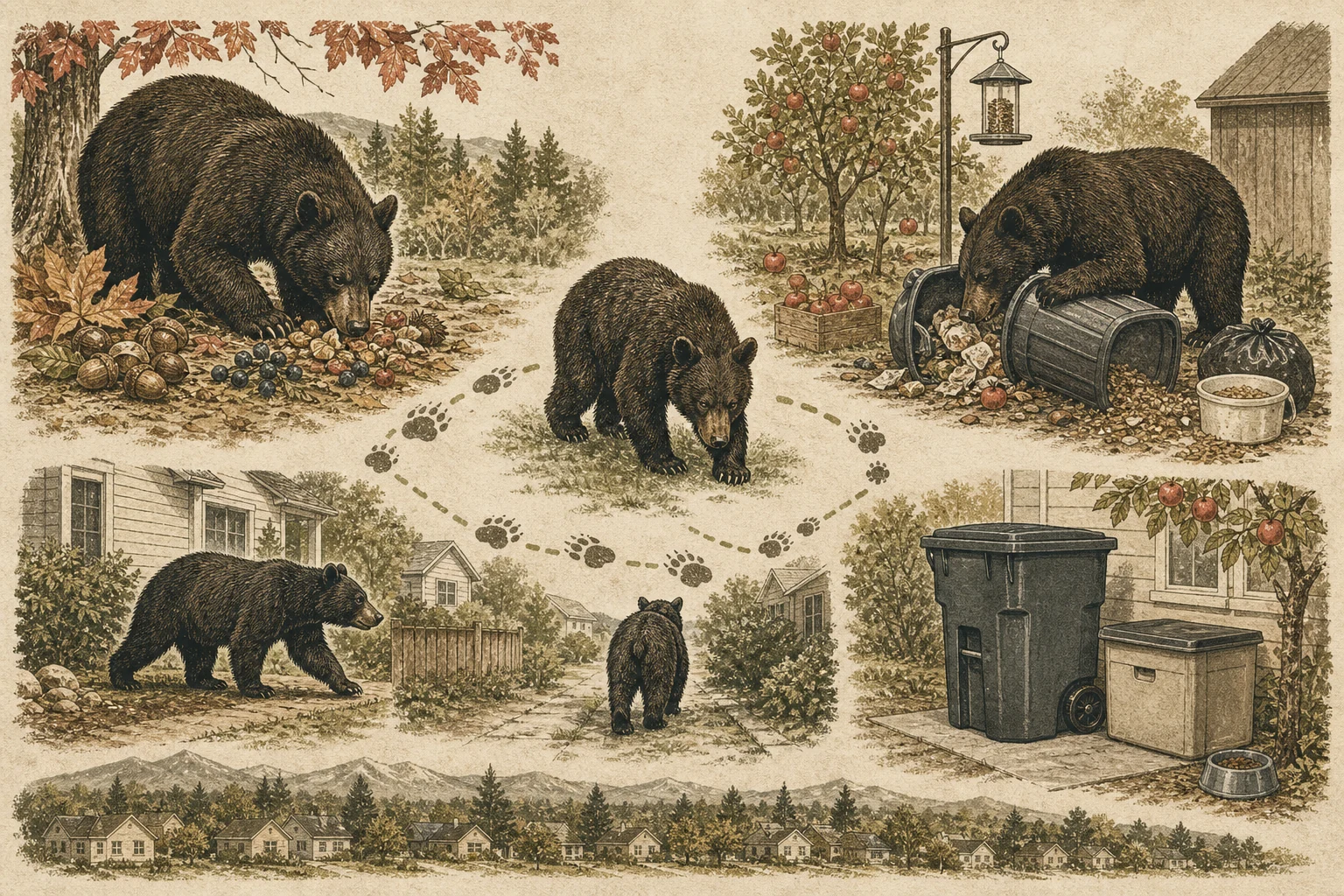
Black, brown, and Asian black bears are opportunistic omnivores whose annual cycle revolves around hyperphagia—a late-summer and autumn feeding drive in which an adult may need 20,000 calories a day to build fat reserves before winter denning. When late spring frosts, summer droughts, or natural masting cycles cause wild staples such as acorns, beechnuts, huckleberries, or pine seeds to fail, bears expand their home ranges and search lower valleys. Multi-decade records from North America and Japan link regional spikes in town sightings directly to years when forest mast crops collapse. [1][2]
- During autumn hyperphagia, bears must consume tens of thousands of calories daily to prepare for winter dormancy
- Failures of wild acorns, beechnuts, or berries push bears to travel farther and explore valley settlements
- Regional surges in town sightings usually track poor wild-food years rather than sudden population explosions
Human food is a powerful reward
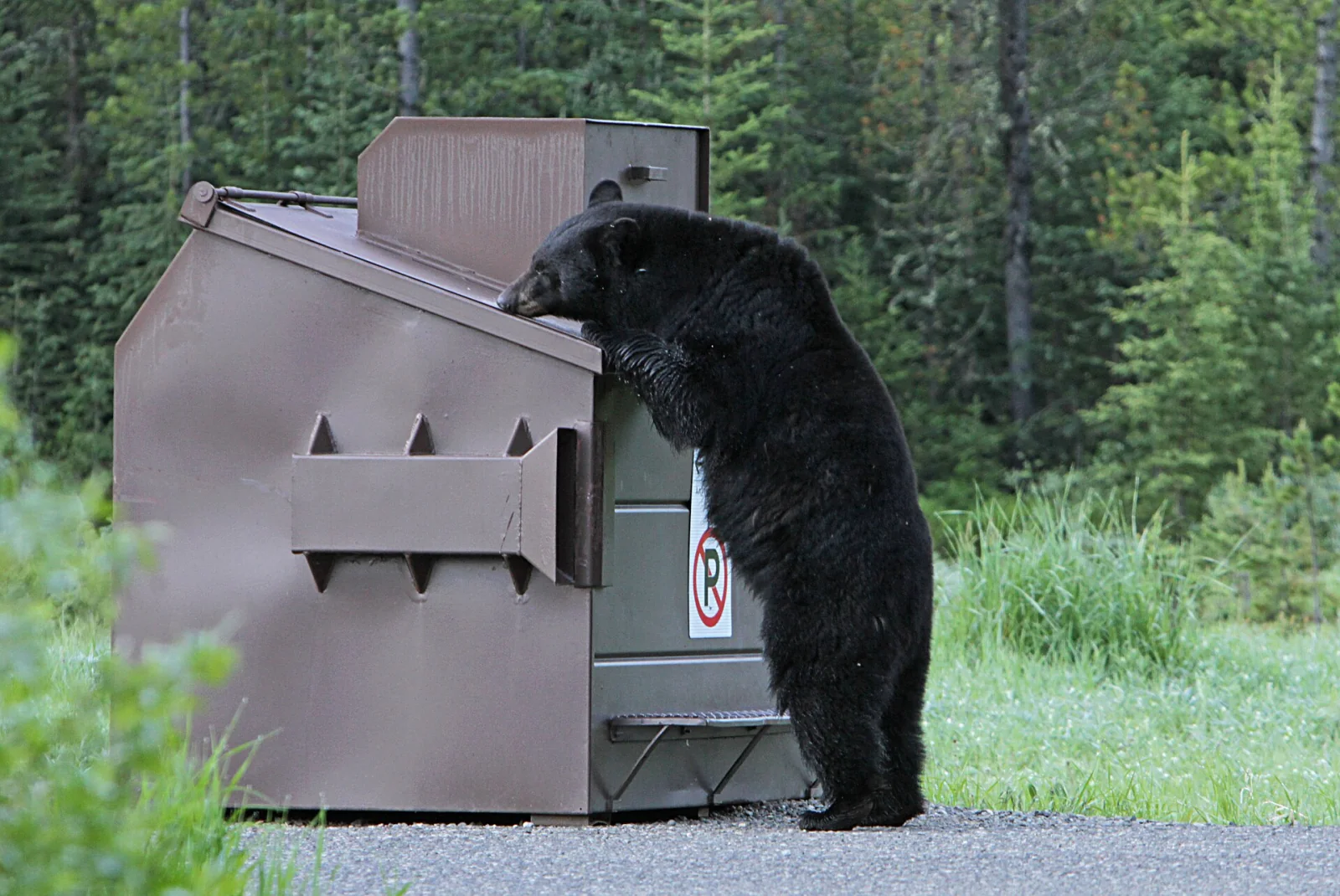
Residential neighborhoods pack extraordinary caloric density into small containers: a single unsecured trash bin, grease trap, bird feeder filled with black-oil sunflower seed, or backyard chicken coop can equal days of foraging in a berry patch. With an acute sense of smell and strong spatial memory, a bear that scores one easy meal quickly learns to check neighboring yards, porches, and parked cars. Wildlife biologists distinguish simple habituation—tolerating nearby people without fleeing—from food conditioning, in which an animal actively links human structures and scents with high-calorie rewards. [2][3][4]
- Bird seed, household garbage, pet kibble, barbecue grease, and fallen orchard fruit pack high calories into one spot
- Bears combine keen olfaction with long-term spatial memory, returning to exact yards where food was available
- Even a single unlatched bin or low feeder can initiate food conditioning across an entire street
A fed bear is a predictable bear
Once food conditioning takes hold, a bear's foraging schedule and risk tolerance shift noticeably. Animals that initially slipped into town after midnight begin arriving at dusk or in broad daylight, ignoring shouting or clapped hands, and testing screen doors, garages, or dumpsters along a regular circuit. Although this behavior is driven by learned foraging efficiency rather than malice toward people, close quarters around porches and driveways sharply increase the risk of defensive encounters—and food-conditioned bears that enter structures are rarely candidates for successful relocation. [3][4][5]
- Food-conditioned bears often shift from secretive nocturnal visits to bold daylight foraging along learned routes
- Relocating a food-conditioned bear rarely solves conflict because the animal often returns or seeks out another town
- Protecting bears in the wild depends on preventing the first food reward that erodes their natural wariness
Securing attractants is the fix
Because calorie rewards drive urban bear visits, lasting coexistence depends on neighborhood-wide attractant management rather than chasing individual animals away. Store household trash inside a closed garage or certified bear-resistant container until collection morning, take seed and hummingbird feeders down from spring through late autumn, harvest ripe tree fruit daily, feed pets indoors, and protect compost piles or beehives with properly grounded electric fencing. Studies in park valleys and mountain towns show that when an entire community locks down calories together, bears pass through peripheral corridors without lingering. [2][4][5]
- Keep garbage inside a locked shed or certified bear-resistant bin until the morning of collection, not the night before
- Remove bird feeders during active bear months and pick ripe orchard fruit before it ferments on the ground
- Use properly installed electric fencing to secure backyard poultry, beehives, and outdoor compost bins
Related guides
Get Fauna and identify it in the field.
Where this guide comes from
Source-checked editorial guide. Last updated . This guide teaches identification and field skills; it is not a substitute for expert verification when it matters.
- National Park Service — Staying Safe Around Bears ↗
- International Association for Bear Research and Management — Human food and black-bear conflict in Yosemite ↗
- BearWise — Community resources for reducing bear attractants ↗
- Get Bear Smart Society — Managing bear attractants ↗
- Colorado Parks and Wildlife — Living with bears ↗