Watching fireflies responsibly
Fireflies flash to find mates, which means the very lights and crowds that visitors bring can drown out their signals. Watching responsibly—shielding light, treading carefully, and keeping habitats dark—lets you enjoy one of nature's great summer displays without harming the beetles whose numbers are already under pressure.
Last updated
The flashes are a conversation
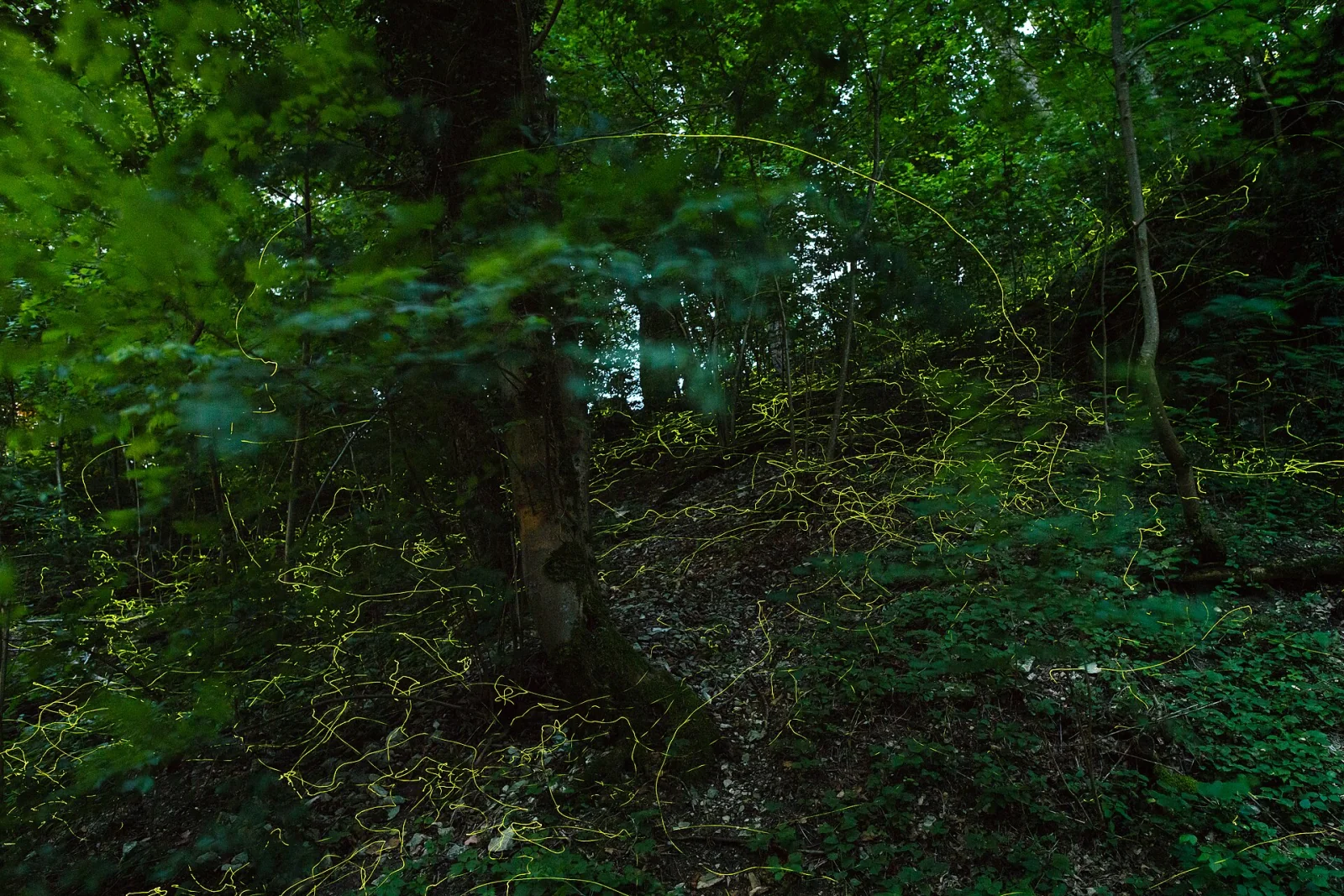
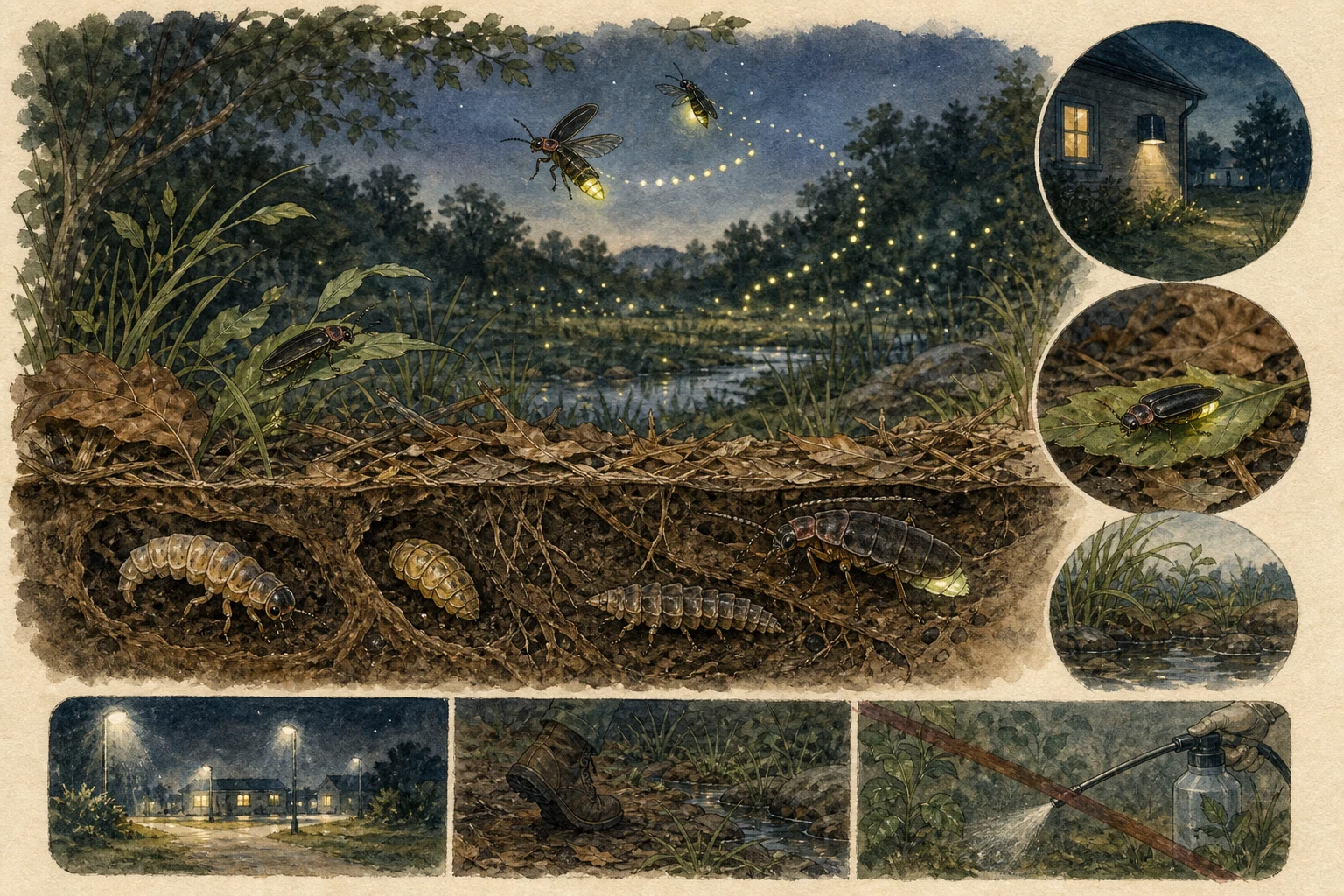
Fireflies and glow-worms are soft-bodied beetles in the family Lampyridae that generate cold light inside specialized abdominal lanterns through a chemical reaction of luciferin, luciferase, oxygen, and ATP. In flashing species, patrolling males emit a species-specific code—varying in flash number, duration, interval, color, and flight shape—while perched females answer after a precise time delay. In a few renowned species, such as Photinus carolinus in the Southern Appalachians or Southeast Asian mangrove fireflies, thousands of males synchronize their flashes into rhythmic waves across the dark. [1][2]
- Fireflies are nocturnal beetles whose abdominal lanterns produce heatless bioluminescent light
- Each flashing species uses a distinct rhythm, flash length, flight trajectory, and female response delay
- Synchronous species align their flash intervals across hundreds of neighbors during brief seasonal peaks
Your light is the main disturbance
Because firefly courtship is a visual dialogue tuned to twilight and starlight, artificial illumination directly blinds or masks the signals partners rely on. Controlled field experiments show that white flashlights, car headlights, unshielded porch lamps, and glowing phone screens sharply reduce male flashing rates and prevent females from answering. Arrive at your viewing spot before dusk so you can find stable seating in natural light, switch phone screens completely off, and carry a dim red-filtered flashlight pointed solely at your shoes when leaving the trail. [2][3]
- White flashlights, camera flashes, and bright phone screens suppress female response flashes and disrupt synchrony
- Arrive before twilight fades so you can settle into position without needing a beam to find the path
- Cover any essential safety flashlight with red filter tape and aim it strictly at the ground when walking out
Tread lightly on the habitat
The flying adults flashing above a meadow or forest stream represent only the final few weeks of a one- to two-year life cycle. Firefly eggs, predatory larvae that hunt snails and earthworms, and pupae spend months hidden in damp soil, rotting logs, and leaf litter, and in glow-worm and several firefly lineages the adult females are completely wingless and signal from low grass stems. Stepping off established trails crushes larvae and flightless females underfoot, while catching flashing beetles in jars interrupts reproduction during their brief adult window. [3][4]
- Fireflies spend most of their one- to two-year life cycle as predatory larvae in damp soil and leaf litter
- Females of glow-worms and several firefly species are wingless and signal from low herbs right beside paths
- Stay strictly on compacted trails, skip DEET repellent handling, and observe flashing adults without jarring them
Protect the darkness that remains
Assessments by the IUCN Firefly Specialist Group and the Xerces Society identify habitat loss, artificial light at night, and broad-spectrum pesticide use as the three primary drivers of firefly declines. At home or in community parks, you can support local populations by leaving unmown, unmulched corners with fallen leaves and rotting wood, eliminating lawn insecticides that kill soil-dwelling larvae and their snail or earthworm prey, and replacing dusk-to-dawn yard lights with shielded, motion-activated amber fixtures. Logging ten-minute counts for projects like Firefly Watch also builds long-term trend data. [4][5]
- Retain damp leaf litter, rotting logs, and unmown water margins where firefly larvae hunt snails and worms
- Avoid lawn insecticides and slug baits that poison subterranean firefly larvae and their soft-bodied prey
- Switch outdoor lamps off during early summer peak flight weeks or use shielded motion sensors
Related guides
Get Fauna and identify it in the field.
Where this guide comes from
Source-checked editorial guide. Last updated . This guide teaches identification and field skills; it is not a substitute for expert verification when it matters.