Plants that burn, sting, or blister
Some plants don't need to be eaten to hurt you. A few of them need only sap and sunshine, and the burn arrives hours after you have forgotten you touched anything.
Scope: UK, Canada, and Australia examples; species and first aid vary regionally · Last updated
Sap plus sunlight
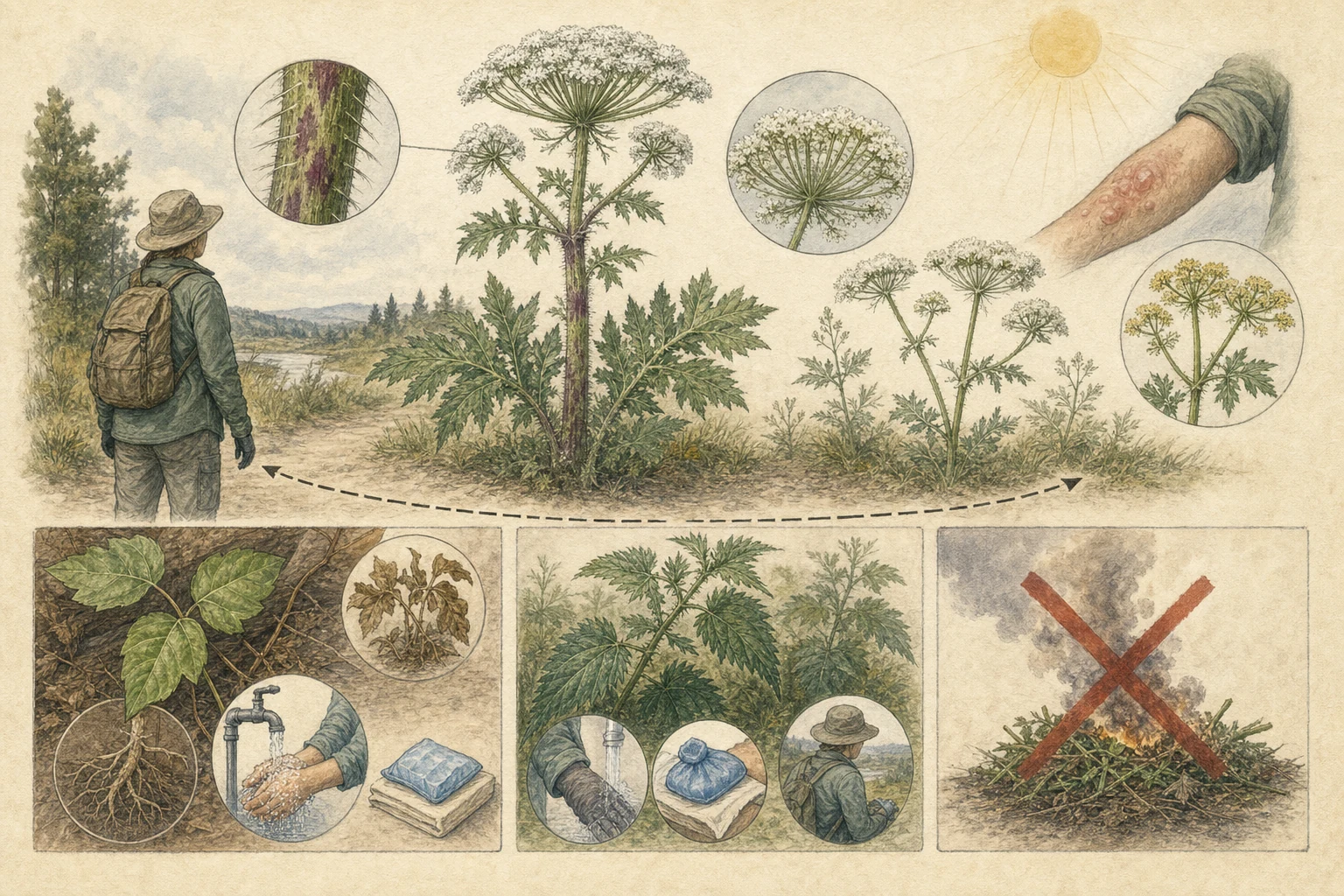
Giant hogweed and wild parsnip contain phototoxic sap. When sap-contaminated skin is exposed to ultraviolet light, it can develop painful redness, burns, and blisters — often 24 to 48 hours later. Wash promptly with soap and cold water, cover the area, and keep it out of sunlight. Severity varies with the exposure, UV dose, and the person; this is a phototoxic reaction, not the same process as poison-ivy allergic dermatitis. [1][2]
- Wash the sap off immediately, and keep that skin covered and out of the sun
- Sap in the eyes: flush with water immediately and get medical help
- Severity varies; obtain medical advice for significant exposure or blistering
Knowing what you are looking at
Use scale, stem, leaf, and flower characters together and do not touch an unknown umbel to inspect it. Mature giant hogweed can reach about 5 meters, with coarse hairs and purple blotches on thick stems and very large white umbels. Wild parsnip is smaller, with yellow-green umbels and sharply toothed leaflets. Several related plants look similar; Queen Anne's lace is smaller, but it is not an edible all-clear and has dangerous lookalikes of its own. [1][2]
- Giant hogweed: very tall, purple-blotched bristly stem, white umbels
- Wild parsnip: yellow-green umbels, toothed mitten-shaped leaflets
- Cut plant material, contaminated clothing, and tools can still transfer sap
Poison ivy: it's the oil, and it's on everything
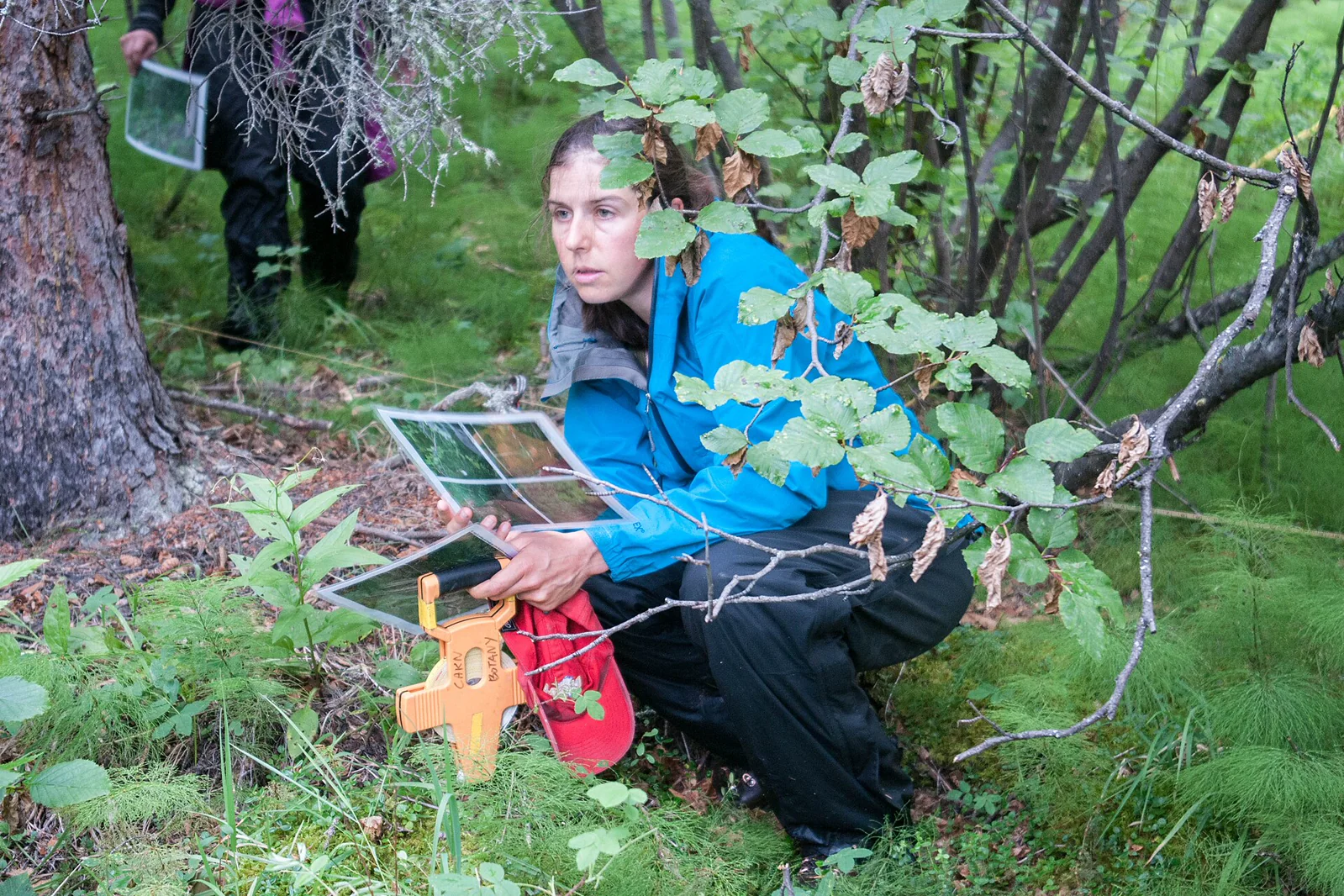
Urushiol is present throughout poison ivy, including roots and dead material. Wash suspected contact promptly with soap and cold water. The oil can transfer from clothing, tools, and pet fur, so clean anything that touched the plant while wearing protection. The rash comes from urushiol exposure, not from blister fluid. [3][4]
- Leaflets three — and the oil is in the roots and the bare winter stems too
- Soap and cold water, as soon as you can
- Wash whatever touched it as well: clothes, laces, gloves, tools, the dog
Do not burn or improvise disposal
Do not burn poison ivy: inhaled urushiol-containing smoke can cause severe respiratory injury, and Health Canada warns that breathing problems may be fatal. Ontario also says not to burn cut giant hogweed or wild parsnip. That is a disposal rule; do not assume all three have the same smoke hazard. Bag or dispose of plant material exactly as the local authority directs. [1][2][3][4]
Stinging plants
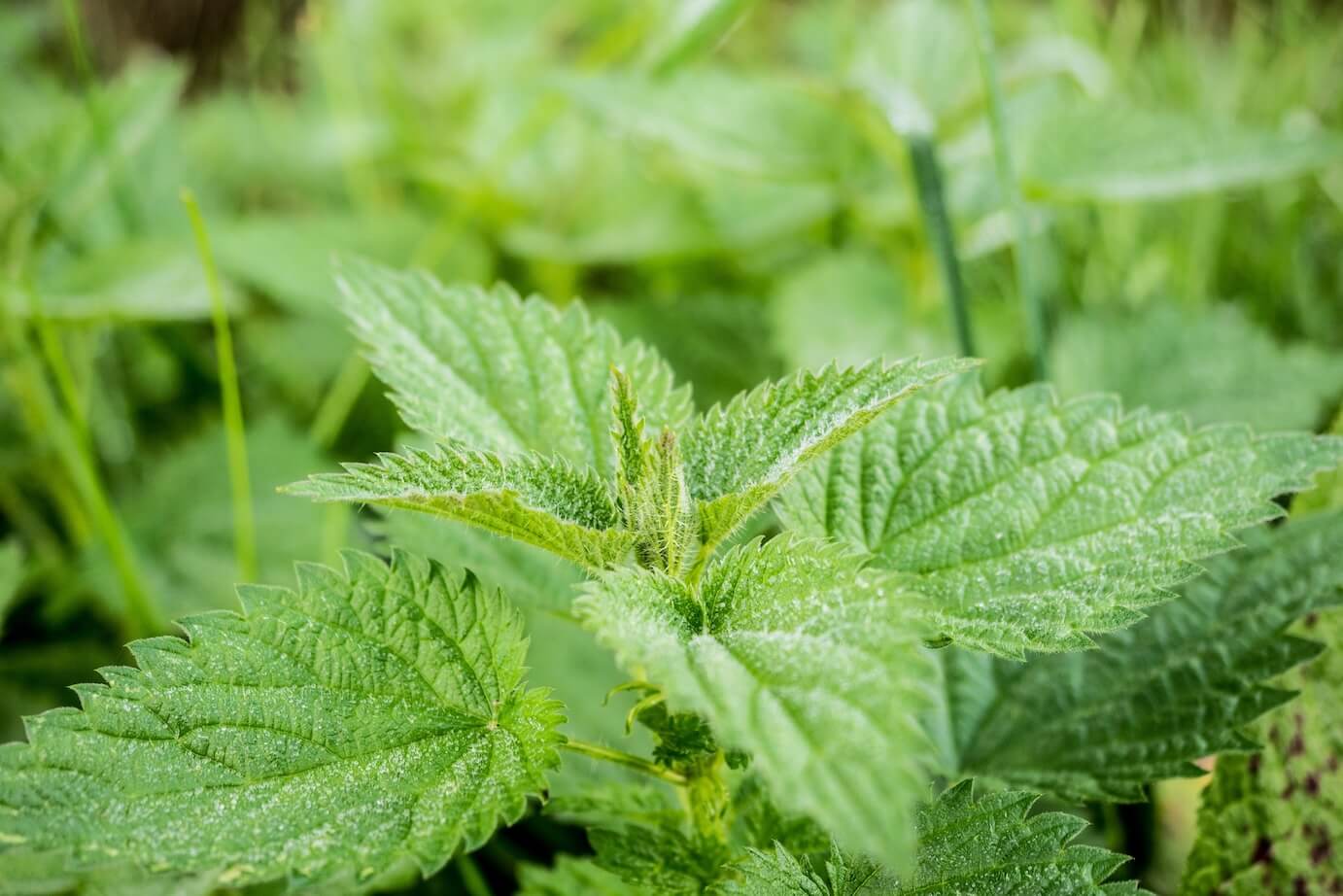
Most nettle stings settle with simple care: wash the area, use a cold compress, and avoid scratching; seek medical advice if pain has not improved after about two hours. Australian stinging trees are different. Healthdirect says there is no agreed first-aid treatment; do not rub, and use a pre-made hair-removal wax strip to lift hairs if available — never pour liquid wax onto the skin. See a doctor after a stinging-tree exposure. [5]
- Nettles: wash, cool it, don't scratch; get seen if pain persists beyond about two hours
- Stinging-tree first aid is specific to Australasia — it makes no sense applied to a British nettle sting
Related guides
Get Fauna and identify it in the field.
Where this guide comes from
Source-checked editorial guide. Last updated . This guide teaches identification and field skills; it is not a substitute for expert verification when it matters.