Coast, tide, and cold water
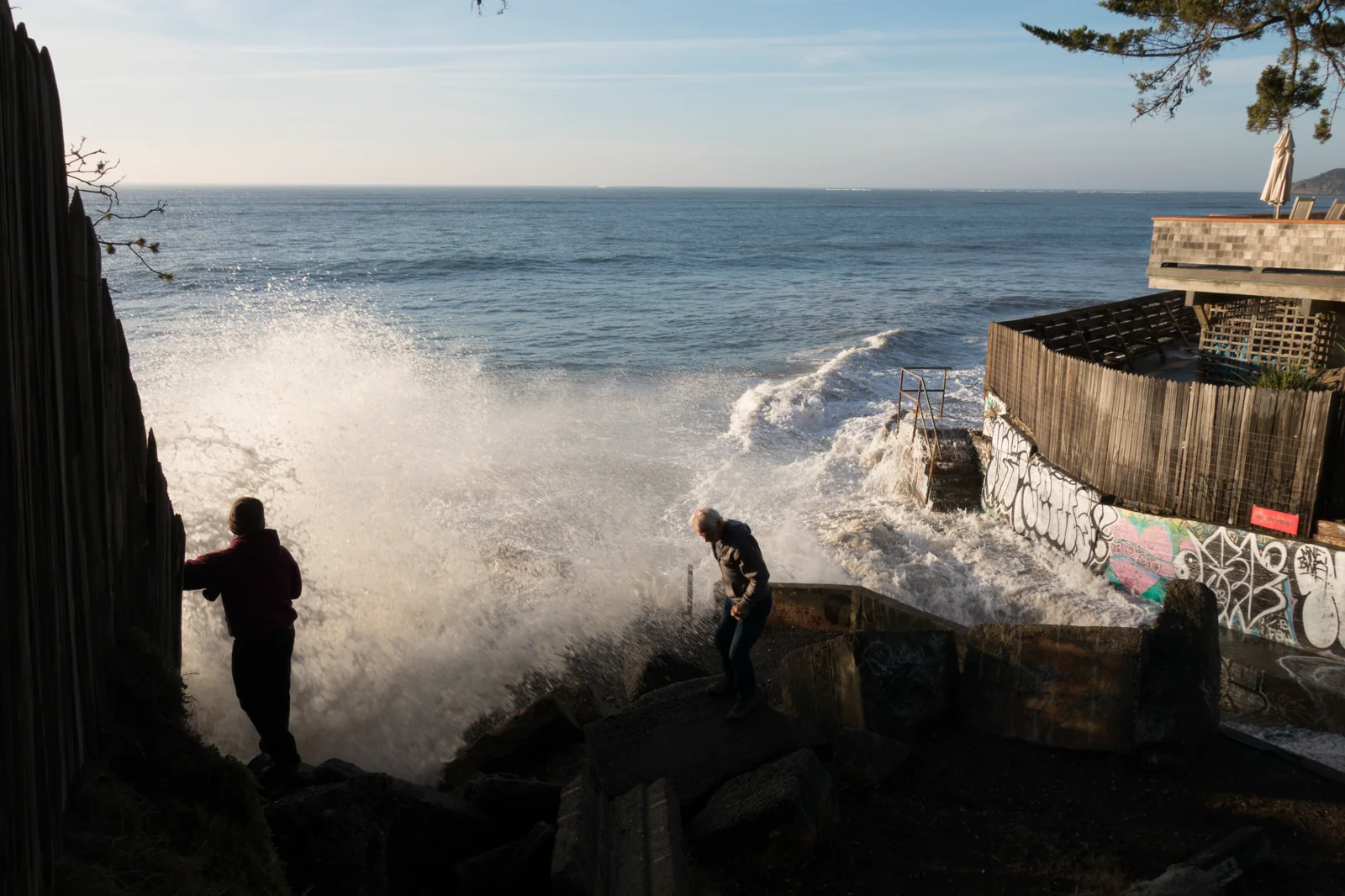
Tide, surf, and water temperature can change a safe-looking wildlife stop into an emergency. Check current local conditions before leaving, keep an exit route, and know how to float and call for help.
Scope: UK, Ireland, Australia, New Zealand, Canada, and US examples · Last updated
Tidal cut-off
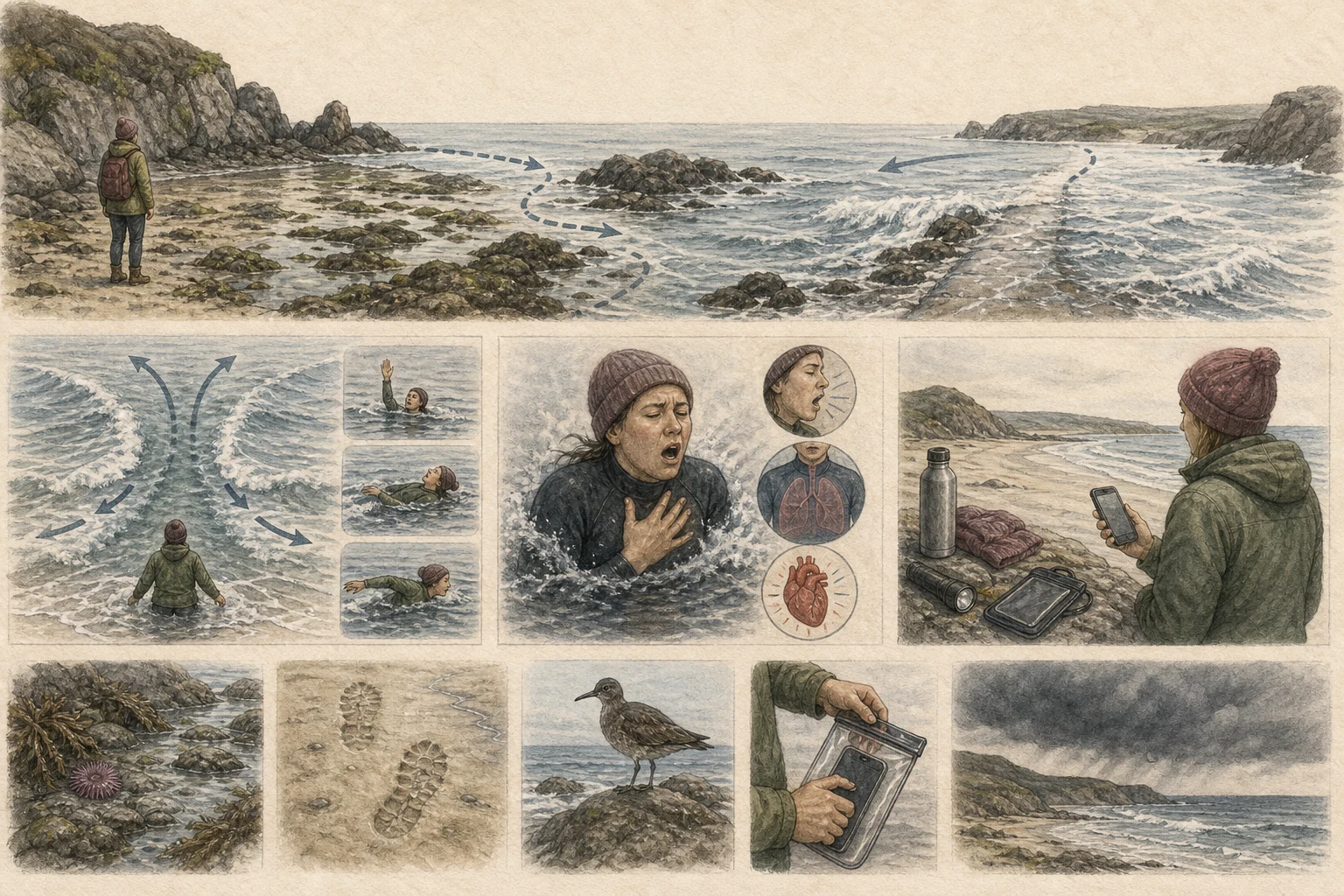
Low water exposes rockpools and flats, but the returning tide can cover a cove, causeway, or route around an outcrop. The RNLI says tidal cut-off contributes to a significant number of rescues each year. Tide times and heights change daily. Spring tides have a greater range than neap tides, so high water can reach farther up the shore. Check an official table and local advice, know whether the tide is rising, set a conservative turnaround time, and keep watching the way back. [1]
- Check the time and height of high and low water for the exact location
- Ask for local advice if you cannot interpret the table
- Choose a turnaround time before walking onto intertidal ground
- Keep the exit in sight; never assume yesterday's route is safe today
Rip currents: the core advice is consistent
National lifesaving services phrase the escape options differently, but the core is consistent: stay calm, do not swim directly against the current, conserve energy, and signal or call for help. The RNLI says to wade if you can stand and, if able, swim parallel to shore; Surf Life Saving New Zealand teaches Relax, Raise, Ride until the current weakens; Surf Life Saving Australia says to raise an arm, float with the current, or swim parallel to the beach or toward breaking waves. Follow lifeguards, flags, and the local service. [2][4][5][6]
- Float or hold a board; do not exhaust yourself fighting the current
- Signal and shout or yell for help
- Escape only if able, using the local service's direction
- A calm or darker gap between breaking waves can be a rip; if unsure, stay out
Cold-water shock
Cold-water shock is the immediate danger after sudden immersion; it does not make later cold exposure irrelevant. In water at 15°C or below, an involuntary gasp, uncontrolled rapid breathing, and a sharp rise in heart rate and blood pressure can occur within seconds. The RNLI advice is to take a minute, lean back and float, and let the initial effects pass before trying to swim. Once breathing is controlled, call for help or swim to safety only if able. [3]
Before you leave
Check the tide, weather, local warnings, and access before leaving. Choose a lifeguarded beach where available, tell someone your route and return time, and carry a charged, protected means of calling for help. For a coastal emergency: UK, call 999 or 112 and ask for the Coastguard; Ireland, call 112 or 999 and ask for the Coast Guard; Australia, call 000; New Zealand, call 111; US, call 911; Canada, call 911 where service is available or use the local emergency number. If using a marine radio, follow the local distress procedure. [1][7][8][9][10][11][12][13]
Get Fauna and identify it in the field.
Where this guide comes from
Source-checked editorial guide. Last updated . This guide teaches identification and field skills; it is not a substitute for expert verification when it matters.
- RNLI — Tides can be dangerous: know the risks ↗
- RNLI — Rip currents ↗
- RNLI — The dangers of cold water shock ↗
- Surf Life Saving Australia (Beachsafe) — Rip currents ↗
- Surf Life Saving New Zealand — Rips ↗
- US National Weather Service — Rip-current safety ↗
- Irish Coast Guard — Contact information ↗
- New Zealand Police — Call 111 ↗
- UK Maritime and Coastguard Agency — Call 999 and ask for the Coastguard ↗
- GOV.UK — 999 and 112 national emergency numbers ↗
- Australian Government Triple Zero — How to call 000 ↗
- US National 911 Program — Calling 911 ↗
- Public Safety Canada — Make an emergency plan ↗