Also known as Deadly Skullcap, Autumn Skullcap, Deadly Galerina
Funeral bells play an essential ecological role as decomposers, recycling lignin and cellulose back into woodland soils by colonizing well-rotted logs. Their tawny-brown caps exhibit strong hygrophany, fading to pale ochre as moisture evaporates from their smooth surfaces. Fruiting bodies typically emerge in small clusters from late summer into frost, often camouflaged amid mosses and leaf litter on decaying coniferous wood.
Not EvaluatedConservation statusIUCN Red List categoriesLCNTVUENCREWEXNot Evaluated — not placed on the risk ladderRed List categories, explained →
Key facts
Diet & preySaprotrophic (wood-decay decomposer)
Predators
Fungus Gnat Larvae
Terrestrial Slugs
Springtails
ThreatsIntensive forestry and total clearing of coarse woody debris
HabitatsBoreal and temperate forests, decaying logs, woody mulch
Life spanMycelium persists for years; fruiting caps last 1–2 weeks
Classification
OrderAgaricales
FamilyHymenogastraceae
GenusGalerina
SpeciesGalerina marginata
Range & activity
Range data is not available yet.
Safe observation
Interaction riskHigh
Low
Moderate
High
Very high
Why interaction risk is high
Contains deadly amatoxins; many edible mushrooms have toxic look-alikes, so never eat wild fungi based on app identification.
Why it is dangerous
Contains deadly alpha- and beta-amatoxins that inhibit RNA polymerase II, leading to delayed gastrointestinal agony, irreversible hepatic necrosis, and kidney failure.
How to recognize a risky encounter
Look for small brownish hygrophanous caps, rusty-brown spores, and a fragile, fibrous ring zone on the fibrous stem.
What to do
Never consume any wild brown mushroom growing on wood, and wash skin thoroughly if caps are handled directly.
Responsible observation
Visual Inspection: Check the stem under a hand lens for a delicate membranous ring and faint white fibrillose striations.
Spore Print: Collect a cap on white paper to observe the rusty-brown spore drop without consuming or tasting any portion.
Safety Protocol: Wash hands thoroughly after any incidental contact and keep curious pets away from rotting wood clusters.

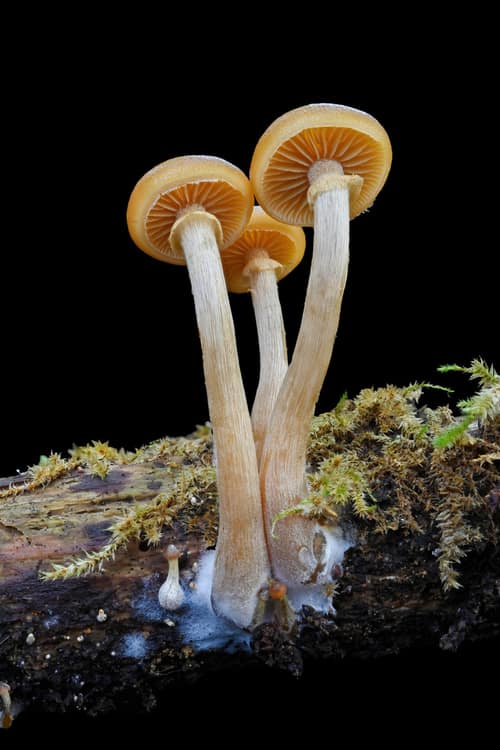
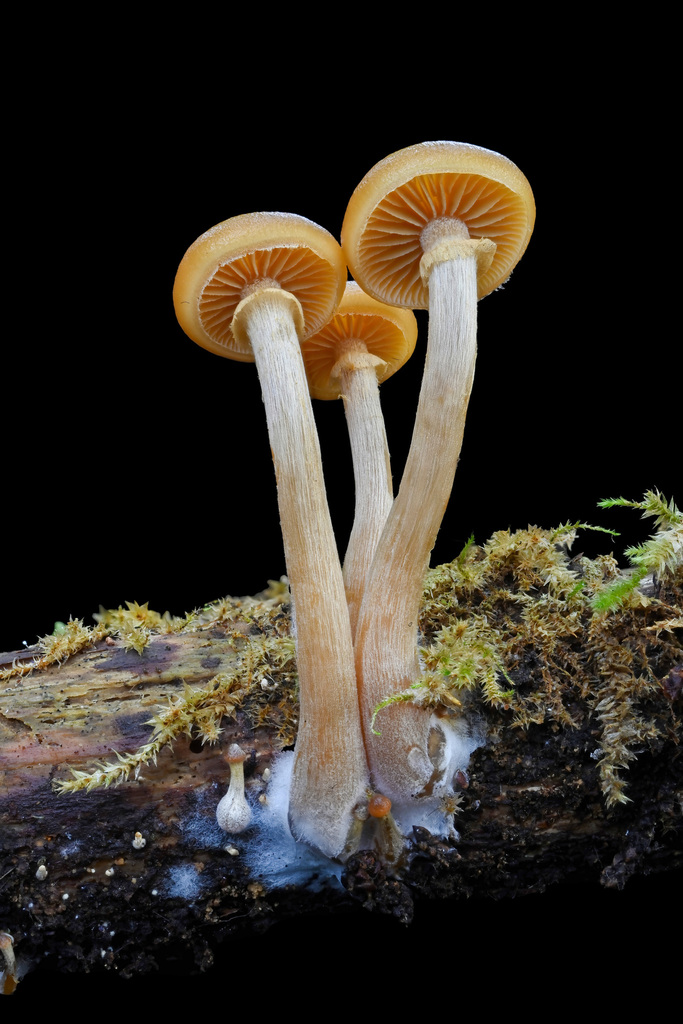
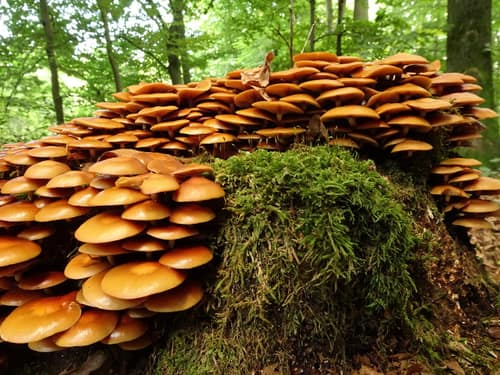
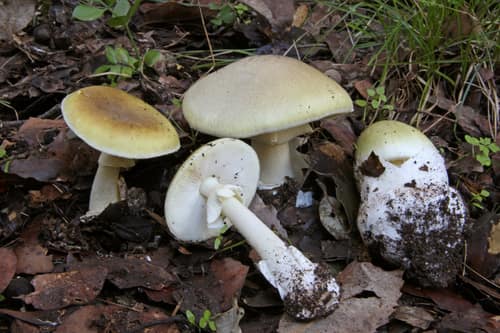
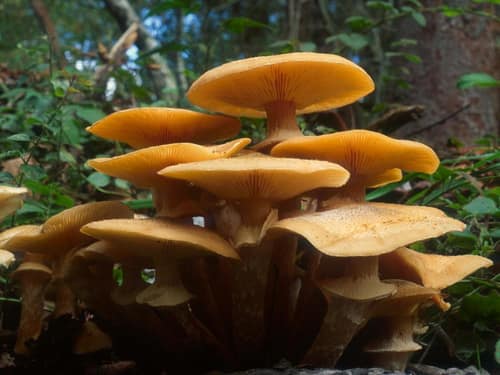
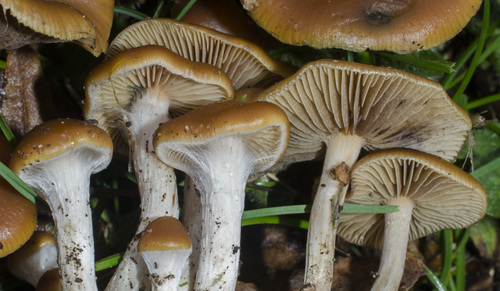
 Image unavailable