
Fungus · GBIF taxon 2533962
Sheathed Woodtuft
Kuehneromyces mutabilisAlso known as Changeable Pholiota, Two-toned Pholiota, Two-toned Woodtuft
Sheathed woodtufts are highly gregarious wood-decaying fungi that sprout in dense, overlapping clusters on decaying broadleaf logs and stumps. Their hygrophanous caps change color dramatically as they dry, transitioning from a deep, watery cinnamon brown to a pale, honey-yellow center. The stems feature a distinct cottony ring, below which the surface is covered in dark, recurved scales.
Wood-decayingHygrophanousCluster-forming
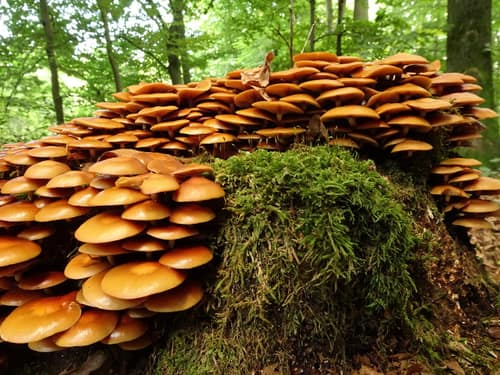
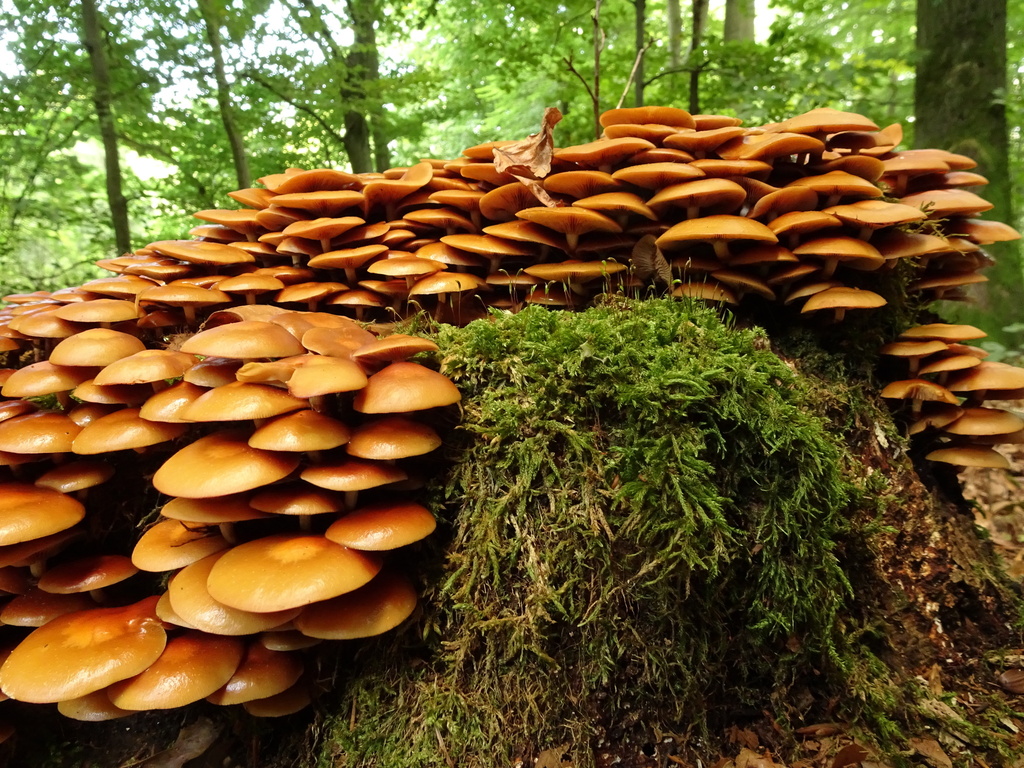
—observations
—countries
—peak records
Least ConcernConservation statusIUCN Red List categoriesLCNTVUENCREWEXLeast ConcernRed List categories, explained →
Diet & prey
- Decaying Wood
- Lignin
- Cellulose
Predators
- Fungus Gnats
- Slugs
- Collembolans
ThreatsHabitat loss and intensive forestry that removes deadwood
HabitatsDeciduous forests, woodlands, and parks with rotting logs
Life spanMycelium lives for decades; individual mushrooms last 1 to 2 weeks
Size / weightNot available
Classification
- FamilyStrophariaceae
- SpeciesKuehneromyces mutabilis
Range data is not available yet.
Interaction riskModerate
- Low
- Moderate
- High
- Very high
- Why interaction risk is moderate
- Many edible mushrooms have toxic look-alikes; never eat wild fungi based on app identification alone.
- Why it is dangerous
- This species strongly resembles the deadly poisonous funeral bell (Galerina marginata), which contains lethal amatoxins.
- How to recognize a risky encounter
- Look for a scaly lower stem and a distinct ring, whereas the deadly look-alike has a smooth, silver-fibrous lower stem.
- What to do
- Never harvest or handle for consumption; observe safely on the wood without disturbing the delicate stem features.
Responsible observation
- Examine the stem: Look for the distinct ring and the dark, recurved scales below it to help distinguish it from deadly look-alikes.
- Observe color changes: Watch how the cap dries from the center outward, creating a striking two-toned appearance.
- Check the substrate: Note that these mushrooms prefer decaying hardwood, particularly birch, beech, and oak.
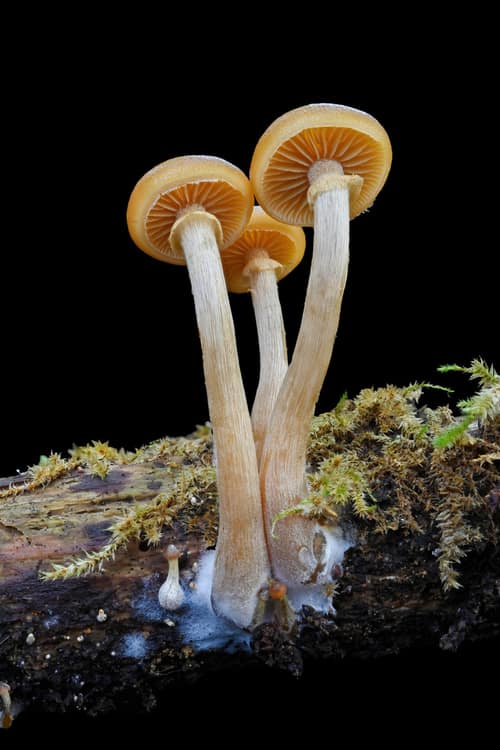
Deadly Look-alike (c) Alan Rockefeller, some rights reserved (CC BY), uploaded by Alan Rockefeller · cc-by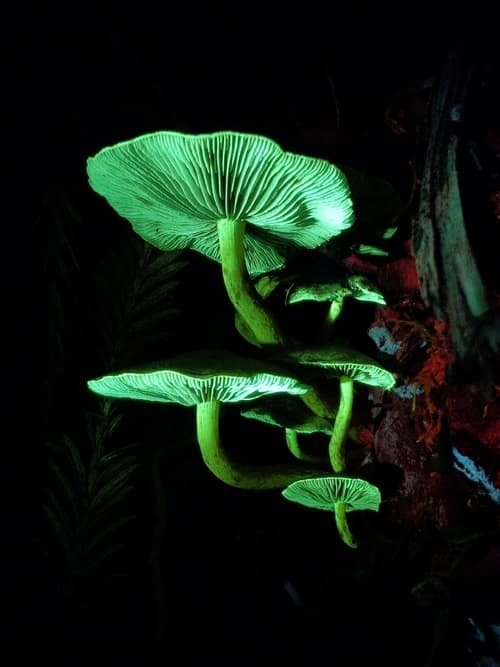
Frequent Companion (c) Alan Rockefeller, some rights reserved (CC BY), uploaded by Alan Rockefeller · cc-by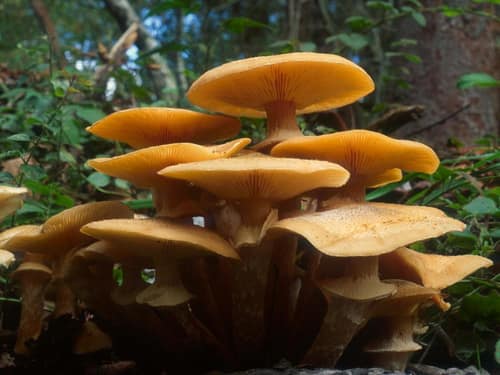
Ecological Competitor (c) Nathan Wilson, some rights reserved (CC BY-SA) · cc-by-sa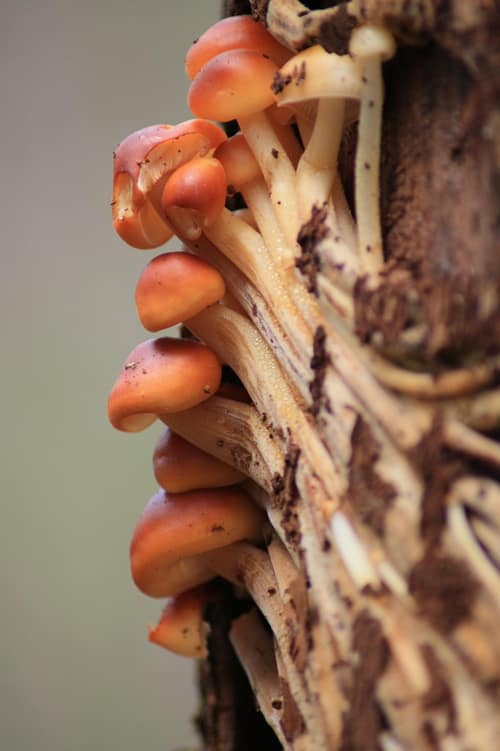
Co-occurring Species (c) GollyGforce, some rights reserved (CC BY) · cc-by
Help improve the field guideSomething wrong?
Checking your Fauna account…Report a name, category, or profile issue for review.