
Fungus · GBIF taxon 2536891
Honey Mushroom
Armillaria melleaAlso known as Honey Fungus, Ringed Honey Mushroom
Honey mushrooms grow in dense, golden-brown clusters around the trunks, stumps, or root systems of hardwood trees and conifers. They spread beneath the bark using tough, black, string-like mycelial structures known as rhizomorphs, which absorb nutrients from living and dead wood alike. On dark nights, their subterranean fungal network emits a faint, green bioluminescent glow known historically as foxfire.
BioluminescentParasiticCluster-forming
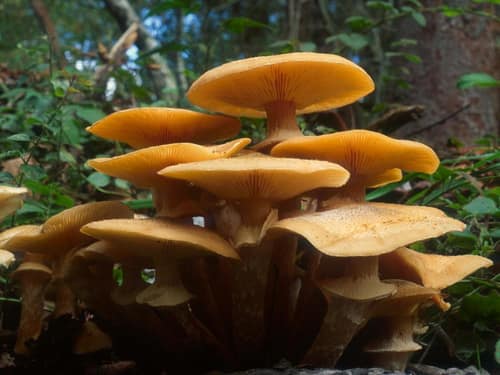
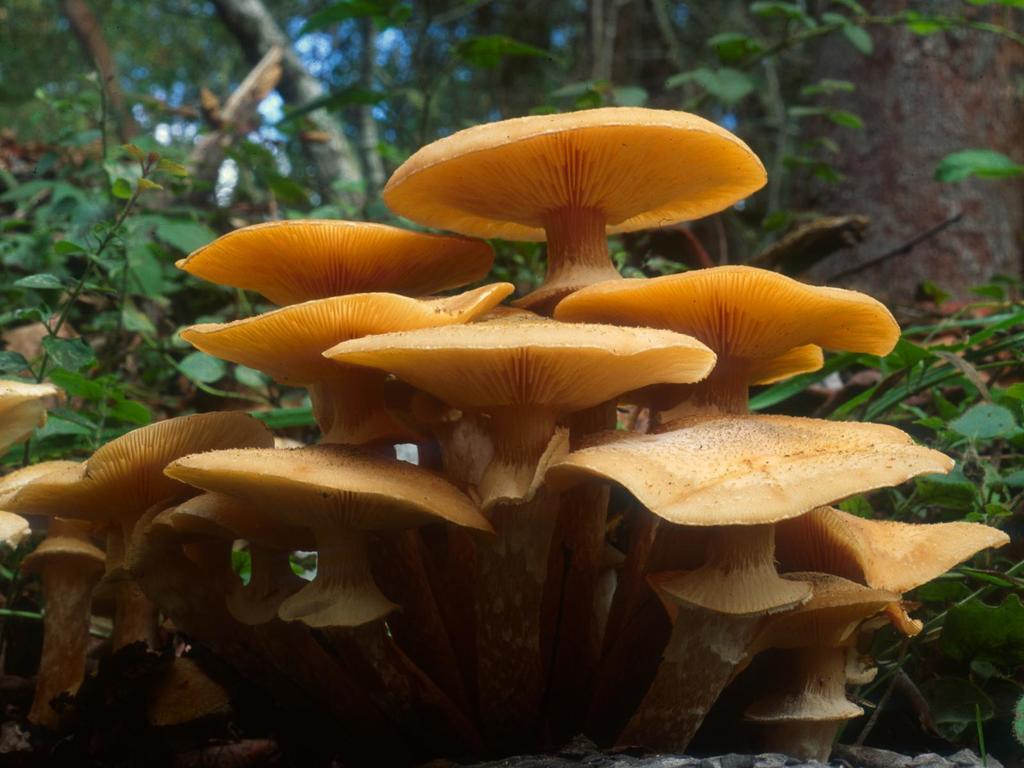
—observations
—countries
—peak records
Not EvaluatedConservation statusIUCN Red List categoriesLCNTVUENCREWEXNot Evaluated — not placed on the risk ladderRed List categories, explained →
Diet & prey
- Parasitic and saprotrophic (decaying wood and live trees)
Predators
- Fungus gnats
- Slugs
- Beetles
ThreatsForest management, host tree removal, urban landscape maintenance
HabitatsTemperate forests, woodlands, parks, and gardens
Life spanFruiting bodies last days to weeks; fungal colony can live for centuries
Size / weightNot available
Classification
- OrderAgaricales
- FamilyPhysalacriaceae
- GenusArmillaria
- SpeciesArmillaria mellea
Range data is not available yet.
Interaction riskModerate
- Low
- Moderate
- High
- Very high
- Why interaction risk is moderate
- Many edible mushrooms have toxic look-alikes; never eat wild fungi based on app identification alone.
- Why it is dangerous
- Raw or undercooked specimens cause gastrointestinal distress, and deadly look-alikes often inhabit the same wood.
- How to recognize a risky encounter
- Look for honey-colored caps with tiny central scales, white spore prints, and a clear stem ring.
- What to do
- Observe and photograph in place without disturbing the surrounding forest floor or tree bark.
Responsible observation
- Spore Print: Collect a mature cap and place it on dark paper overnight to observe its white spore print.
- Cluster ID: Look for dense overlapping clusters attached directly to wood or subterranean tree roots.
- Inspect for Rings: Check the upper stem for a distinct, woolly ring left by the partial veil.
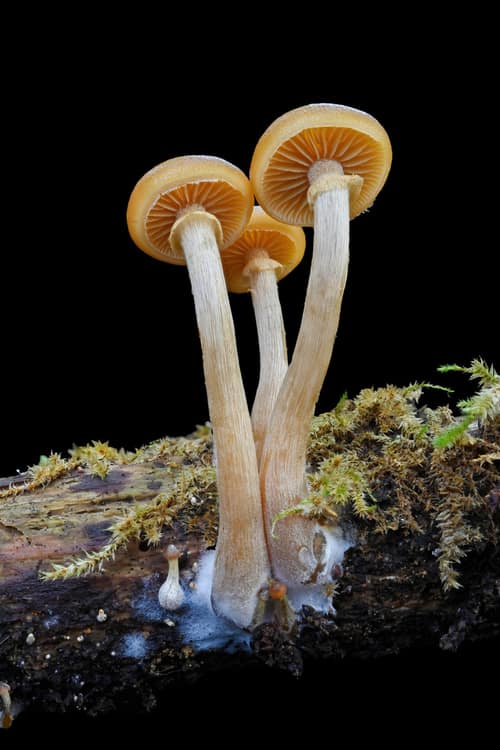
Toxic Look-alike (c) Alan Rockefeller, some rights reserved (CC BY), uploaded by Alan Rockefeller · cc-by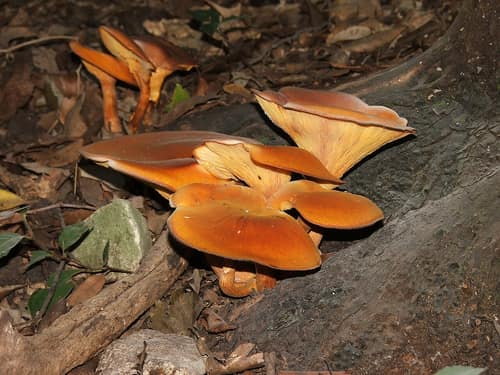
Toxic Look-alike Antonio Abbatiello / Public domain · cc0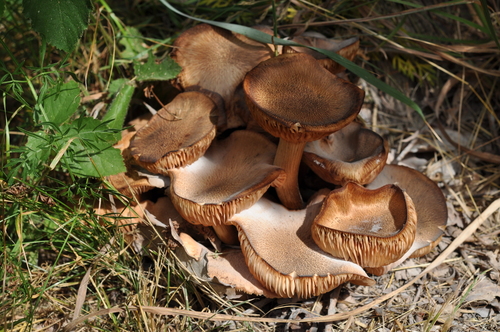
Close Relative (c) Jose Castro, some rights reserved (CC BY) · cc-by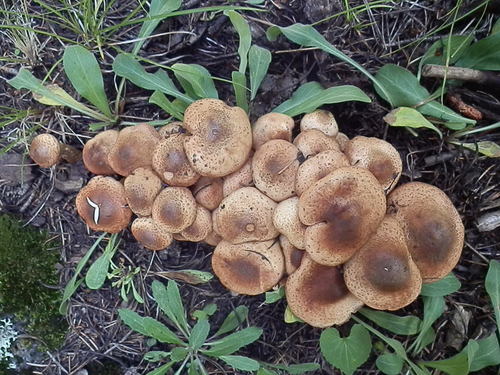
Close Relative (c) pinonbistro, some rights reserved (CC BY-SA), uploaded by pinonbistro · cc-by-sa
Keep collecting in Fauna
Found in Collections
Species set Pro
Fungi Forager
Honey Mushroom is found in this collection. Identify it in Fauna to fill this slot and continue your progress.
Unlock to track progress
Help improve the field guideSomething wrong?
Checking your Fauna account…Report a name, category, or profile issue for review.