
Invertebrate
European Lobster
Homarus gammarusAlso known as Common Lobster, Blue Lobster
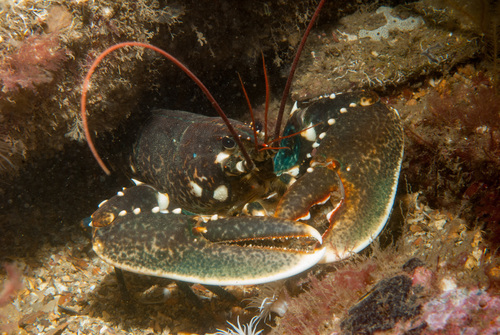
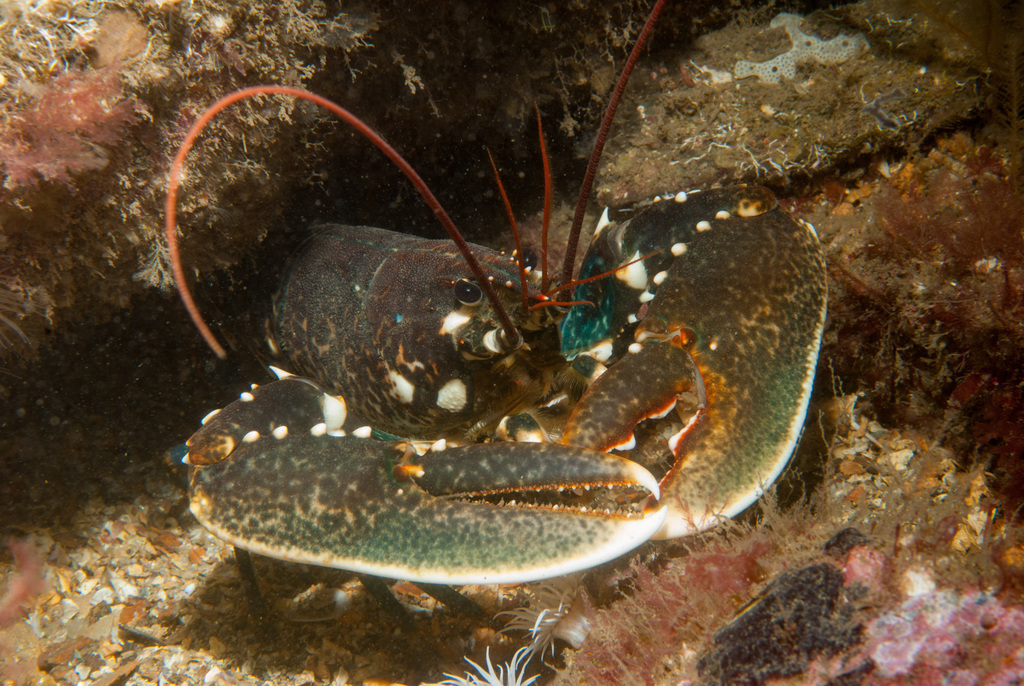
European lobsters are solitary, nocturnal marine crustaceans renowned for their vivid midnight-blue exoskeletons and massive, asymmetrical claws. They occupy rocky crevices and boulder fields, emerging under cover of darkness to scour the seabed for prey and carrion. Females carry thousands of eggs glued to their swimmerets for up to a year before releasing free-swimming larvae into coastal currents.
MarineCrustaceanNocturnal
—observations
—countries
—peak records
Least ConcernConservation statusIUCN Red List categoriesLCNTVUENCREWEXLeast ConcernRed List categories, explained →
Diet & preyEdible crab, Blue mussel, Common starfish
Predators
- Atlantic cod
- European conger
- Common seal
ThreatsOverfishing, destructive bottom trawling, marine pollution, and habitat disruption
HabitatsRocky seabeds, reefs, boulder fields, and underwater crevices from the lower intertidal down to 150 meters
Life span30–50 years
Classification
- FamilyNephropidae
- SpeciesHomarus gammarus
Range data is not available yet.
Interaction riskLow
- Low
- Moderate
- High
- Very high
- Why interaction risk is low
- Powerful crusher claws can severely injure fingers; avoid handling wild individuals without specialized gear.
- Why it is dangerous
- The larger crusher claw exerts immense mechanical pressure capable of fracturing bones and causing deep puncture wounds.
- How to recognize a risky encounter
- Distinguished by an intense dark blue mottled shell, white claw bumps, and two distinct, oversized front claws.
- What to do
- Never pick up an unrestrained lobster by the front or attempt to pry claws open by hand.
Responsible observation
- Diving Etiquette: Observe them quietly using dive lights while leaving their rocky crevices undisturbed.
- Handling Precaution: Keep fingers clear of the large crusher and cutter claws if examining caught specimens.
- Shell Inspection: Notice the difference between the heavy, rounded crusher claw and the sharper, slender cutter claw.
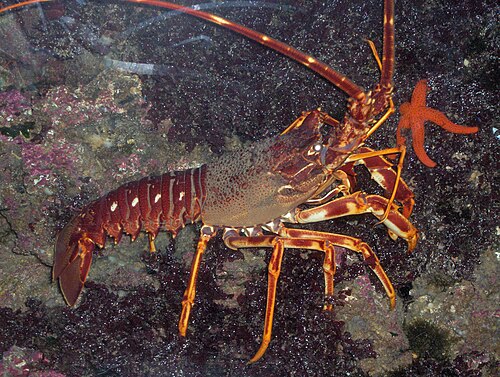
Neighbor Georges Jansoone (JoJan) / CC BY 3.0 · cc-by Image unavailable
Prey 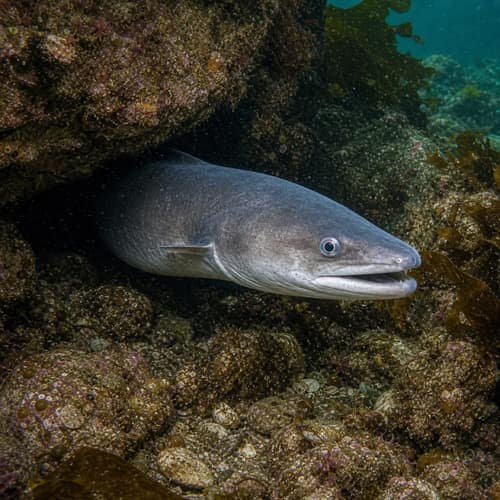
Predator Matthieu Sontag / CC BY 3.0 · CC BY 3.0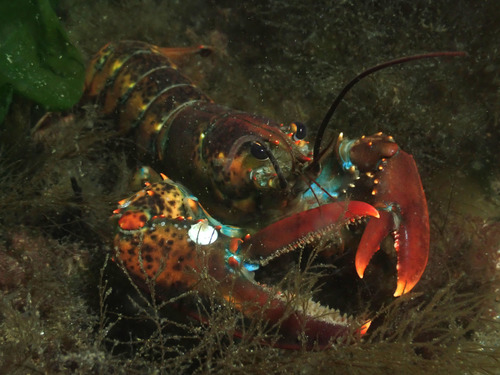
Close Relative (c) Roger Rittmaster, some rights reserved (CC BY), uploaded by Roger Rittmaster · cc-by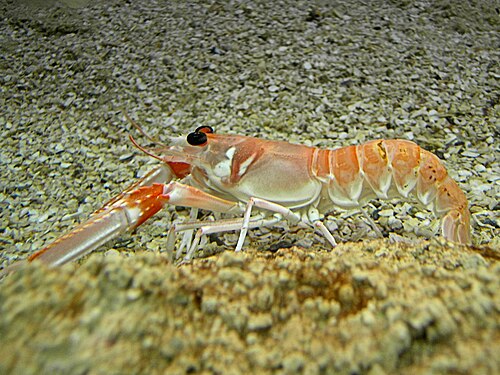
Same Family Hans Hillewaert / CC BY-SA 4.0 · cc-by-sa
Help improve the field guideSomething wrong?
Checking your Fauna account…Report a name, category, or profile issue for review.