
Invertebrate
American Lobster
Homarus americanusAlso known as Atlantic Lobster, Canadian Lobster, Northern Lobster, Maine Lobster
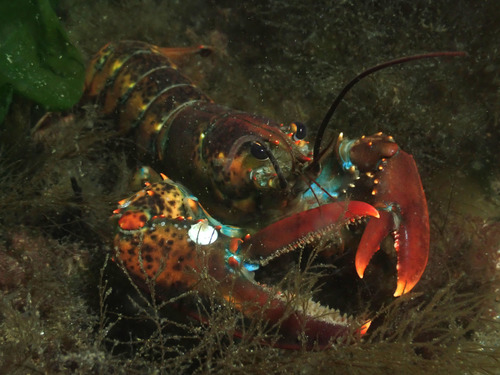
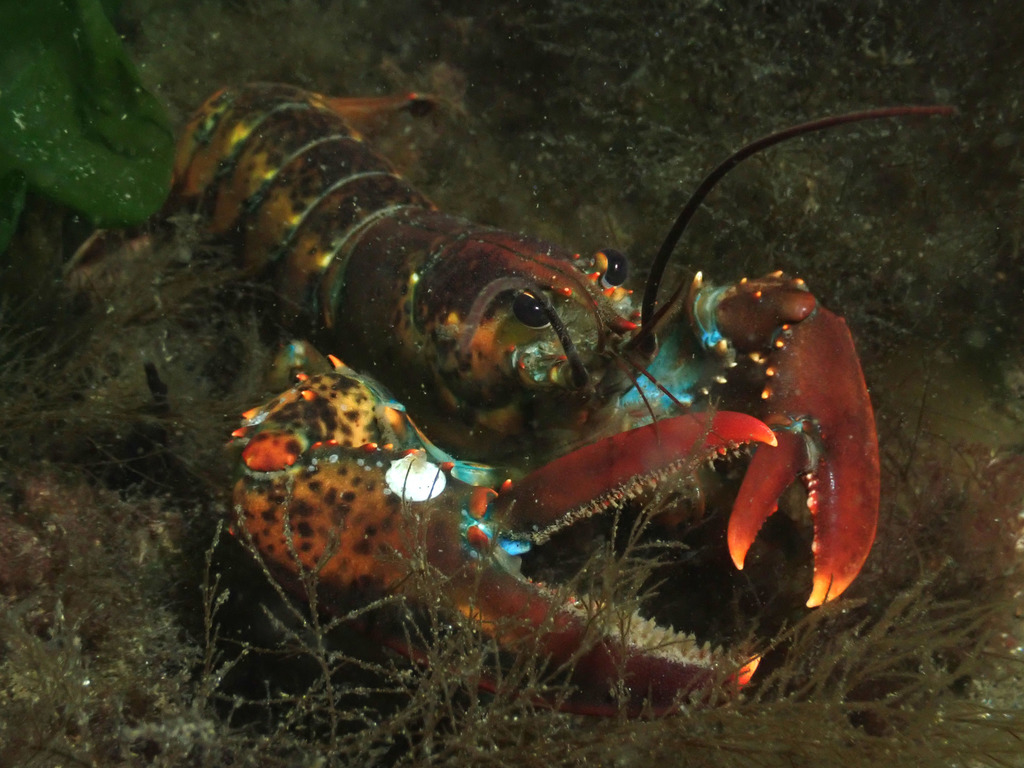
American lobsters rule cold benthic waters along the Northwest Atlantic coast, navigating rocky crevices and muddy floors using sensitive antennae. Equipped with a massive crushing claw for cracking hard shells and a sharp cutting claw for tearing tissue, these nocturnal hunters prey on crabs, mollusks, and fish. They grow continuously throughout their exceptionally long lives by repeatedly shedding their rigid chitinous exoskeletons.
MarineCrustaceanBenthic
—observations
—countries
—peak records
Least ConcernConservation statusIUCN Red List categoriesLCNTVUENCREWEXLeast ConcernRed List categories, explained →
Diet & preyMussels, Sea Urchins, Rock Crabs
Predators
- Atlantic Cod
- Striped Bass
- Harbor Seal
ThreatsOcean warming, ocean acidification, shell disease, and localized overfishing
HabitatsRocky ocean floors, kelp forests, muddy substrate, and coastal waters to deep continental slopes
Life span50–100 years
Classification
- OrderDecapoda
- FamilyNephropidae
- GenusHomarus
- SpeciesHomarus americanus
Range data is not available yet.
Interaction riskLow
- Low
- Moderate
- High
- Very high
- Why interaction risk is low
- Capable of inflicting severe crushes or cuts with massive claws; keep hands clear when handling live specimens.
- Why it is dangerous
- Generates immense crushing power in its main claw that can cut skin or fracture fingers.
- How to recognize a risky encounter
- Recognized by its heavy greenish-brown shell, long whip-like antennae, and two large asymmetric claws.
- What to do
- Pick up firmly behind the carapace, keeping fingers clear of claw hinges and tail flaps.
Responsible observation
- Safe handling: Grasp firmly from directly behind the head-thorax carapace to stay clear of both claws.
- Tidepool searching: Search under large submerged rocks and ledges during extreme low tides along northern coasts.
- Observing behavior: Use red-filtered dive lights at night when lobsters emerge from crevices to forage.
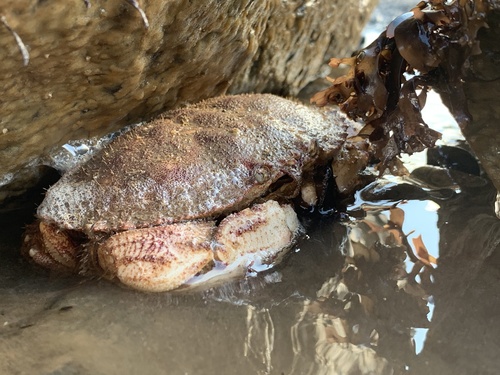
Co-inhabitant (c) Ian Manning, some rights reserved (CC BY), uploaded by Ian Manning · cc-by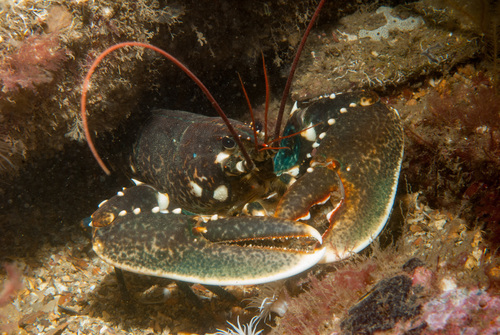
Close Relative (c) Bernard Picton, some rights reserved (CC BY), uploaded by Bernard Picton · cc-by
Help improve the field guideSomething wrong?
Checking your Fauna account…Report a name, category, or profile issue for review.