
Bird
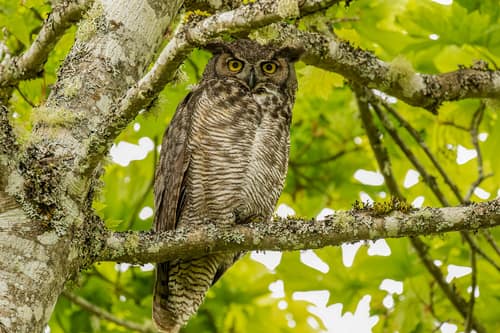
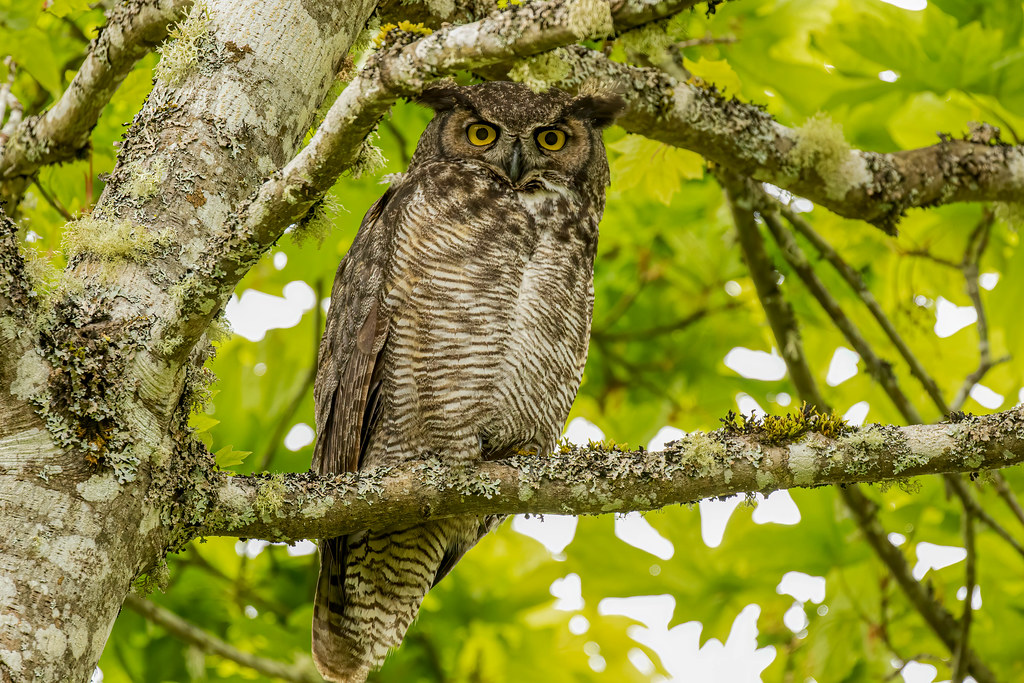
Great Horned Owl
Bubo virginianusAlso known as Tiger Owl, Hoot Owl, Cat Owl
Great horned owls rule North American nights with silent flight and keen binocular vision, hunting everything from rodents to skunks. Mated pairs defend territories year-round, performing deep-toned vocal duets that echo across woodlands and deserts in late winter. Female owls lay eggs in abandoned hawk nests or tree cavities early in the season, brooding young while males provide all the food.
NocturnalApex PredatorAdaptable
—observations
—countries
—peak records
Least ConcernConservation statusIUCN Red List categoriesLCNTVUENCREWEXLeast ConcernRed List categories, explained →
Diet & preyCottontail Rabbits, Striped Skunks, Mice and Voles
Predators
- Golden Eagle
- Peregrine Falcon
ThreatsRodenticide poisoning, vehicle strikes, power lines
HabitatsForests, deserts, wetlands, suburban parks
Life span13–15 years in wild
Classification
- OrderStrigiformes
- FamilyStrigidae
- GenusBubo
- SpeciesBubo virginianus
Range data is not available yet.
Interaction riskLow
- Low
- Moderate
- High
- Very high
- Why interaction risk is low
- Capable of inflicting serious injuries with talons if cornered; observe from a safe distance.
- Why it is dangerous
- Equipped with powerful talons capable of exerting tremendous crushing pressure, posing a severe puncture hazard if approached closely or handled.
- How to recognize a risky encounter
- Recognizable by prominent feather ear tufts, large yellow eyes, and deep rhythmic hooting calls at night.
- What to do
- Maintain a respectful distance and avoid approaching nests or injured birds without professional rehabilitator assistance.
Responsible observation
- Vocal Tracking: Listen for deep, five-to-six-note hoots at dusk, especially during winter courtship.
- Disturbance Cues: Watch for agitated mobbing behavior from crows, jays, or songbirds, which often reveals a roosting owl.
- Viewing Etiquette: Keep flashlight beams off the bird's eyes to avoid disrupting nocturnal hunting.
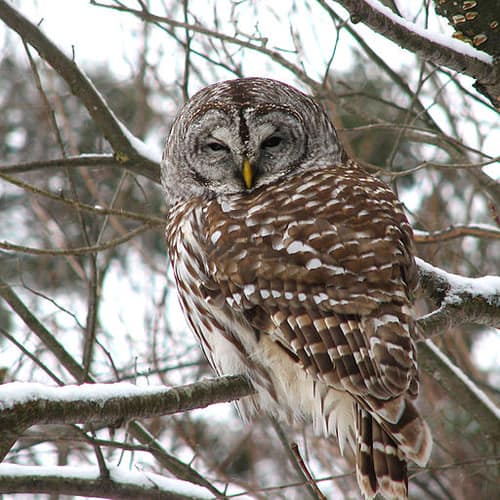
Competitor U.S. Fish and Wildlife Service Headquarters / Public domain · cc0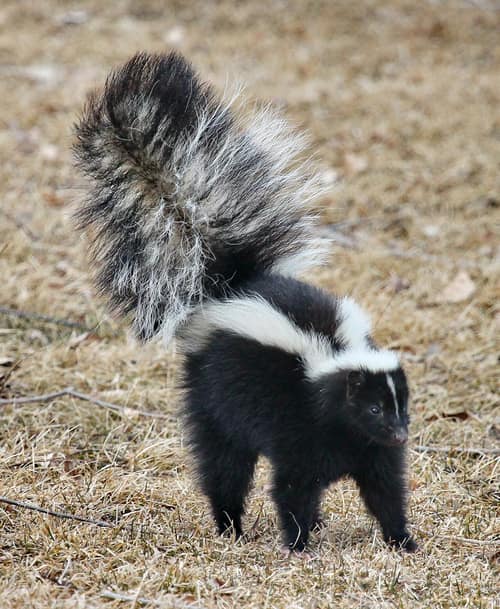
Prey Wallace Keck / Public domain · cc0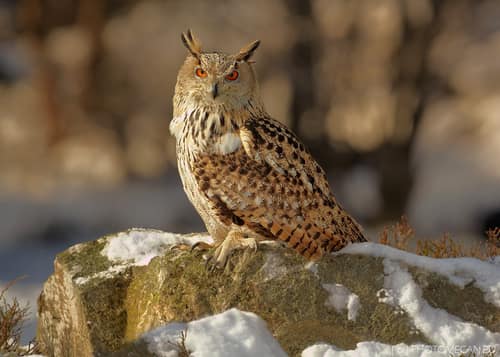
Close Relative Martin Mecnarowski (http://www.photomecan.eu/) / CC BY-SA 3.0 · cc-by-sa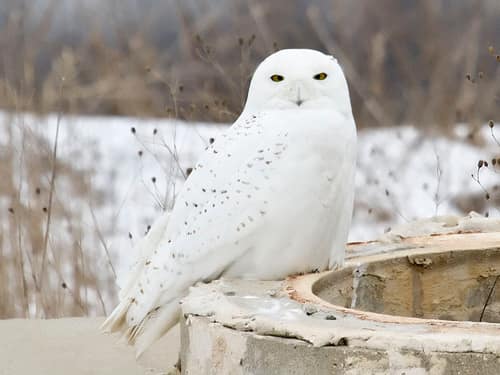
Close Relative (c) Bill Bouton, some rights reserved (CC BY-SA) · cc-by-sa
Keep collecting in Fauna
Found in Collections
Species set
Moonlight Marvels
Great Horned Owl is found in this collection. Identify it in Fauna to fill this slot and continue your progress.
—/7
Help improve the field guideSomething wrong?
Checking your Fauna account…Report a name, category, or profile issue for review.