
Bird
Barred Owl
Strix variaAlso known as Northern Barred Owl, Hoot Owl, Eight-Hooter Owl
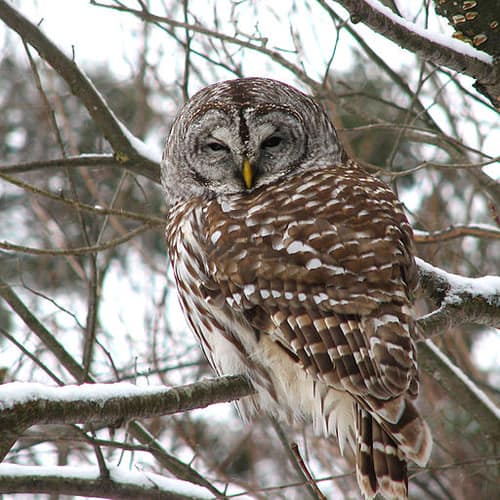
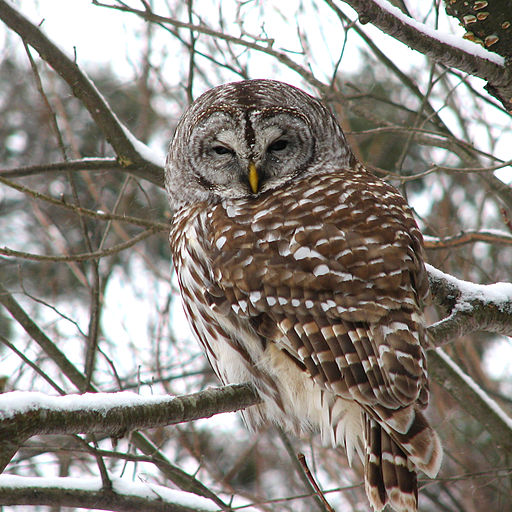
Barred owls rule mature mixed woodlands with silent wings and deep brown eyes unusual among North American owls. Their famous call sounds like 'Who cooks for you, who cooks for you all?', echoing through river bottoms and swampy forests at dusk and throughout the night. While expanding westward across North America, they aggressively defend nesting cavities and adapt readily to suburban woodlots.
NocturnalForest DwellerVocal
—observations
—countries
—peak records
Least ConcernConservation statusIUCN Red List categoriesLCNTVUENCREWEXLeast ConcernRed List categories, explained →
Diet & preyMice and Voles, Crayfish, Songbirds
Predators
- Great Horned Owl
- Northern Goshawk
ThreatsHabitat fragmentation, vehicle collisions, secondary rodenticide poisoning
HabitatsMature deciduous and mixed forests, wooded swamps, suburban parks
Life span10–20 years in the wild
Classification
- OrderStrigiformes
- FamilyStrigidae
- GenusStrix
- SpeciesStrix varia
Range data is not available yet.
Interaction riskLow
- Low
- Moderate
- High
- Very high
- Why interaction risk is low
- May dive-bomb intruders near active nests; stay clear of nesting trees during spring.
- Why it is dangerous
- Adults fiercely defend nest cavities during spring breeding, occasionally swooping down to strike intruders with sharp talons.
- How to recognize a risky encounter
- Look for vertical brown stripes on the belly, horizontal bars on the chest, and deep brown eyes without ear tufts.
- What to do
- Give active nesting trees a wide berth during spring and early summer, and wear a hat if passing nearby.
Responsible observation
- Listen for Calls: Scan low branches near water at dusk when their distinctive eight-note hooting chorus begins.
- Nesting Distance: Maintain at least 30 meters from suspected nest cavities to prevent defensive swooping.
- Use Flashlights Wisely: Avoid shining bright lights directly into their eyes, which can temporarily blind them.
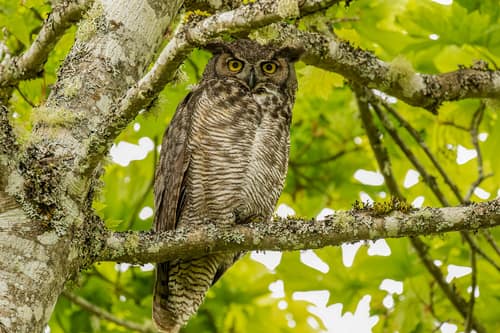
Competitor "Great Horned Owl, the first I've seen in decent light this year. Didn't want to disturb it for too long so we continued along the trail" by island deborah- is licensed under CC BY-SA 2.0. To view a copy of this license, visit https://creativecommons.org/licenses/by-sa/2.0/. · cc-by-sa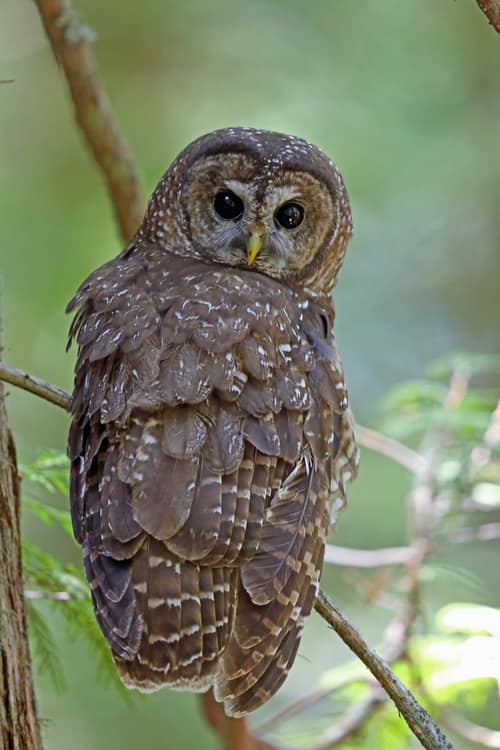
Close Relative (c) Nigel Voaden, some rights reserved (CC BY) · cc-by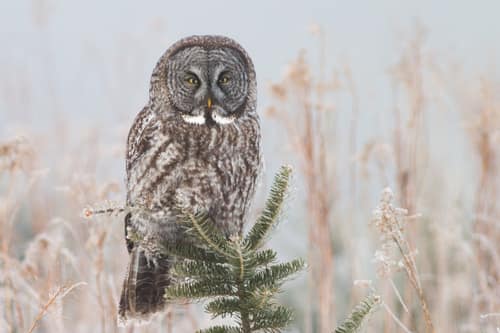
Close Relative (c) Fyn Kynd, some rights reserved (CC BY-SA), uploaded by Fyn Kynd · cc-by-sa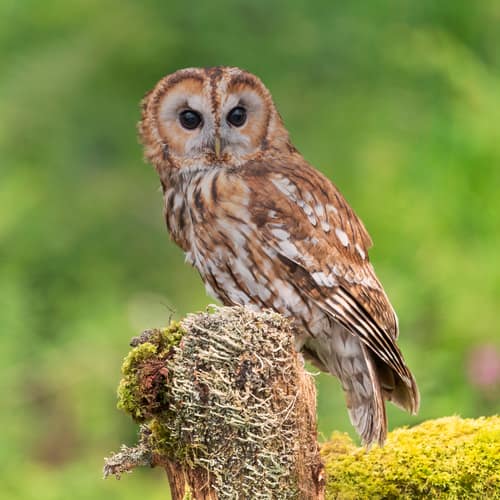
Close Relative (c) caroline legg, some rights reserved (CC BY) · cc-by
Keep collecting in Fauna
Found in Collections
Species set
Moonlight Marvels
Barred Owl is found in this collection. Identify it in Fauna to fill this slot and continue your progress.
—/7
Help improve the field guideSomething wrong?
Checking your Fauna account…Report a name, category, or profile issue for review.