
Mammal
Striped Skunk
Mephitis mephitisAlso known as Common Skunk
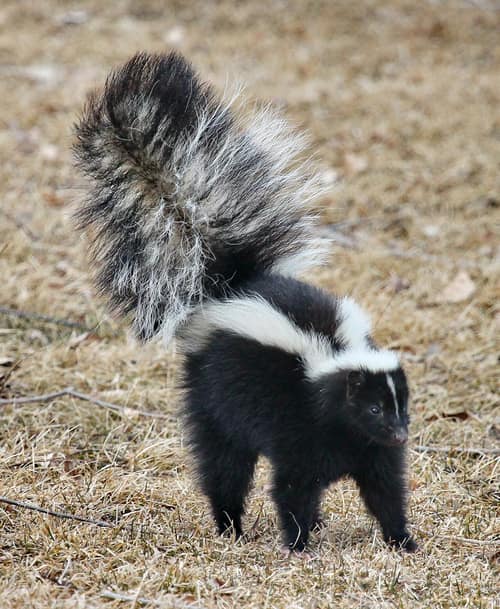
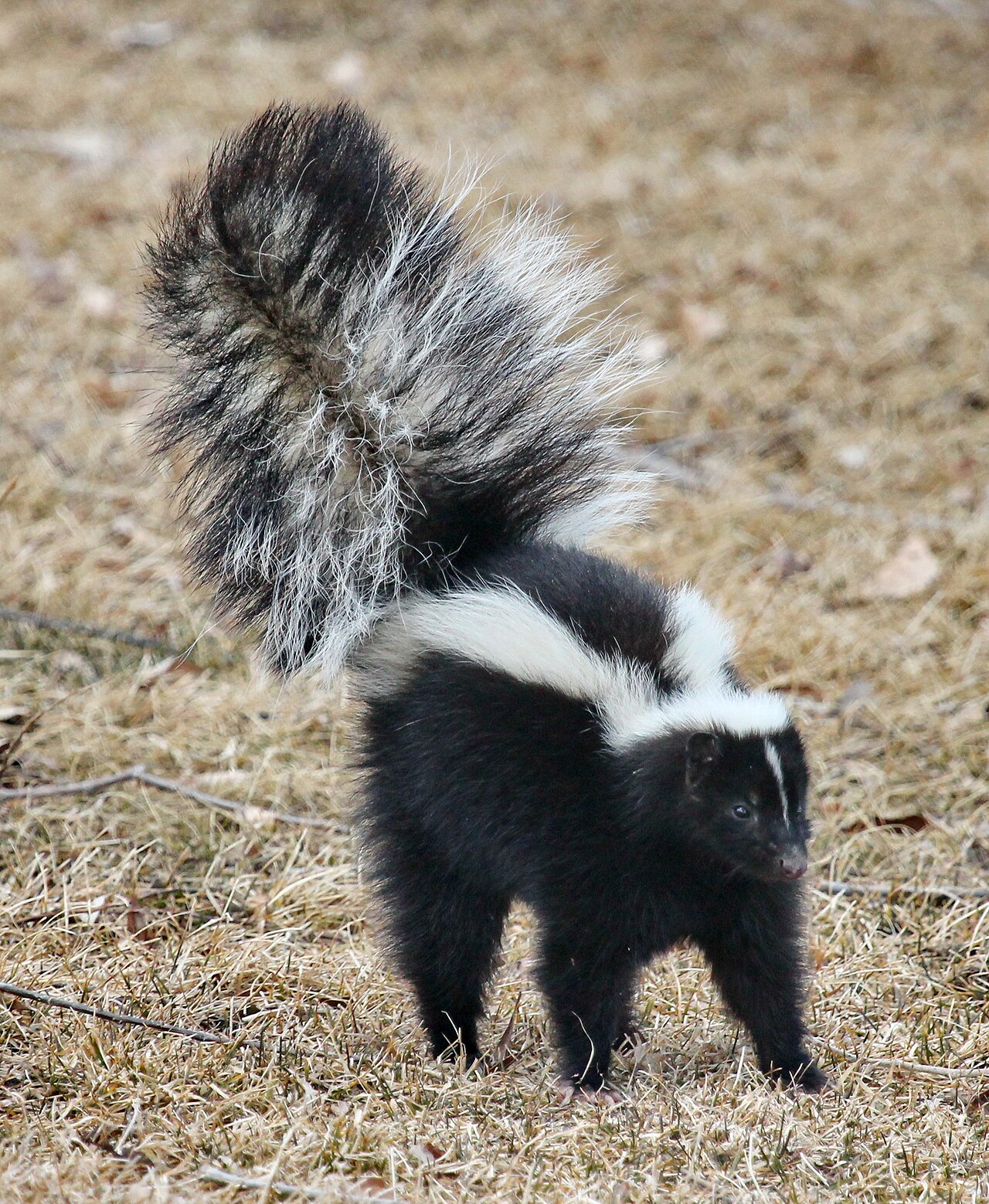
Striped skunks are adaptable nocturnal omnivores famous for their bold black-and-white warning pattern and defensive scent glands. Before spraying their pungent sulfurous musk up to six meters, they perform dramatic warning displays including foot-stomping, tail-raising, and false charges. They play a vital ecological role by consuming vast numbers of agricultural pests, small rodents, and ground-nesting insects throughout the night.
NocturnalOmnivoreAdaptable
—observations
—countries
—peak records
Least ConcernConservation statusIUCN Red List categoriesLCNTVUENCREWEXLeast ConcernRed List categories, explained →
Diet & preyGrubs and Insects, Small Rodents, Bird Eggs
Predators
- Great Horned Owl
- Golden Eagle
- Coyote
ThreatsVehicle collisions, pest control trapping, and viral diseases such as rabies
HabitatsForests, grasslands, agricultural fields, suburbs, and urban parks
Life span2–3 years in the wild; up to 10 years in captivity
Classification
- OrderCarnivora
- FamilyMephitidae
- GenusMephitis
- SpeciesMephitis mephitis
Native
Interaction riskModerate
- Low
- Moderate
- High
- Very high
- Why interaction risk is moderate
- Can spray pungent musk and carry rabies; keep pets leashed and maintain a safe distance.
- Why it is dangerous
- Produces a blinding sulfur-rich defensive spray from anal glands and serves as a major reservoir for rabies.
- How to recognize a risky encounter
- Recognizable by a solid black body with a white stripe splitting across the back and a bushy tail.
- What to do
- Give any skunk a wide berth and never corner it; keep pets vaccinated and away from wild individuals.
Responsible observation
- Watch for Warnings: If a skunk stomps its front feet or lifts its tail, back away immediately to avoid spray.
- Keep Dogs Leashed: Dogs frequently trigger defensive spray responses during nighttime backyard encounters.
- Secure Outdoor Food: Seal trash bins and remove pet food to prevent attracting skunks near homes.
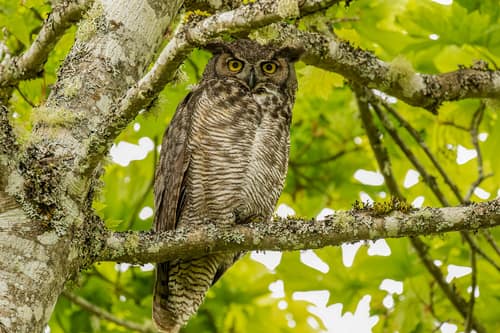
Predator "Great Horned Owl, the first I've seen in decent light this year. Didn't want to disturb it for too long so we continued along the trail" by island deborah- is licensed under CC BY-SA 2.0. To view a copy of this license, visit https://creativecommons.org/licenses/by-sa/2.0/. · cc-by-sa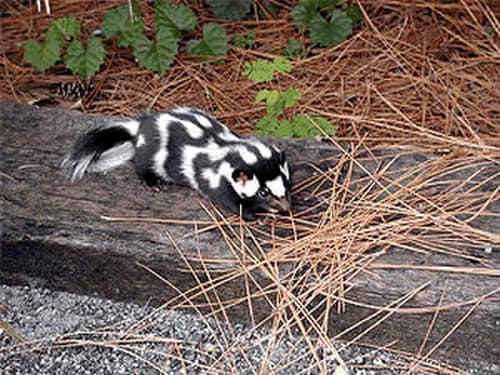
Close Relative A National Park Service employee / Public domain · cc0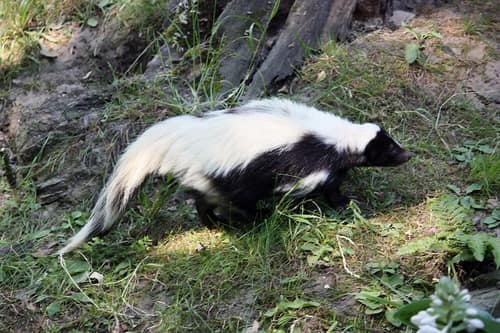
Close Relative Dmitrij Rodionov, DR / CC BY-SA 3.0 · cc-by-sa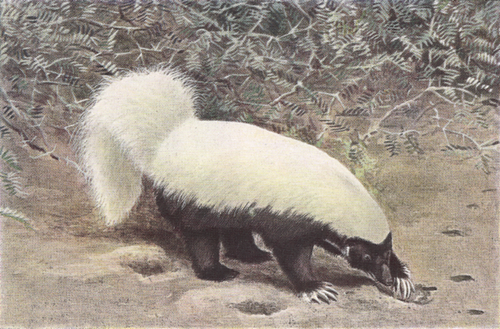
Close Relative en:Louis Agassiz Fuertes. / Public domain · cc0
Keep collecting in Fauna
Found in Collections
Species set
Urban Dwellers
Striped Skunk is found in this collection. Identify it in Fauna to fill this slot and continue your progress.
—/7
Help improve the field guideSomething wrong?
Checking your Fauna account…Report a name, category, or profile issue for review.