
Reptile
Panther Chameleon
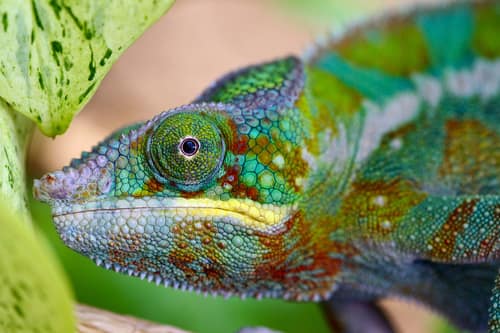
Furcifer pardalisMale panther chameleons showcase breathtaking color morphs determined by their geographic origin, ranging from vibrant turquoise and emerald to fiery red and orange. Their specialized eyes pivot independently to track passing insects with full stereoscopic depth before a sticky tongue projects outward at lightning speed. Highly territorial, rival males resolve territorial disputes through brilliant color flashing and puffing displays rather than physical combat.
ArborealColorfulDiurnal

—observations
—countries
—peak records
Least ConcernConservation statusIUCN Red List categoriesLCNTVUENCREWEXLeast ConcernRed List categories, explained →
Diet & preyCrickets, Moths, Grasshoppers
Predators
- Madagascar Buzzard
- Madagascar Harrier-Hawk
- Speckled Hognose Snake
ThreatsHabitat loss from slash-and-burn agriculture and illegal collection for the pet trade
HabitatsLowland tropical rainforests, coastal scrub, and degraded forest edges
Life span3–7 years
Classification
- FamilyChamaeleonidae
- GenusFurcifer
- SpeciesFurcifer pardalis
Range data is not available yet.
Interaction riskLow
- Low
- Moderate
- High
- Very high
- Why interaction risk is low
- Harmless to humans; safe to observe from a respectful distance without touching.
Responsible observation
- Spotting: Scan sunny low branches and shrub layers during morning hours when individuals bask to warm up.
- Observation: Approach slowly and quietly to avoid startling them into freezing or turning dull brown in distress.
- Photography: Use natural light from a few paces away without using flashes that stress arboreal reptiles.
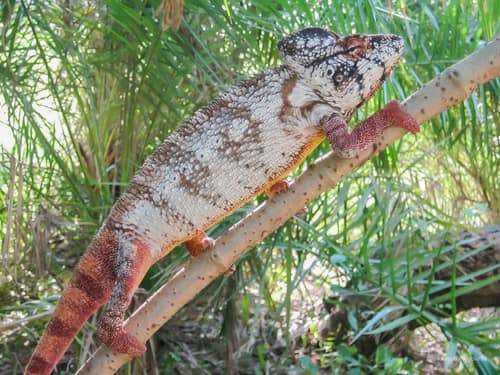
Close Relative (c) Ioannis Magouras, some rights reserved (CC BY), uploaded by Ioannis Magouras · cc-by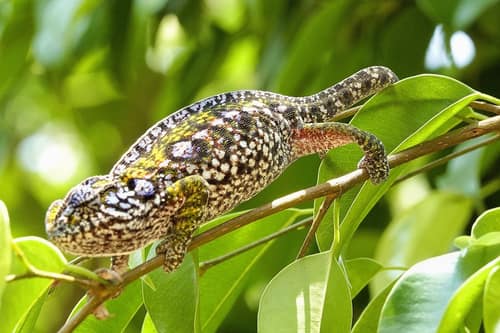
Close Relative (c) Margaret Stevens, some rights reserved (CC BY), uploaded by Margaret Stevens · cc-by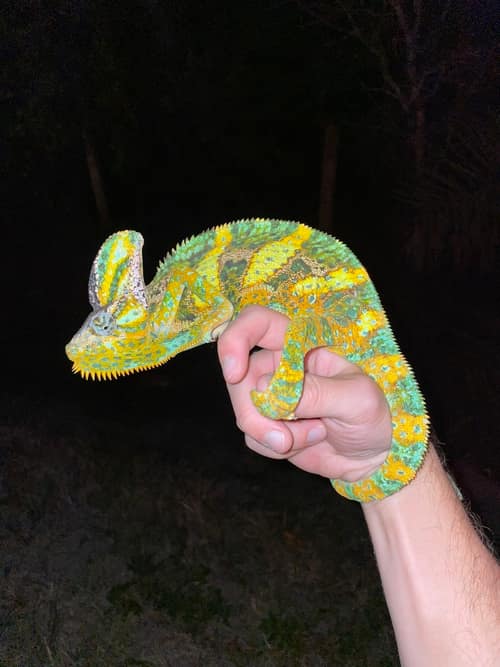
Same Family (c) Daily Anole, some rights reserved (CC BY) · cc-by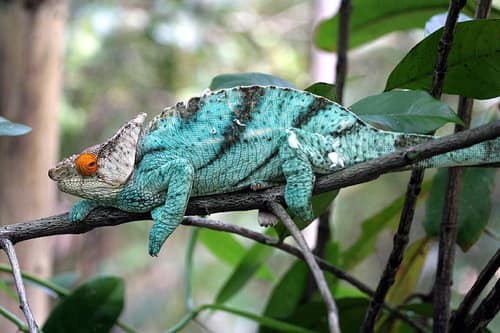
Same Family JialiangGao www.peace-on-earth.org / CC BY-SA 4.0 · cc-by-sa
Keep collecting in Fauna
Found in Collections
Species set Pro
Emerald Kingdom
Panther Chameleon is found in this collection. Identify it in Fauna to fill this slot and continue your progress.
Unlock to track progress
Help improve the field guideSomething wrong?
Checking your Fauna account…Report a name, category, or profile issue for review.