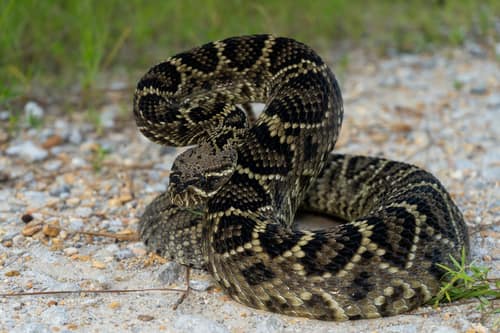
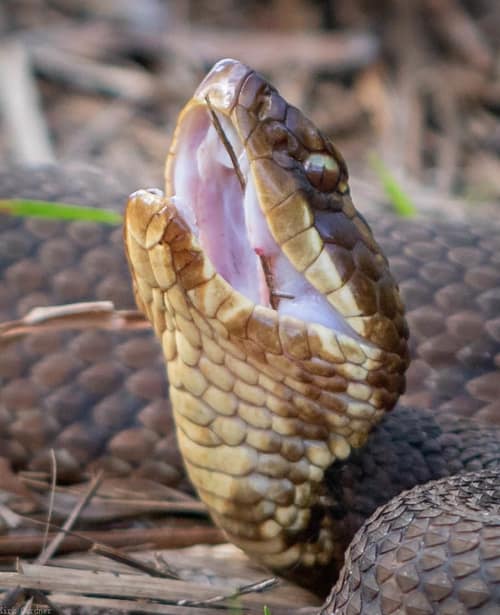
Also known as Banded Rattlesnake, Canebrake Rattlesnake
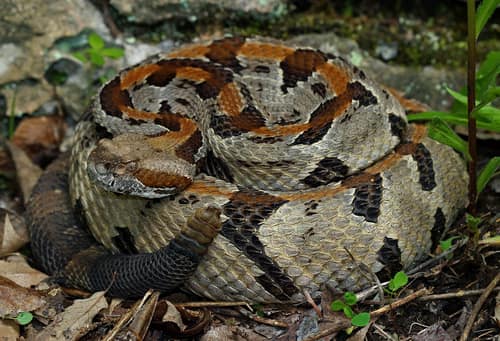
Timber rattlesnakes inhabit rugged hardwood forests and rocky bluffs across eastern North America, relying on subtle cryptic coloration to blend seamlessly into fallen leaf litter. During cool autumn months, individuals return from summer hunting grounds to assemble in traditional communal dens deep within mountain crevices. Though equipped with potent venom, these calm pit vipers typically rely on camouflage or a rhythmic buzzing rattle to warn off potential threats before resorting to defensive strikes.
Highly venomous; maintain a distance of at least three meters and never attempt to handle or corner one.
Why it is dangerous
Injects potent venom containing variable mixes of hemotoxins and neurotoxins that cause severe tissue destruction, systemic bleeding, or neurological impairment.
How to recognize a risky encounter
Distinguished by dark chevron bands along a yellow, brown, or black body, a broad spade-shaped head, and a tail rattle.
What to do
Freeze and locate the snake if heard or seen, step away slowly to a distance of three meters or more, and never reach into brush.
What to notice
Look for heavy-bodied snakes with dark crossbands or chevrons basking on sunny rocky ledges in mature eastern forests.
Support conservation
Never disclose precise den location coordinates online, refrain from disturbing basking sites, and observe silently from a safe distance.
Responsible observation
Listen for Warnings: If you hear a dry buzzing sound, freeze, locate the snake, and step back slowly.
Maintain Distance: Keep at least three meters away, as striking range can cover up to half the body length.
Watch Steps on Ledges: Avoid placing hands or feet into unexamined rock crevices or under fallen logs.