
Reptile
Northern Cottonmouth
Agkistrodon piscivorusAlso known as Water Moccasin
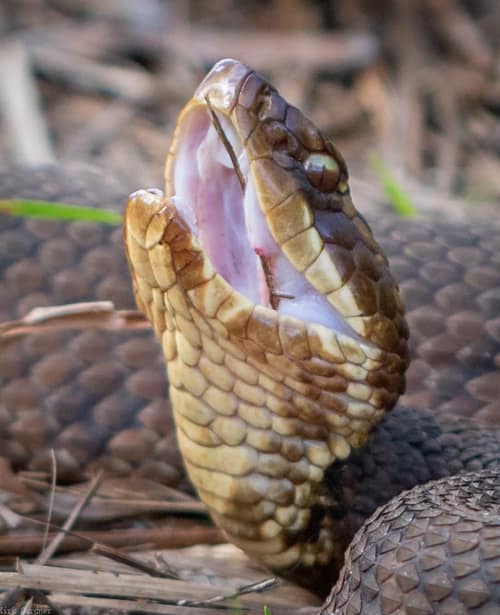
The Northern Cottonmouth is a heavy-bodied semiaquatic pit viper with a broad head and a dark stripe through the eye. When alarmed it may coil and display the pale interior of its mouth, but ample distance usually lets it retreat.
Venomous SnakeSemiaquatic ViperDefensive Display

—observations
—countries
—peak records
Least ConcernConservation statusIUCN Red List categoriesLCNTVUENCREWEXLeast ConcernRed List categories, explained →
Diet & preyFish, Frogs, Small mammals
Predators
- Large raptors
- Kingsnakes
- Alligators
ThreatsWetland loss, road mortality, persecution, pollution, and deliberate killing
HabitatsSwamps, marshes, slow rivers, floodplain forest, lake margins, and wooded wetlands
Life spanOften more than a decade, with some individuals surviving considerably longer
Classification
- FamilyViperidae
- SpeciesAgkistrodon piscivorus
Range data is not available yet.
Interaction riskVery high
- Low
- Moderate
- High
- Very high
- Why interaction risk is very high
- A bite can cause severe pain and tissue injury and requires immediate emergency medical care.
- Why it is dangerous
- Venom can cause severe pain, swelling, tissue damage, and systemic illness requiring urgent professional treatment.
- How to recognize a risky encounter
- Look for a broad blocky head, facial pit, dark eye stripe, heavy body, and pale mouth lining when displayed.
- What to do
- Never touch, corner, or attempt to kill it; after a bite, stay calm and seek emergency care immediately.
Responsible observation
- Distance: Stay at least several meters away and never block escape.
- Footing: Check around logs and dense wetland vegetation before stepping.
- Emergency: After a bite, limit movement and call emergency services immediately.
Help improve the field guideSomething wrong?
Checking your Fauna account…Report a name, category, or profile issue for review.