
Reptile
Common Kingsnake
Lampropeltis getulaAlso known as Chain Kingsnake, Chain Snake, Eastern Chain Snake
Eastern kingsnakes are famous for their natural immunity to pit viper venom, allowing them to regularly hunt and eat rattlesnakes and copperheads alongside small mammals and bird eggs. Draped in glossy black scales accented by bright white or yellow chain-like bands, these smooth-scaled constrictors rely on sheer muscular force to subdue their prey. Active mainly during cool mornings in spring and autumn, they transition to nocturnal foraging during the high heat of summer.
Non-venomousReptileConstrictor
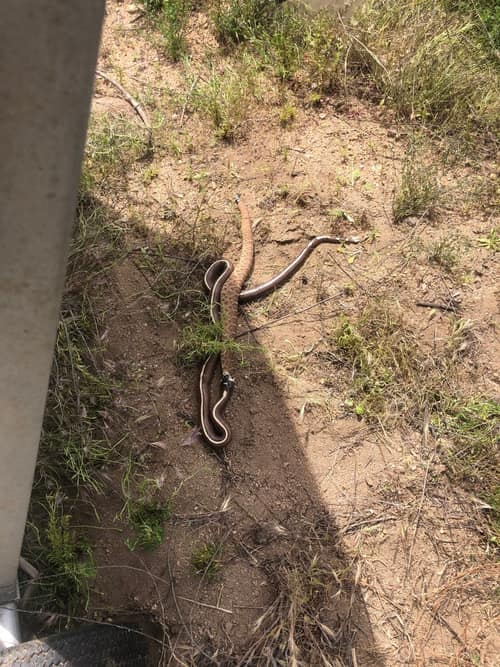

—observations
—countries
—peak records
Least ConcernConservation statusIUCN Red List categoriesLCNTVUENCREWEXLeast ConcernRed List categories, explained →
Diet & preyRattlesnakes, Mice, Lizards
Predators
- Red-tailed Hawk
- Great Horned Owl
- Raccoon
ThreatsHabitat loss, road mortality, pet trade collection
HabitatsForests, pine flatwoods, agricultural areas, wetlands
Life span15–20 years
Classification
- FamilyColubridae
- GenusLampropeltis
- SpeciesLampropeltis getula
Range data is not available yet.
Interaction riskLow
- Low
- Moderate
- High
- Very high
- Why interaction risk is low
- Non-venomous and calm, but capable of biting or musking if grabbed; observe from a respectful distance.
- Why it is dangerous
- Defensive bites can break skin and foul-smelling musk is released if the snake is handled or cornered.
- How to recognize a risky encounter
- Recognized by glossy black scales with narrow yellow or white chain-like bands across the body.
- What to do
- Enjoy watching from a few feet away and do not attempt to catch or hold wild individuals.
Responsible observation
- Give space: Maintain a distance of a few feet to allow the snake to move freely.
- Watch behavior: Look for tail-vibrating or coiling that indicates the snake feels threatened.
- Preserve cover: Leave brush piles and fallen logs intact to protect native shelter.
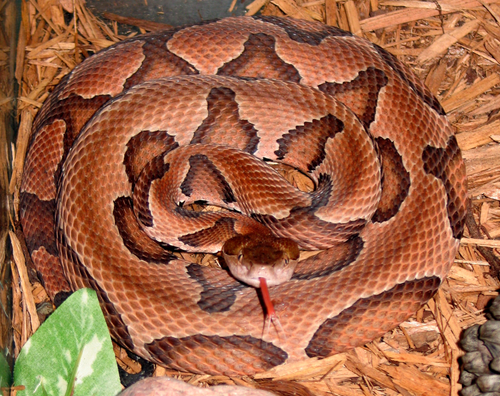
Prey Wikimedia Commons / Public domain · cc0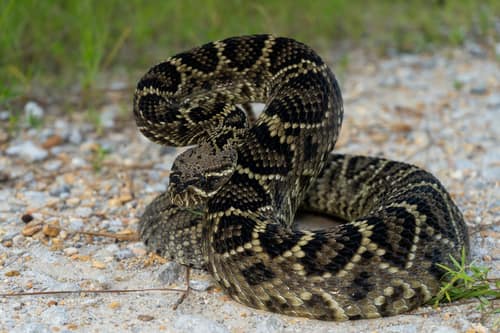
Prey (c) evangrimes, some rights reserved (CC BY) · cc-by
Competitor (c) Deana Tempest Thomas, some rights reserved (CC BY) / CC BY 4.0 · cc-by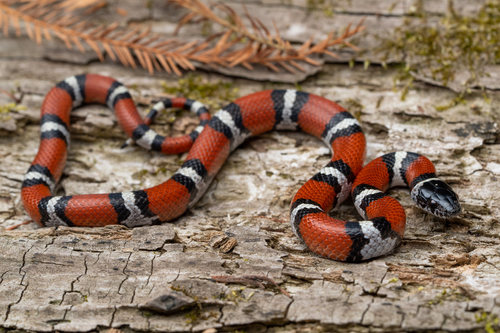
Close Relative (c) evangrimes, some rights reserved (CC BY), uploaded by evangrimes · cc-by
Help improve the field guideSomething wrong?
Checking your Fauna account…Report a name, category, or profile issue for review.