Also known as Gavial, Fish-eating Crocodile, Indian Gharial
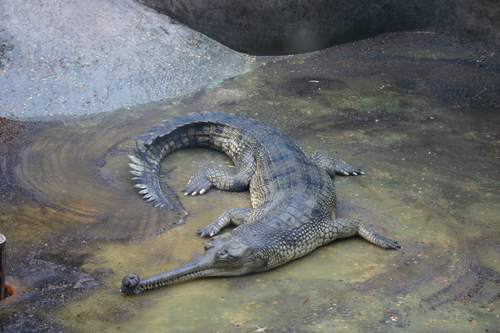
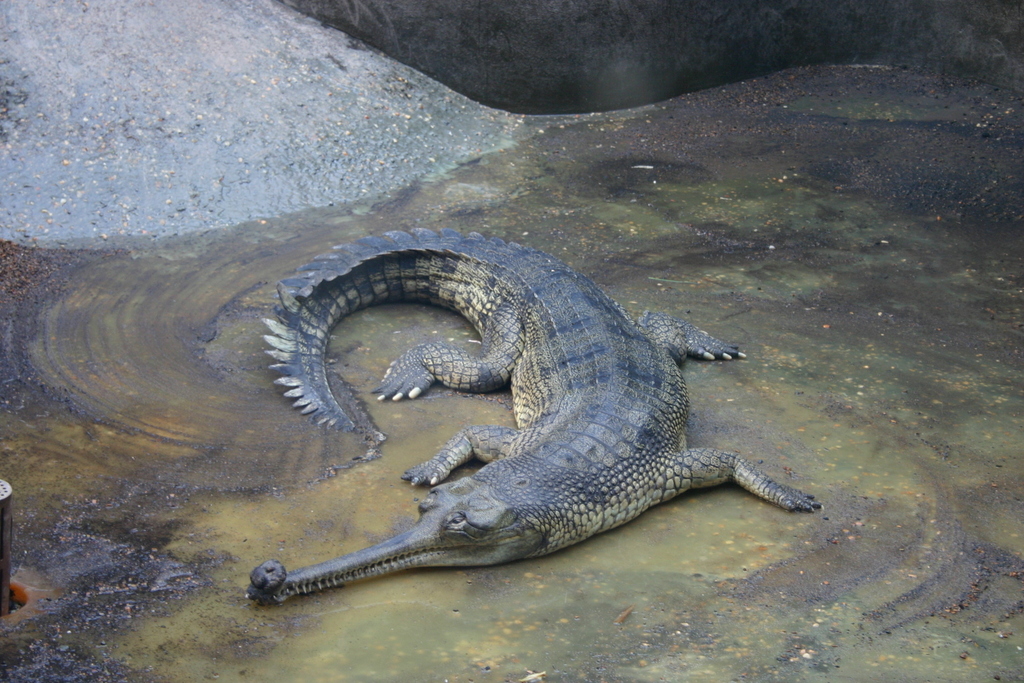
Gharials spend almost their entire lives in swift, deep freshwater rivers, hauling out on undisturbed sandbanks primarily to warm their bodies in the sun or lay eggs. Adult males develop a bulbous hollow growth called a ghara atop their snouts, which amplifies vocalizations into loud buzzing hisses and popping bubbles during aquatic territory displays. Unlike other crocodilians, their leg muscles are ill-suited for high-walking on land, so they belly-slide across beaches and use specialized, needle-like teeth to snap sideways at passing schools of fish.
Critically EndangeredConservation statusIUCN Red List categoriesLCNTVUENCREWEXCritically EndangeredRed List categories, explained →
Key facts
Diet & preyCarp, Catfish, Freshwater shrimp
Predators
Golden jackal
Striped hyena
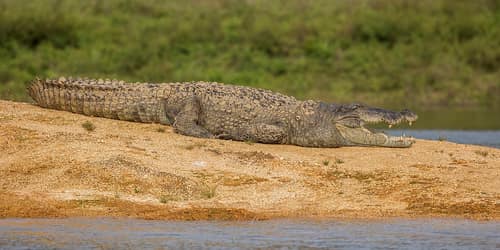
Mugger crocodile
ThreatsDam construction, commercial sand mining, gill net entanglement, and agricultural encroachment
HabitatsDeep pools and bends of fast-flowing freshwater rivers with sandy nesting banks
Life span50–60 years
Classification
FamilyGavialidae
SpeciesGavialis gangeticus
Range & activity
Range data is not available yet.
Safe observation
Interaction riskHigh
Low
Moderate
High
Very high
Why interaction risk is high
Massive river reptile that avoids humans; keep distance on sandbanks and avoid swimming near deep river pools.
Why it is dangerous
Although specialized to hunt fish rather than large mammals, a cornered adult can cause catastrophic crush or laceration trauma using over one hundred interlocking teeth and a heavy tail.
How to recognize a risky encounter
Look for an exceptionally long, needle-thin snout lined with interlocking sharp teeth and an olive-toned body reaching up to six meters in length.
What to do
Never approach basking animals on shore or wade through deep river pools in their territory; retreat slowly if one enters the water.
What to notice
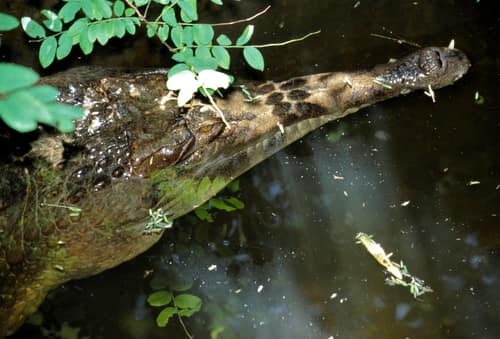
Easily identified by the pencil-thin snout and, on mature males, the prominent bulbous boss on the tip of the upper jaw.
Support conservation
Keep boat engines at low throttle in river sanctuaries, never walk along sandbars between March and June, and report illegal gill nets.
Responsible observation
Boat Viewing: Watch quietly from river safari boats, keeping at least 20 meters away from resting sandbanks.
Nesting Etiquette: Avoid sandbanks completely during the spring breeding season to prevent crushing hidden egg clutches.
Binocular Observation: Use a spotting scope from river bluffs to safely observe the male's distinct bulbous ghara.