
Invertebrate
Day Octopus
Octopus cyaneaAlso known as Big Blue Octopus, Cyane's Octopus, Common Reef Octopus
Active during daylight across Indo-Pacific coral reefs, the day octopus is an exceptionally clever hunter that uses dynamic camouflage to blend instantly with surrounding corals and sand. It maneuvers over reef structures, flaring its webbed arms to flush out hiding crabs and crustaceans before extracting them with precise suckers. When returning from a forage, it retreats into a snug crevice surrounded by a telltale midden of discarded shells.
DiurnalReef DwellerCamouflage Master
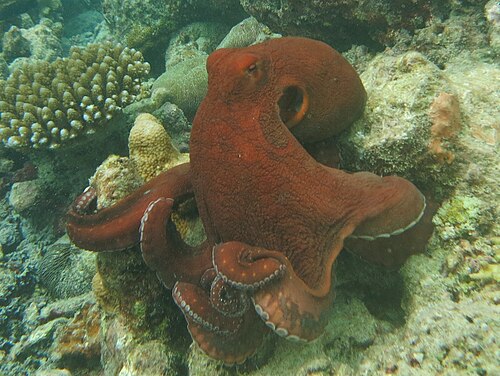
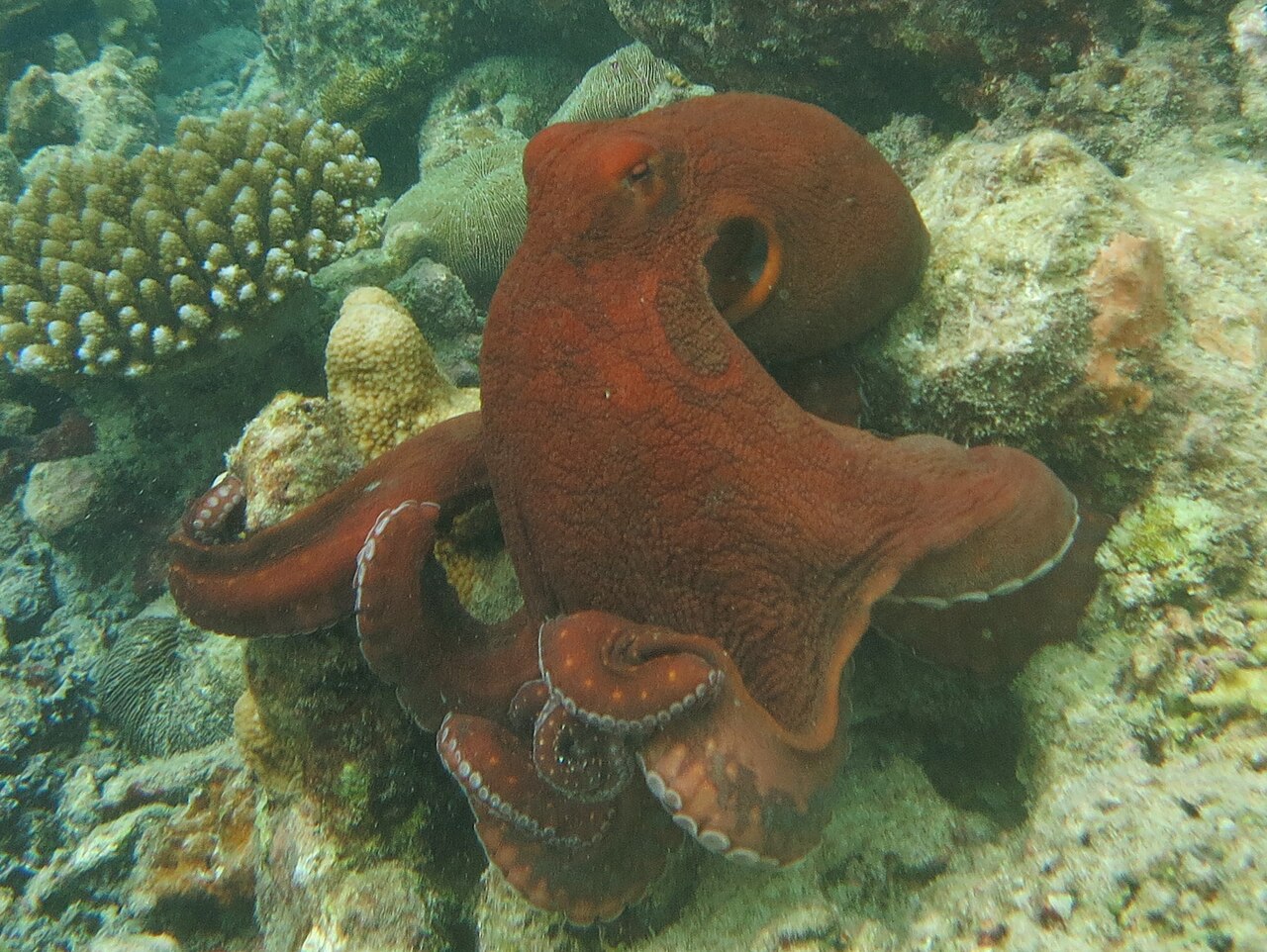
—observations
—countries
—peak records
Least ConcernConservation statusIUCN Red List categoriesLCNTVUENCREWEXLeast ConcernRed List categories, explained →
Diet & preyCrabs, Shrimp, Bivalves
Predators
- Moray Eels
- Reef Sharks
- Groupers
ThreatsHabitat degradation, targeted fishing, climate change impacts on coral reefs
HabitatsCoral reefs, rocky substrate, shallow seagrass beds
Life span1–1.5 years
Classification
- FamilyOctopodidae
- SpeciesOctopus cyanea
Range data is not available yet.
Interaction riskLow
- Low
- Moderate
- High
- Very high
- Why interaction risk is low
- Possesses a sharp beak capable of delivering a painful bite if handled; observe from a respectful distance without touching.
Responsible observation
- Spotting Dens: Look for scattered piles of empty crab carapaces and clam valves that mark active dens.
- Watch Camouflage: Maintain a quiet presence near a moving individual to witness rapid color and texture shifts.
- Maintain Distance: Avoid reaching into reef crevices or attempting to handle wild individuals.
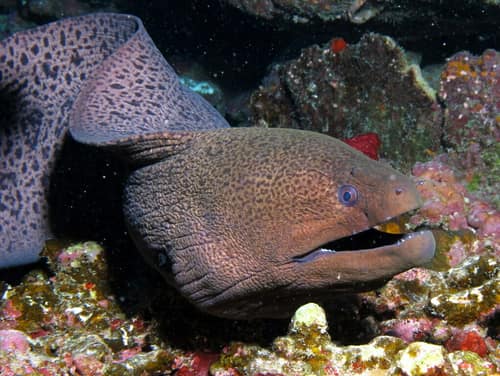
Predator (c) Derek Keats, some rights reserved (CC BY) · cc-by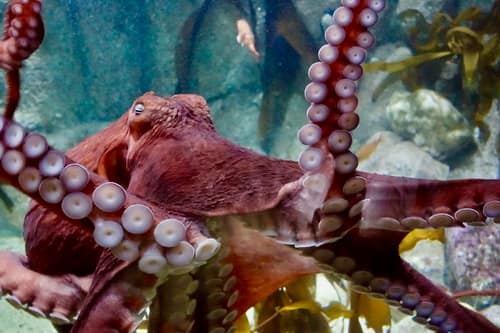
Close Relative "Giant Pacific Octopus" by jurvetson is licensed under CC BY 2.0. To view a copy of this license, visit https://creativecommons.org/licenses/by/2.0/. · cc-by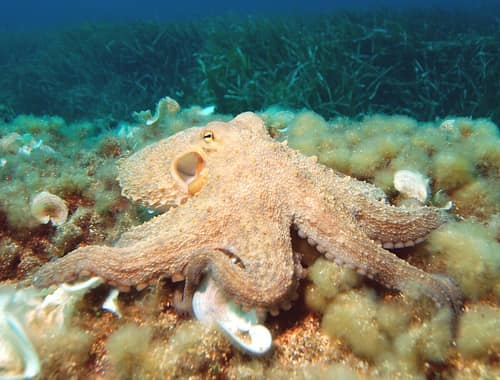
Close Relative albert kok / CC BY-SA 3.0 · cc-by-sa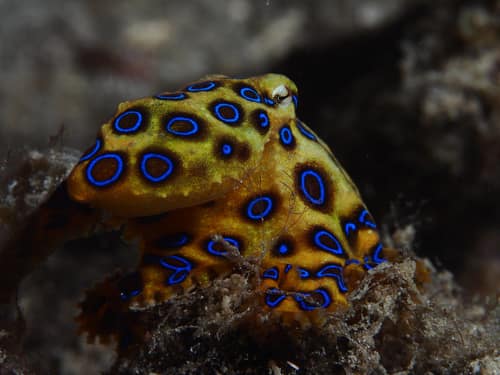
Close Relative "Greater blue-ringed octopus (Hapalochlaena lunulata)" by krokodiver is licensed under CC BY-SA 2.0. To view a copy of this license, visit https://creativecommons.org/licenses/by-sa/2.0/. · cc-by-sa
Help improve the field guideSomething wrong?
Checking your Fauna account…Report a name, category, or profile issue for review.