
Giant Pacific Octopus
Enteroctopus dofleiniAlso known as North Pacific Giant Octopus
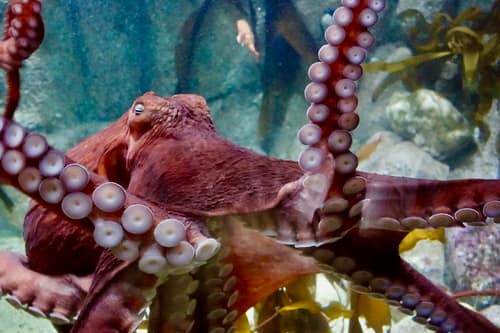
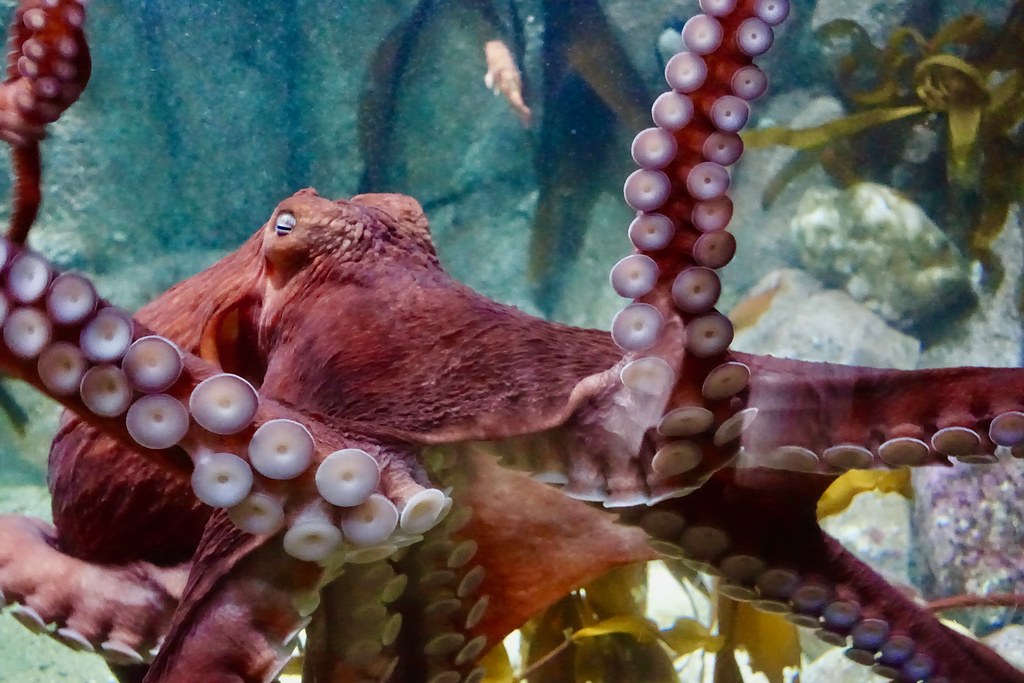
Giant Pacific octopuses are renowned for their exceptional intelligence, navigating complex underwater mazes and opening sealed jars with ease. They hunt under the cover of darkness along temperate rocky reefs, dragging crabs and mollusks back to secluded dens marked by telltale middens of discarded shells. Females invest their final months of life guarding tens of thousands of translucent eggs, aerating and cleaning them tirelessly without feeding until they perish.
- Harbor Seal
- Steller Sea Lion
- Giant Pacific Sleeper Shark
- OrderOctopoda
- FamilyEnteroctopodidae
- GenusEnteroctopus
- SpeciesEnteroctopus dofleini
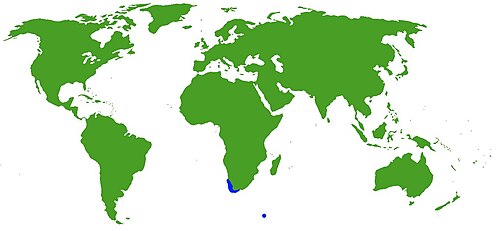
Marine distribution — the ocean basins and seas where the species occurs.
- Low
- Moderate
- High
- Very high
- Why interaction risk is low
- Possesses a powerful beak capable of a painful defensive bite; observe without touching or cornering.
- Why it is dangerous
- The parrot-like chitinous beak can puncture thick wetsuits and skin, injecting enzymes that cause localized pain and swelling.
- How to recognize a risky encounter
- Recognized by its massive size, reddish-pink textured mantle, and thick arms lined with two rows of large suckers.
- What to do
- Maintain a respectful buffer of at least a meter while diving and never reach into dark rock recesses bare-handed.
- Look for Dens: Spot them by looking for clean rock crevasses ringed by piles of empty crab carapaces.
- Night Dives: Dive after dusk when adults leave their crevices to hunt actively over open reefs.
- Give Space: Avoid blocking cave openings or attempting to grab tentacles, which provokes defensive ink.
Same Genus Kirt L. Onthank / Public domain · cc0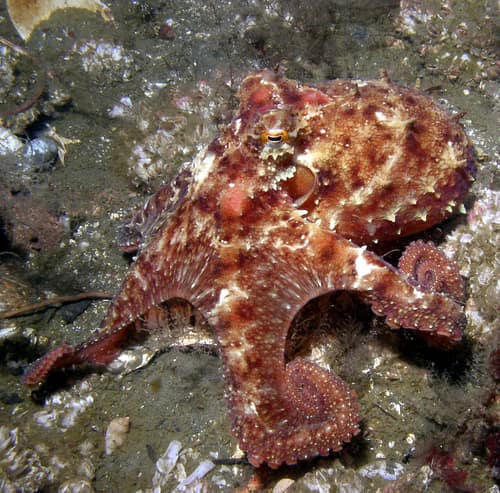
Competitor Original uploader was Taollan82 at en.wikipedia / CC BY-SA 3.0 · cc-by-sa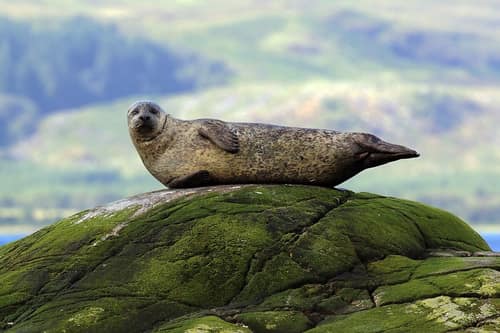
Predator Charles J. Sharp / CC BY-SA 4.0 · cc-by-sa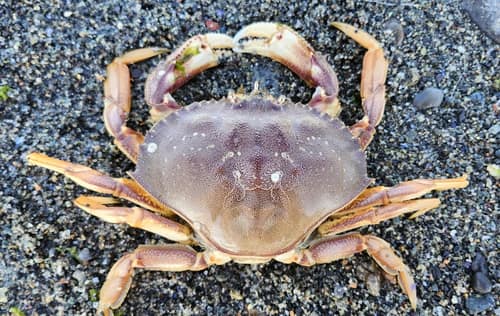
Prey (c) Lisa Zhang, some rights reserved (CC BY), uploaded by Lisa Zhang · cc-by
Found in Collections
Shore Life
Giant Pacific Octopus is found in this collection. Identify it in Fauna to fill this slot and continue your progress.
Unlock to track progress
Report a name, category, or profile issue for review.