
Species · GBIF taxon 2289324
Greater Blue-ringed Octopus
Hapalochlaena lunulataAlso known as Blue-ringed Octopus, Greater Blue-ring Octopus
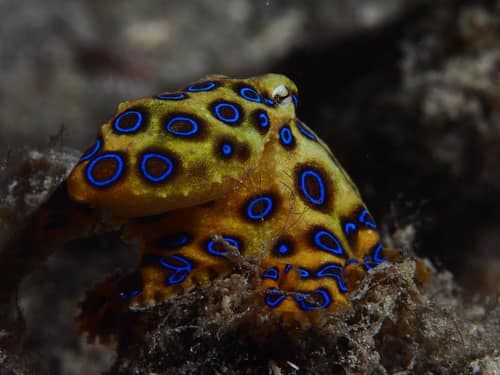
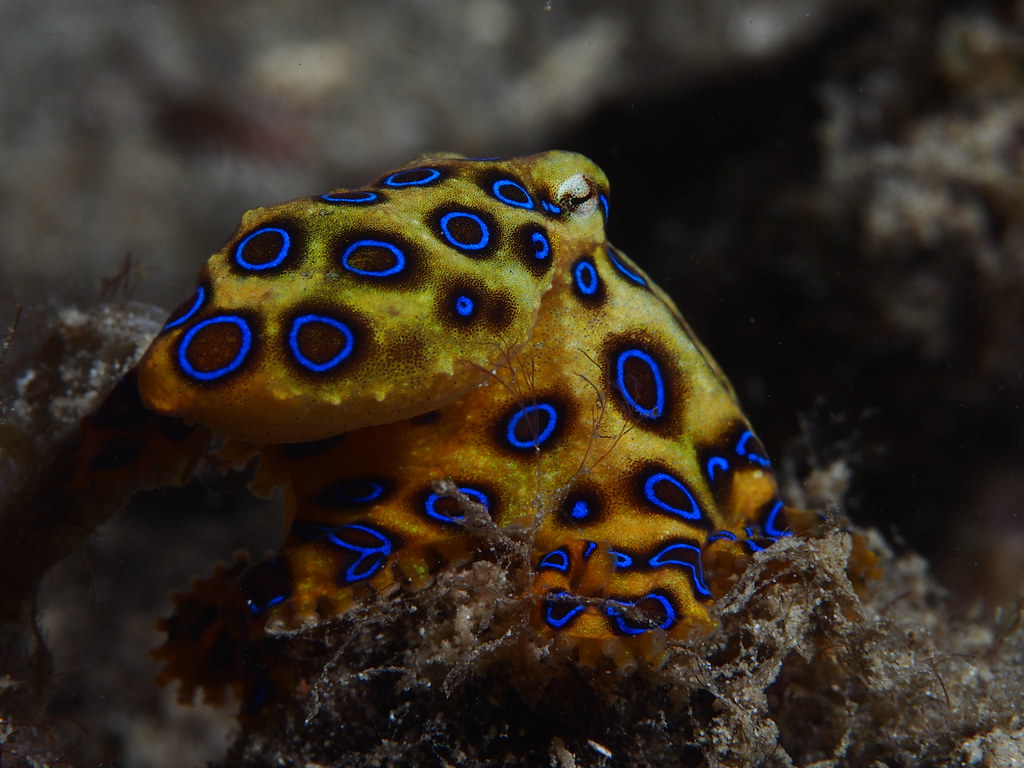
Greater blue-ringed octopuses are masters of camouflage that blend seamlessly into coral reefs and sandy shallows until threatened, when they flash brilliant, iridescent blue rings as a warning. They hunt primarily at night, using a powerful neurotoxin called tetrodotoxin to paralyze crabs and small fish before consuming them. Despite their tiny size, they carry enough venom to kill multiple adult humans, making them one of the ocean's most formidable creatures.
VenomousMarineNocturnal
—observations
—countries
—peak records
Not EvaluatedConservation statusIUCN Red List categoriesLCNTVUENCREWEXNot Evaluated — not placed on the risk ladderRed List categories, explained →
Diet & prey
- Crabs
- Shrimp
- Hermit crabs
Predators
- Moray eels
- Flatheads
- Large fish
ThreatsHabitat destruction, climate change, marine pollution, and collection for the aquarium trade
HabitatsCoral reefs, tide pools, sandy and muddy sea floors
Life spanAbout 1 to 2 years
Size / weightNot available
Classification
- FamilyOctopodidae
- SpeciesHapalochlaena lunulata
Range data is not available yet.
Interaction riskVery high
- Low
- Moderate
- High
- Very high
- Why interaction risk is very high
- Carries a highly lethal neurotoxin; never touch or handle under any circumstances.
- Why it is dangerous
- Produces tetrodotoxin, a potent neurotoxin that causes motor paralysis and respiratory failure within minutes.
- How to recognize a risky encounter
- Look for a small, yellowish octopus with dark brown patches that flash bright, iridescent blue rings when disturbed.
- What to do
- Never handle this animal or pick up shells or debris where it might be hiding; seek immediate emergency medical care if bitten.
Responsible observation
- Keep your distance: Observe from a safe distance and never attempt to touch or corner them.
- Watch for warning signs: Look for the sudden, bright flashing of iridescent blue rings on their body.
- Check tide pools carefully: Be cautious when exploring shallow reef flats where they may hide in crevices.
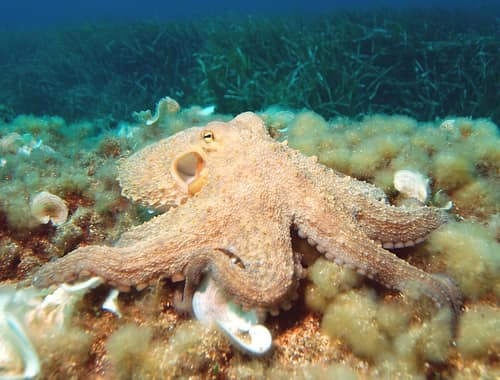
Distant Cousin albert kok / CC BY-SA 3.0 · cc-by-sa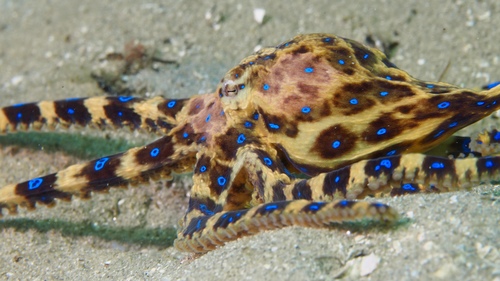
Close Relative (c) Christopher Mark, some rights reserved (CC BY), uploaded by Christopher Mark · cc-by Image unavailable
Close Relative
Help improve the field guideSomething wrong?
Checking your Fauna account…Report a name, category, or profile issue for review.