
Species · GBIF taxon 2403808
Giant Moray
Gymnothorax javanicusAlso known as Javanese Moray Eel, Black-blotched Moray, Giant Moray Eel
Giant morays rule Indo-Pacific coral reefs with heavy, muscular bodies and a mottled brown-and-black pattern that blends perfectly into dark crevices. These formidable predators spend their days peering out from rocky shelters, constantly opening and closing their mouths to pump water over their gills. Under the cover of darkness, they leave their lairs to hunt, sometimes forming cooperative partnerships with roving groupers to flush out prey.
MarineNocturnalCarnivorous
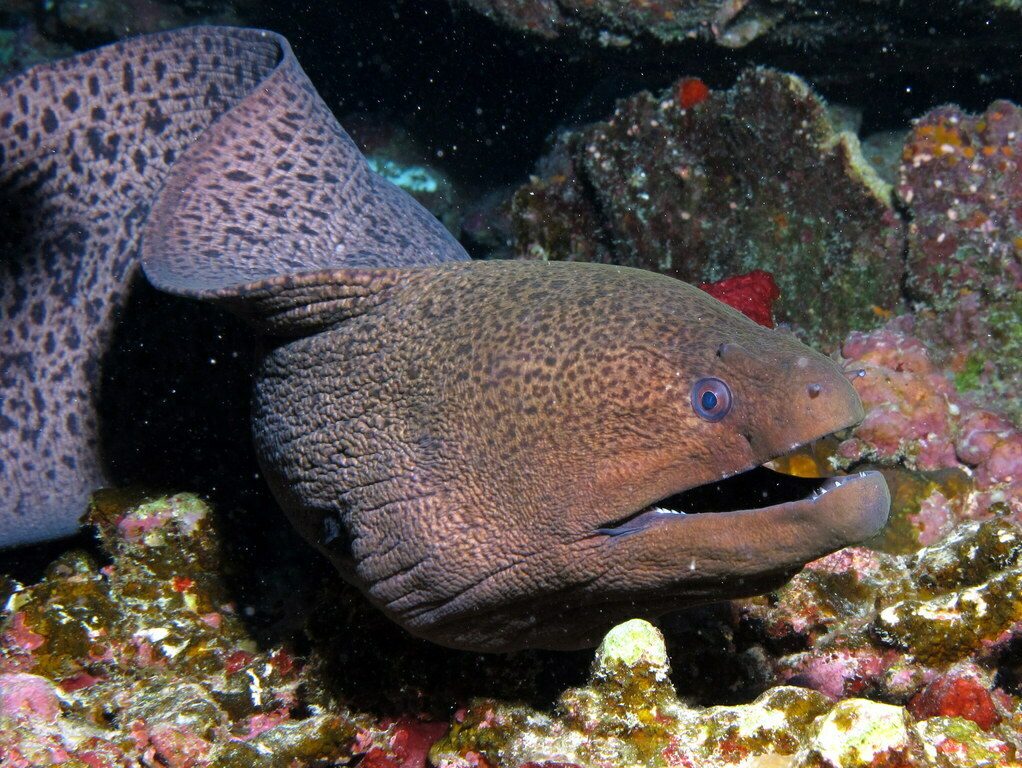
Licensed reference(c) Derek Keats, some rights reserved (CC BY) · cc-by
—observations
—countries
—peak records
Least ConcernConservation statusIUCN Red List categoriesLCNTVUENCREWEXLeast ConcernRed List categories, explained →
Diet & prey
- Reef Fish
- Octopuses
- Crustaceans
Predators
- Large Sharks
- Sea Snakes
- Humans
ThreatsHabitat degradation, overfishing, and accidental capture in reef fisheries
HabitatsCoral reefs, rocky crevices, and lagoons up to depths of 50 meters
Life spanUp to 30 years
Size / weightNot available
Classification
- FamilyMuraenidae
- SpeciesGymnothorax javanicus
Range data is not available yet.
Interaction riskLow
- Low
- Moderate
- High
- Very high
- Why interaction risk is low
- Capable of inflicting severe, infectious bites if cornered or provoked; maintain a respectful distance when diving.
- Why it is dangerous
- Possesses powerful jaws lined with sharp, backward-curving teeth that can cause deep lacerations prone to severe bacterial infection.
- How to recognize a risky encounter
- Look for a massive, thick-bodied eel with dark speckling, a black patch around the gill opening, and a constantly gaping mouth.
- What to do
- Never attempt to touch, feed, or corner a moray; swim slowly past their crevices without blocking their exit.
Responsible observation
- Keep your distance: Avoid reaching into dark crevices or holes where an eel might be resting.
- Watch their posture: A moray that retreats deep into its lair or gapes aggressively is feeling threatened.
- Do not feed: Hand-feeding habituates eels to humans, leading to accidental and severe bites.

Symbiont 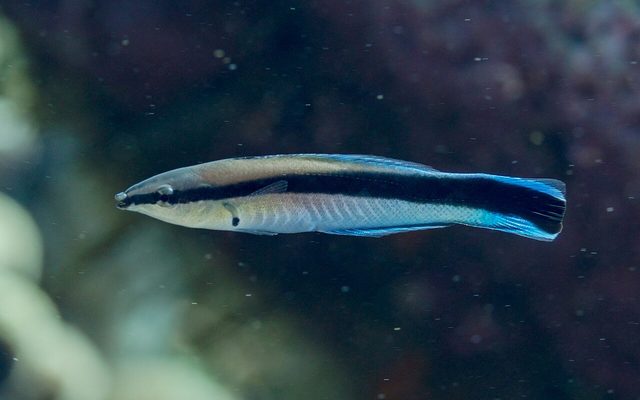
Symbiont Diego Delso / CC BY-SA 4.0 · cc-by-saClose Relative Close Relative Close Relative
Help improve the field guideSomething wrong?
Checking your Fauna account…Report a name, category, or profile issue for review.