
Invertebrate
Signal Crayfish
Pacifastacus leniusculusAlso known as Pacific Crayfish, Californian Crayfish
Signal crayfish are robust freshwater crustaceans recognizable by the bright white to turquoise patch on their claw hinges. Native to cold, clean rivers in western North America, they have become highly aggressive invaders in European and Asian waterways. They dig extensive burrows along riverbanks, causing severe erosion and displacing native crayfish species.
FreshwaterInvasiveAquatic
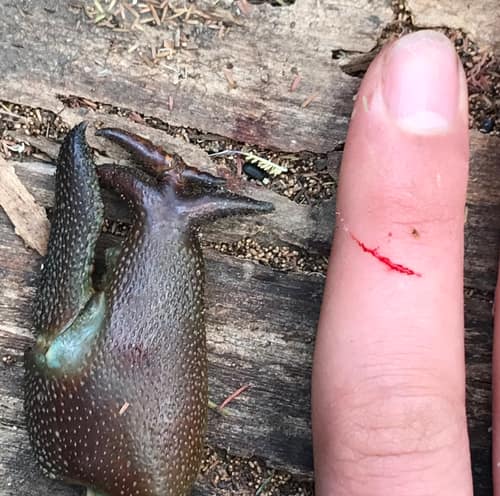

—observations
—countries
—peak records
Least ConcernConservation statusIUCN Red List categoriesLCNTVUENCREWEXLeast ConcernRed List categories, explained →
Diet & preyAquatic insects, Submerged plants, Snails
Predators
- Eurasian otter
- Grey heron
- Largemouth bass
ThreatsHabitat pollution and dam construction in native ranges
HabitatsStreams, rivers, lakes, and reservoirs
Life spanup to 16 years
Classification
- OrderDecapoda
- FamilyAstacidae
- GenusPacifastacus
- SpeciesPacifastacus leniusculus
Range data is not available yet.
Interaction riskLow
- Low
- Moderate
- High
- Very high
- Why interaction risk is low
- Large pincers can pinch hard enough to break skin; observe from a short distance or handle carefully behind carapace.
- Why it is dangerous
- Strong claws can deliver a painful pinch capable of breaking human skin.
- How to recognize a risky encounter
- Look for smooth reddish-brown body with a distinct bright white or turquoise mark at the claw hinge.
- What to do
- Never place fingers near open claws; hold firmly from behind the head shell.
Responsible observation
- Observation: Look under rocks and submerged debris in clear water during dusk or dawn.
- Biosecurity: Clean and dry gear thoroughly to avoid spreading crayfish plague between waterbodies.
- Handling: Grasp firmly behind the main body shell to avoid the powerful claws if sampling.
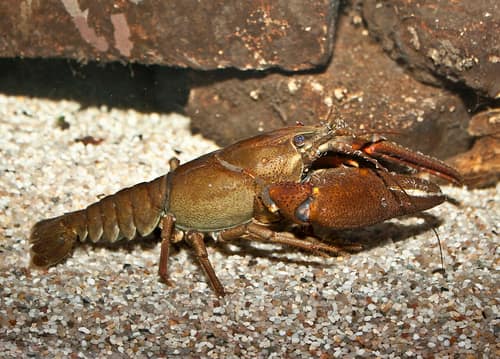
Competitor Dragon187 / CC BY-SA 3.0 · cc-by-sa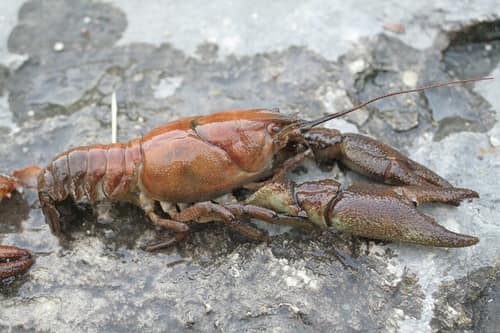
Competitor David Gerke / CC BY-SA 3.0 · cc-by-sa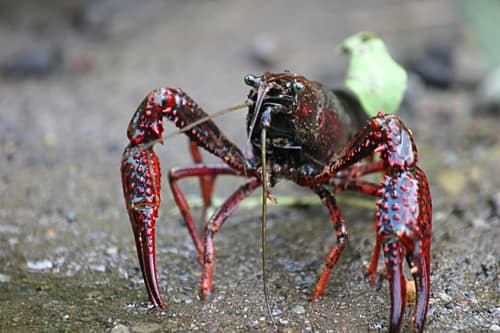
Co-invader No machine-readable author provided. MikeMurphy assumed (based on copyright claims). / Public domain · cc0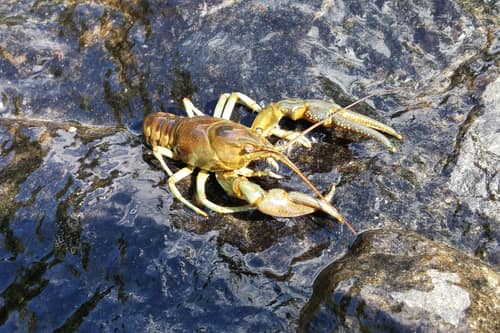
Ecological Parallel (c) Kristof Zyskowski, some rights reserved (CC BY), uploaded by Kristof Zyskowski · cc-by
Keep collecting in Fauna
Found in Collections
Species set Pro
Shore Life
Signal Crayfish is found in this collection. Identify it in Fauna to fill this slot and continue your progress.
Unlock to track progress
Help improve the field guideSomething wrong?
Checking your Fauna account…Report a name, category, or profile issue for review.