
Red Swamp Crayfish
Procambarus clarkiiAlso known as Louisiana Crawfish, Mudbug, Louisiana Crayfish, Red Swamp Crawfish
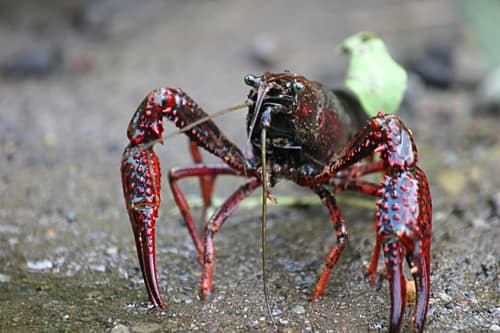
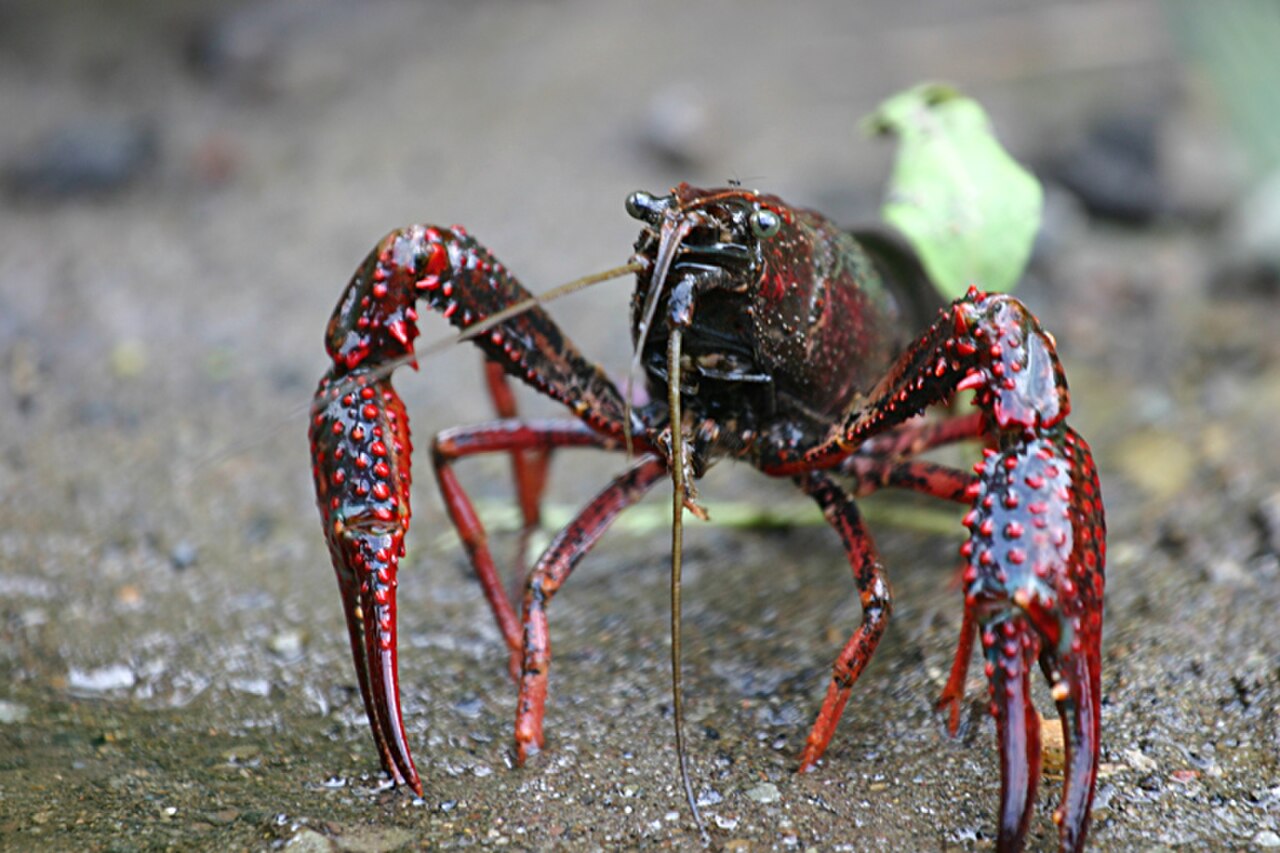
Red swamp crayfish are highly adaptable freshwater crustaceans known for their dark red bodies, long claws studded with bright crimson bumps, and ability to survive drought by burrowing deep into mud. They dig extensive networks of underground tunnels that can weaken ditch banks and earthen levees while disrupting native aquatic food webs. Highly fecund and tolerant of low-oxygen water, these opportunistic omnivores have spread from their native southern wetlands to become a major invasive species across multiple continents.
- Raccoons
- Great Blue Herons
- Largemouth Bass
- OrderDecapoda
- FamilyCambaridae
- GenusProcambarus
- SpeciesProcambarus clarkii
- Low
- Moderate
- High
- Very high
- Why interaction risk is low
- Large claws can deliver a painful pinch; handle carefully from behind the body.
- Why it is dangerous
- Equipped with strong, pointed claws capable of inflicting painful pinches and breaking delicate skin when cornered or handled roughly.
- How to recognize a risky encounter
- Look for the overall deep crimson body color and slender claws covered in prominent bright red tubercles.
- What to do
- If lifting a crayfish, reach from directly behind its back to hold the main carapace safely out of reach of its claws.
- Handling Technique: Grasp the back of the carapace firmly behind the claws to prevent pinches.
- Spotting Burrows: Search along muddy waterlines for raised mud chimneys crowning tunnel entrances.
- Invasive Management: Avoid moving wild crayfish between water bodies or releasing pets into local waters.
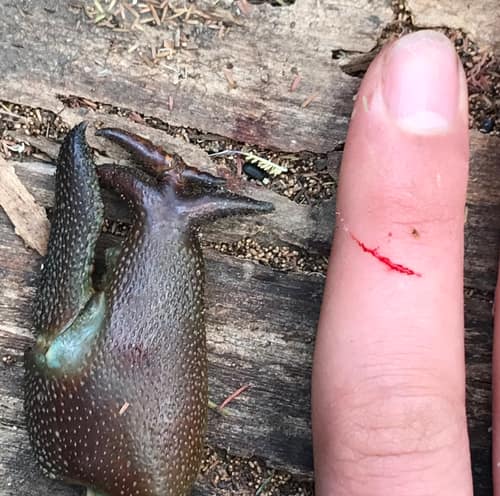
Competitor (c) Parsa Fard, some rights reserved (CC BY) · cc-by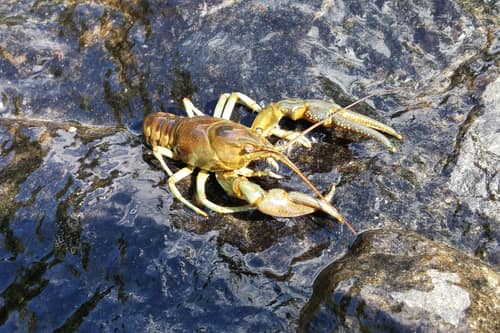
Competitor (c) Kristof Zyskowski, some rights reserved (CC BY), uploaded by Kristof Zyskowski · cc-by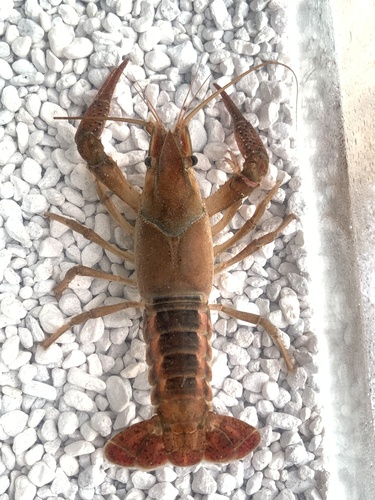
Close Relative (c) Mila Turov, some rights reserved (CC BY) · cc-by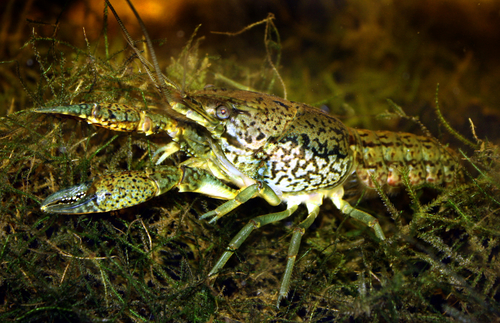
Close Relative (c) Chucholl C., some rights reserved (CC BY-SA) · cc-by-sa
Found in Collections
Shore Life
Red Swamp Crayfish is found in this collection. Identify it in Fauna to fill this slot and continue your progress.
Unlock to track progress
Report a name, category, or profile issue for review.