Viceroy
Limenitis archippus
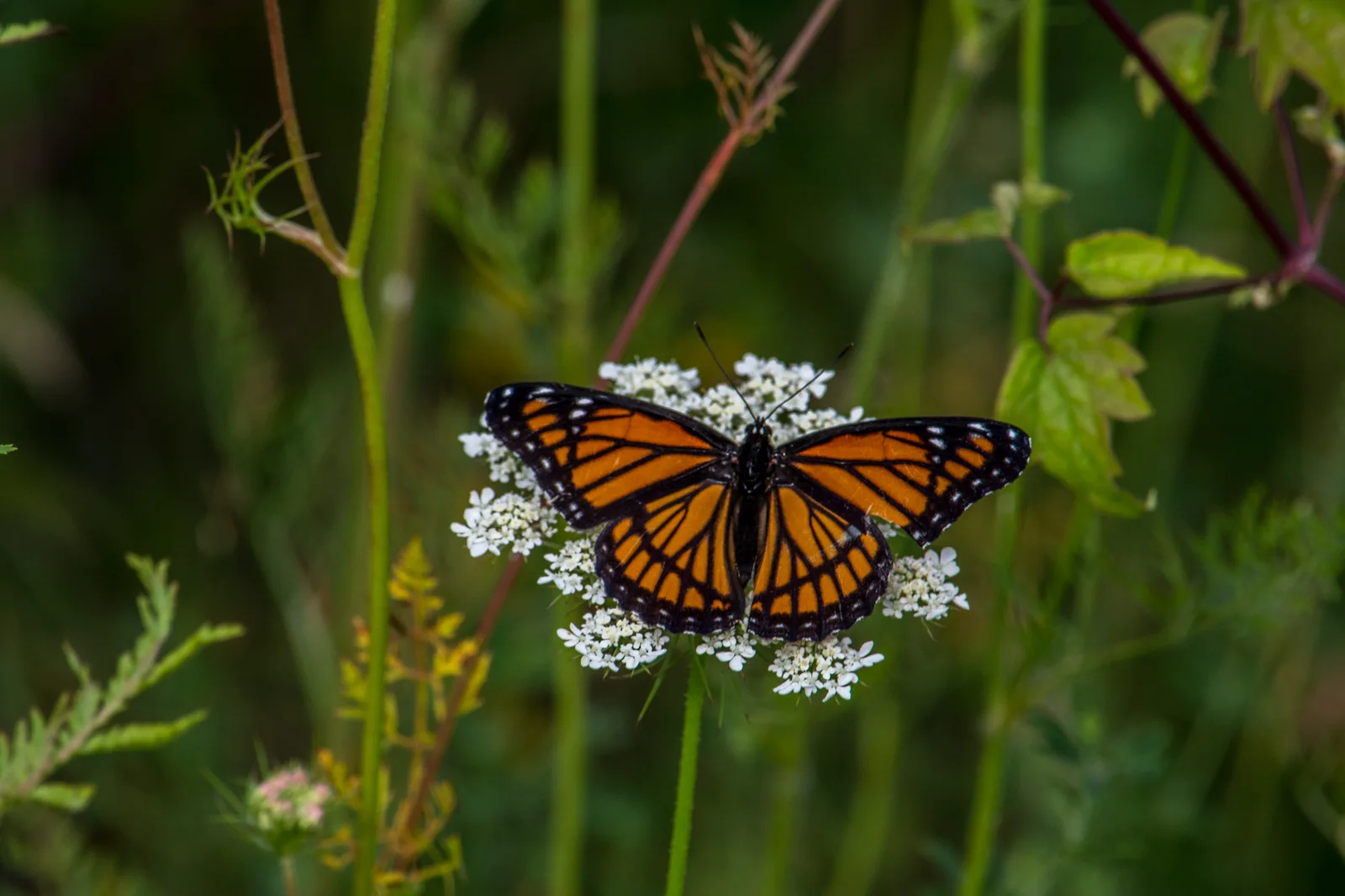
A smaller monarch mimic, separated instantly by the black line that crosses each hindwing.
What to look for
- 01
A black line arcs across each hindwing, cutting across the veins — a monarch has no such line
- 02
Smaller than a monarch, roughly 2.5–3.5 inches across
- 03
Orange with black veins and a black border spotted with white
Where it lives
Wet meadows, streamsides, marsh edges, and roadside ditches — anywhere its willow, poplar, and cottonwood host plants grow.
How it moves
Flies with quick, erratic, flapping movements rather than the monarch's floating flap-and-glide. Resident year-round rather than migratory, and often patrols near willows and damp ground.
Common lookalikes
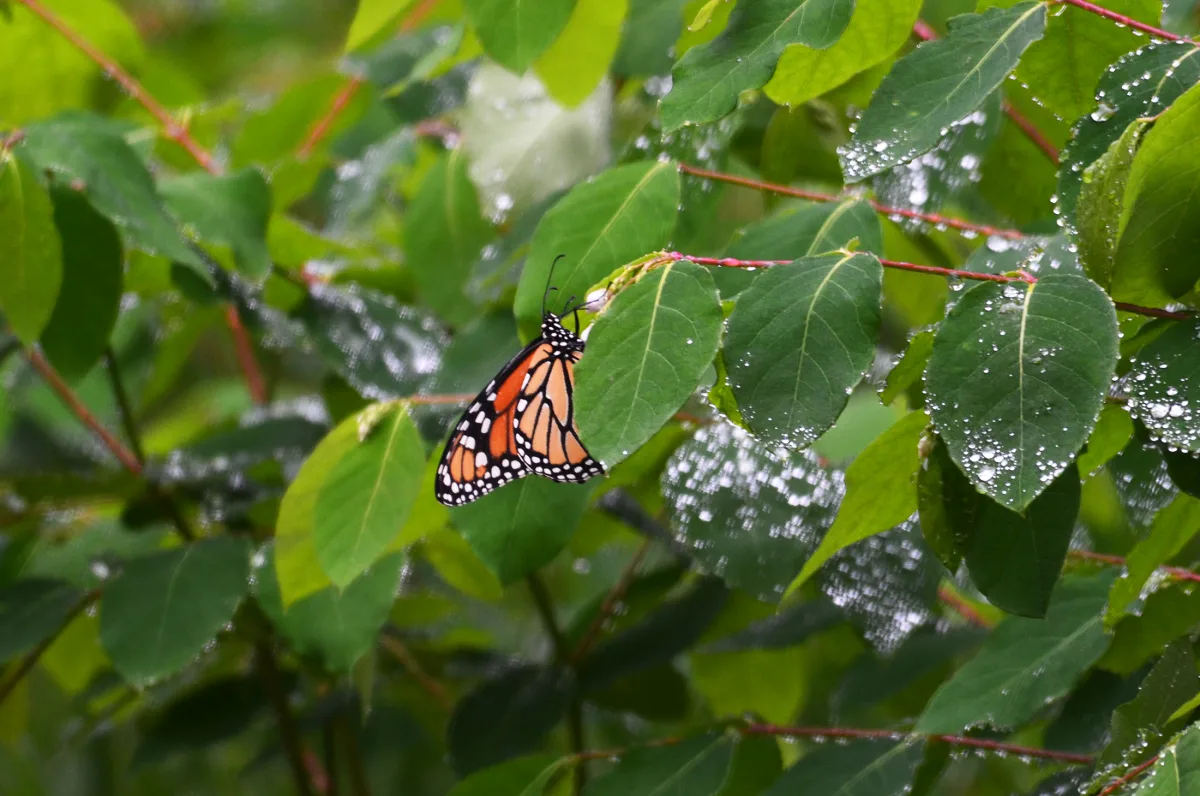
Monarchs are larger, lack the hindwing crossline, and sail with a flap-and-glide flight. In the southern US the darker queen is the closer mimic and also lacks the crossline.
Observe responsibly
Photograph the open hindwing if you can — the crossline decides it. Handling is unnecessary and risks damaging the wings.
Harmless to people. Long treated as a Batesian mimic, the viceroy is now understood to be unpalatable in its own right, making the resemblance mutually reinforcing rather than a bluff.
Widespread and not currently of conservation concern, though it depends on willow-lined wet ground that is easily drained or cleared.
Get Fauna and identify it in the field.
Where this guide comes from
Sources are linked below. Field marks vary with age, sex, season, region, light, and viewing distance.