Turkey Tail
Trametes versicolor
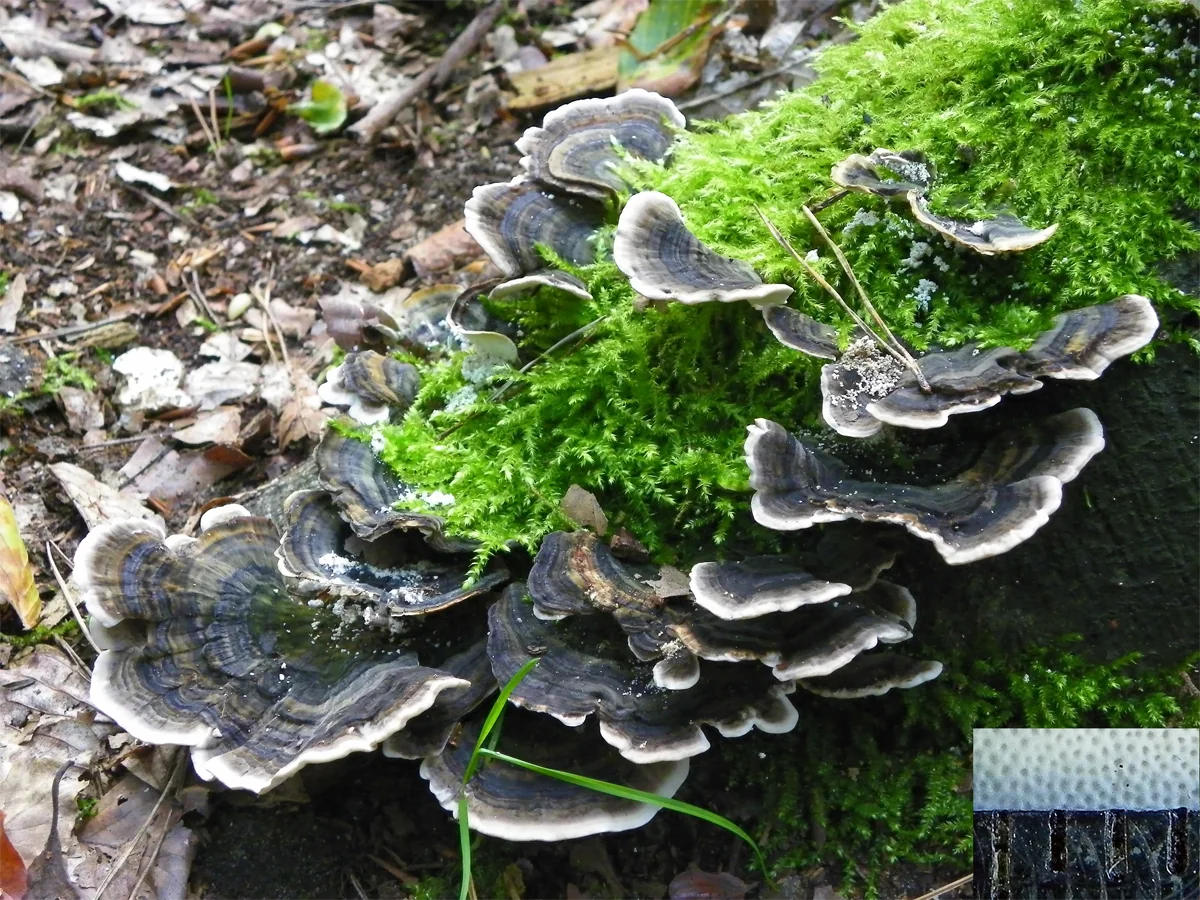
A thin, banded bracket fungus identified with certainty by the fine pore surface on its underside.
What to look for
- 01
Underside carries a true pore surface — roughly 3–8 tiny pores per millimetre, usually whitish
- 02
Concentric bands of contrasting colour with a velvety upper surface
- 03
Thin and flexible, growing in overlapping tiers or rosettes
Where it lives
Dead hardwood — stumps, fallen logs, and standing dead trees — in woodlands across North America.
How it grows
A wood-decay fungus that fruits in shelving clusters on dead hardwood, persisting through much of the year and reviving after rain.
Common lookalikes
False turkey tail has a smooth underside with no pores at all. Several other banded brackets exist; the underside is what settles it, ideally with a hand lens.
Observe responsibly
Turn a piece over, or bring a hand lens. The pores are the whole identification, and they are hard to see in a photograph of the top alone.
Fauna teaches identification, not edibility or medicinal use. Turkey tail is widely collected for tea, which is precisely why the pore check matters — and why a wild fungus should never be used on the strength of an app match or a single guide.
Common and secure, and an important recycler returning dead hardwood to forest soil.
Get Fauna and identify it in the field.
Where this guide comes from
Sources are linked below. Field marks vary with age, sex, season, region, light, and viewing distance.