Golden Chanterelle
Cantharellus species
A prized golden mushroom whose underside has blunt, forked ridges known as false gills rather than true blades.
What to look for
- 01
Egg-yolk to golden color with a funnel-shaped cap and a wavy edge
- 02
Blunt, forked, gill-like ridges run down onto the stem and won't peel off cleanly
- 03
Grows alone or scattered from soil near trees — never in fused clumps on wood
- 04
Flesh is pale and whitish inside; the smell is often fruity, like apricot
Where it lives
Bare soil, moss, and leaf litter under conifers and hardwoods — always from the ground, in partnership with tree roots.
How it grows
Fruits from midsummer into fall, often reappearing year after year in the same mycorrhizal patches under living trees.
Common lookalikes
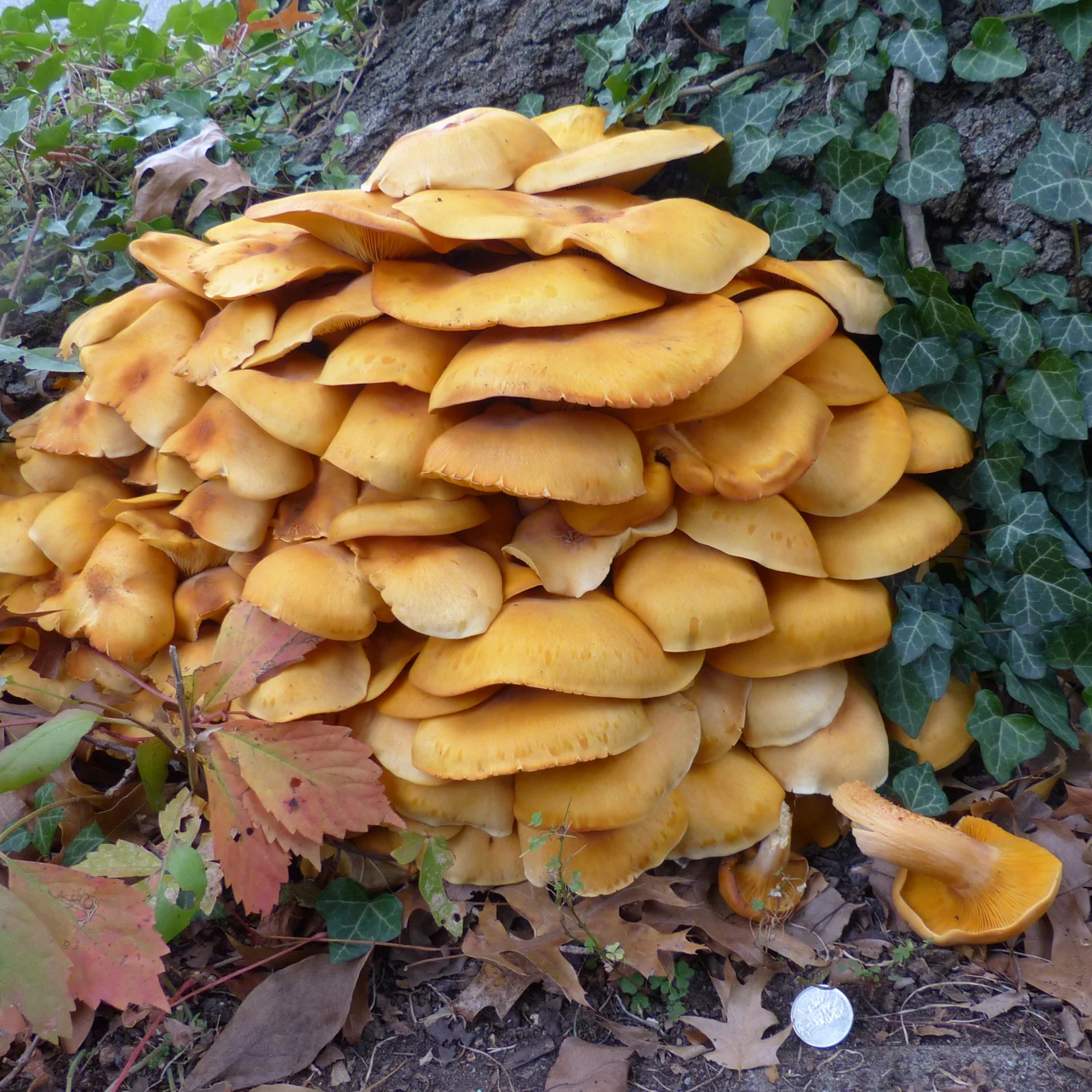
The toxic jack-o'-lantern shares the orange-gold color and season but has thin, sharp, true gills and grows in dense clumps on wood.
Observe responsibly
Photograph the underside and the base before anything else — the ridges and what it grows from decide the identification.
Never eat any wild mushroom based on looks, an app match, or a single guide. Toxic lookalikes share this color and season; if a wild mushroom has been eaten, call Poison Control at 1-800-222-1222 (US) — even before symptoms appear.
Chanterelles live in partnership with living trees; raking or heavy soil disturbance damages the patches they return to.
Get Fauna and identify it in the field.
Where this guide comes from
Sources are linked below. Field marks vary with age, sex, season, region, light, and viewing distance.