False Turkey Tail
Stereum ostrea
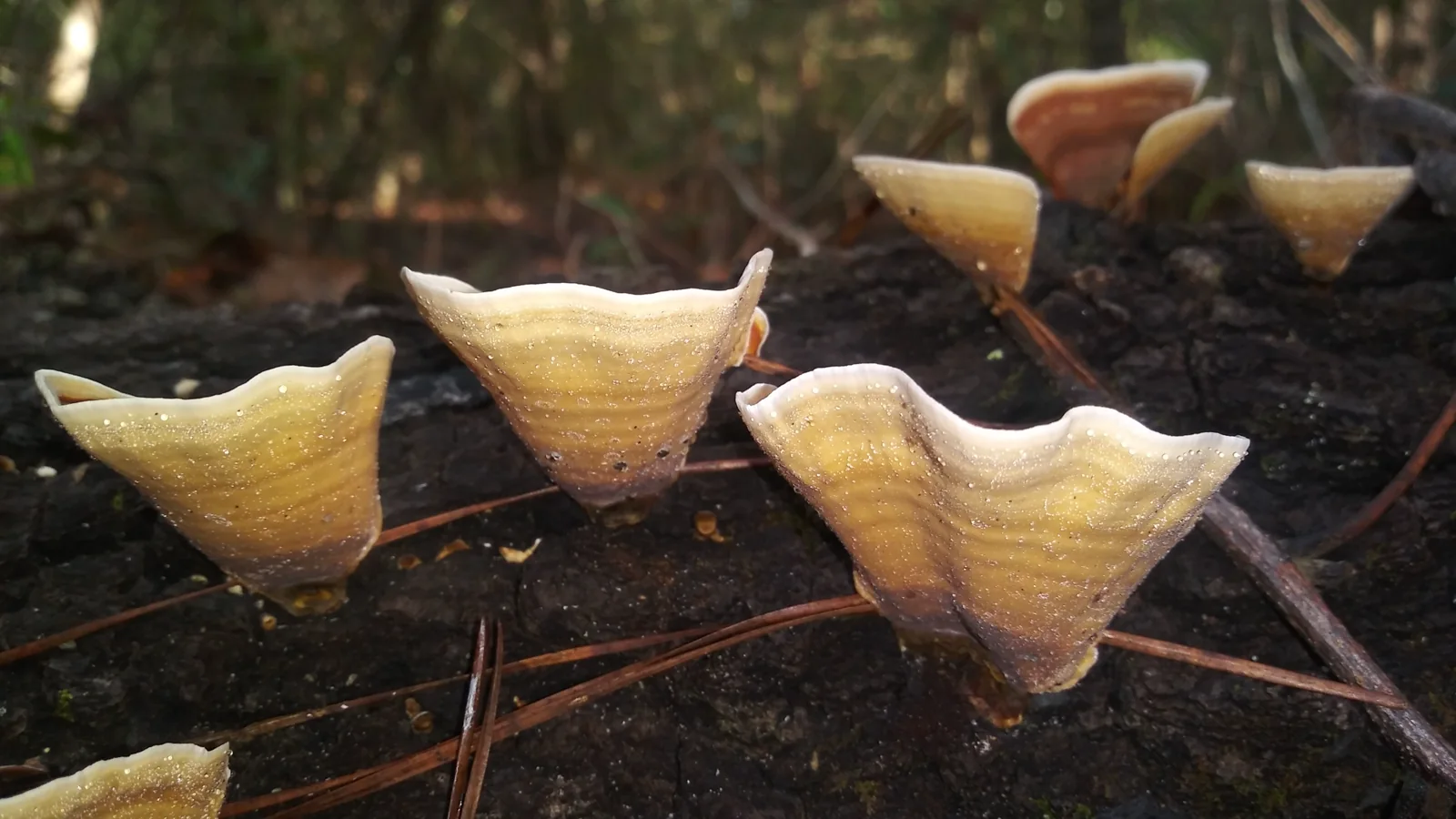
A banded lookalike bracket that gives itself away with a completely smooth, poreless underside.
What to look for
- 01
Underside smooth and bare — no pores, no gills
- 02
Banded upper surface, often warmer orange-tan than turkey tail
- 03
Thin and often more wavy or cupped, growing in tiers on dead hardwood
Where it lives
Dead hardwood logs, stumps, and branches in woodlands across much of North America.
How it grows
A crust fungus that fruits on dead hardwood year-round, spreading spores from a flat surface rather than from within pores.
Common lookalikes
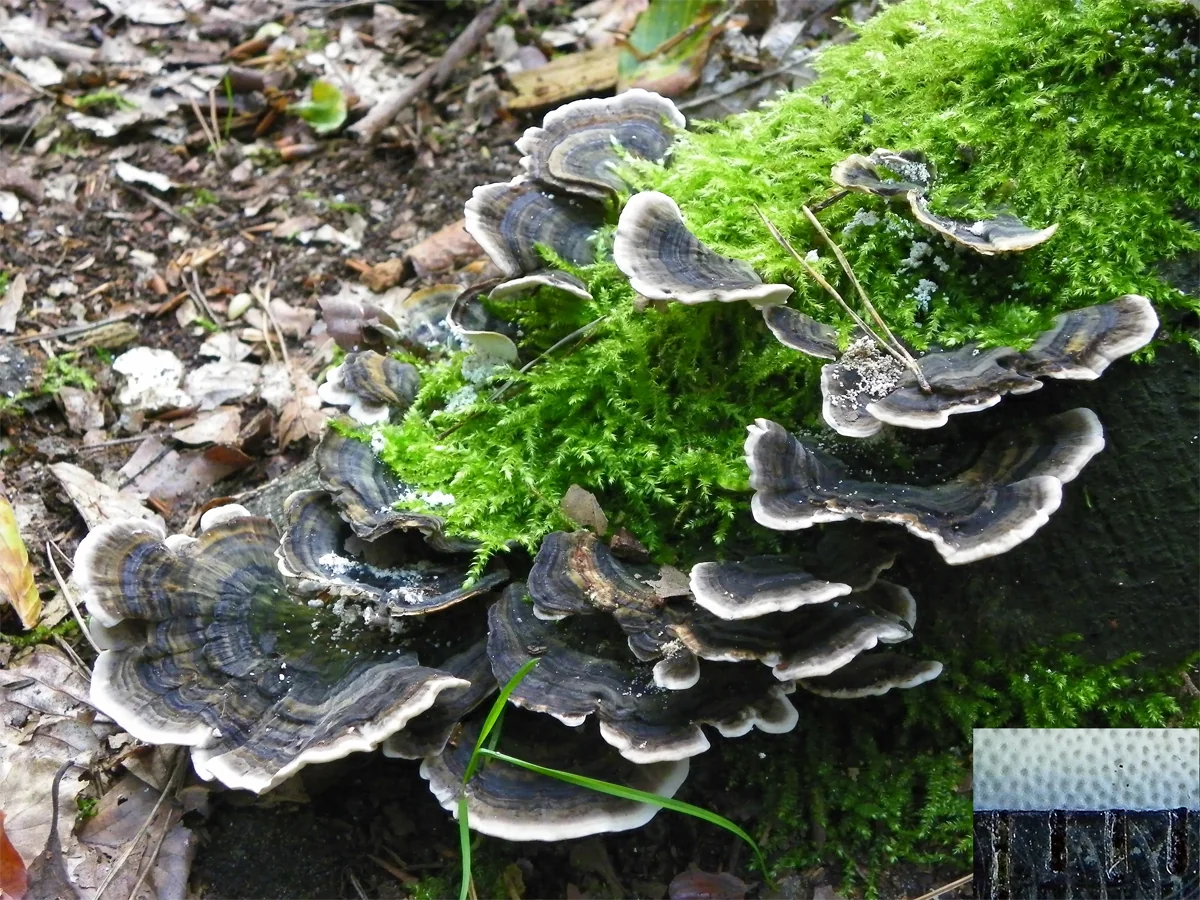
True turkey tail is the same shape and habitat but carries a fine pore surface underneath. Colour and banding overlap far too much to separate them from the top.
Observe responsibly
Photograph the underside, not just the banded top — that is the only view that answers the question.
Not a food. Fauna teaches identification only, and no wild fungus should be eaten or brewed on the strength of a guide or an app match.
Common and secure; another of the fungi steadily returning dead wood to soil.
Get Fauna and identify it in the field.
Where this guide comes from
Sources are linked below. Field marks vary with age, sex, season, region, light, and viewing distance.