Jack-o'-lantern Mushroom
Omphalotus species
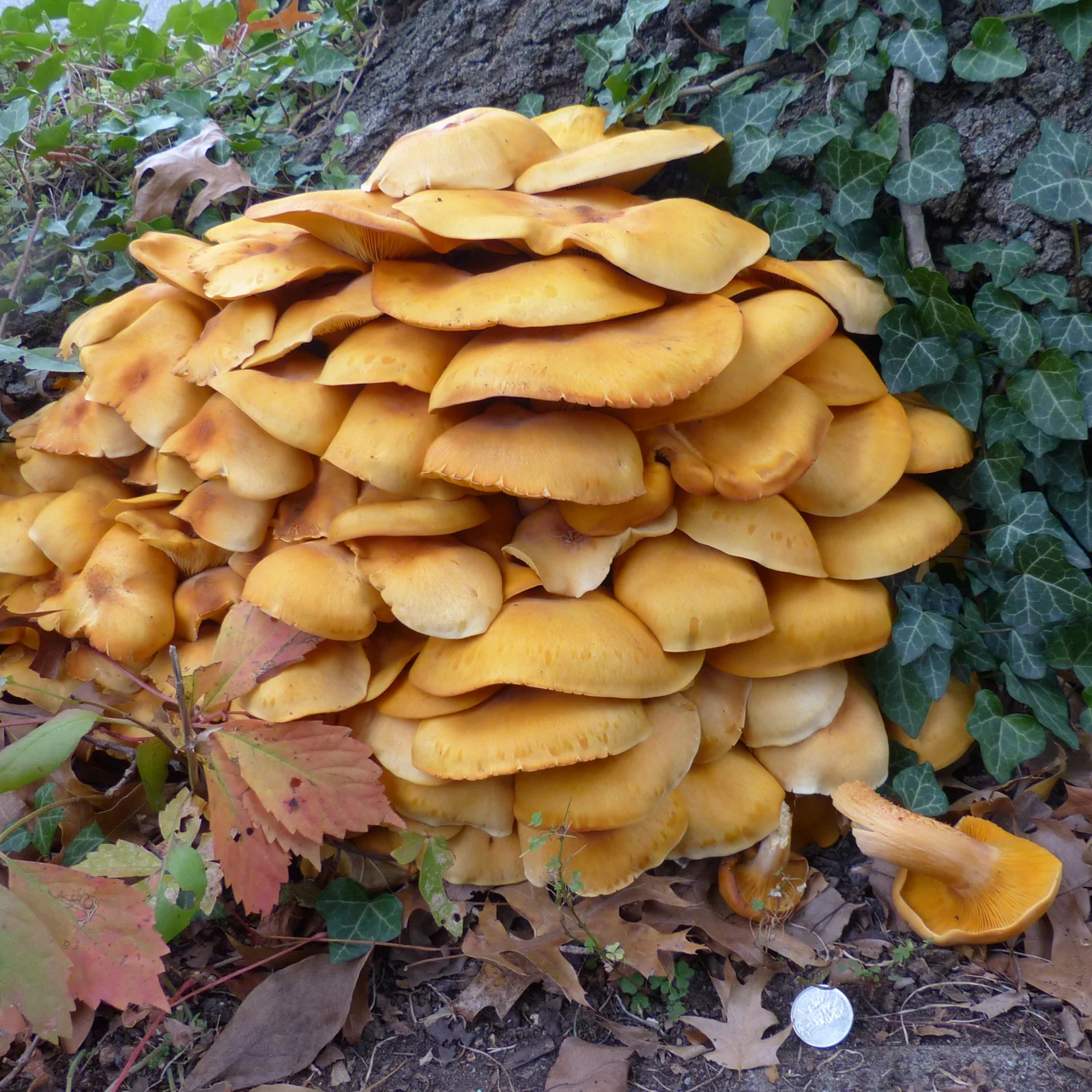
A vivid orange, toxic mushroom that grows in clusters on wood and has true, knife-edged gills. It is the classic chanterelle lookalike.
What to look for
- 01
Vivid orange overall, often deeper than a chanterelle
- 02
Thin, sharp, crowded true gills that separate cleanly from the cap
- 03
Grows in dense, fused clumps on stumps, buried roots, and the bases of trees
- 04
Flesh is orange more or less throughout when cut
Where it lives
Dead and dying hardwood — stumps, logs, buried roots, and tree bases — sometimes appearing to rise from soil over buried wood.
How it grows
Fruits in clusters from late summer through fall. Very fresh gills can glow faintly in total darkness, but the glow fades after picking and is not a reliable field test.
Common lookalikes
Golden chanterelles are duller gold, grow alone from soil, and carry blunt forked ridges instead of true gills.
Observe responsibly
Observe and photograph freely — the clustered growth on wood and the knife-edged gills are the field marks worth recording.
Toxic. Eating it causes severe vomiting, cramps, and diarrhea within about 30 minutes to two hours; it is rarely fatal but can require medical care, and cooking does not make it safe. If ingestion is suspected, call Poison Control at 1-800-222-1222 (US).
A common wood-decay fungus that helps return dead wood to forest soil — part of the nutrient cycle, not a pest.
Get Fauna and identify it in the field.
Where this guide comes from
Sources are linked below. Field marks vary with age, sex, season, region, light, and viewing distance.