
Fungus
Ringless Honey Fungus
Desarmillaria tabescensAlso known as Ringless Honey Mushroom
Ringless honey fungi erupt in dense, multi-stemmed clusters around the bases of living or dead deciduous trees each autumn. Their underground mycelial network produces a faint greenish bioluminescence known as foxfire while attacking tree root systems as an aggressive parasite. Once the host succumbs to root rot, the fungus switches smoothly into a saprotrophic decomposer to break down the remaining woody tissue.
FungusDecomposerParasitic
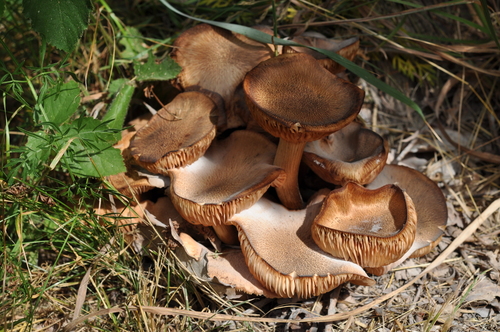
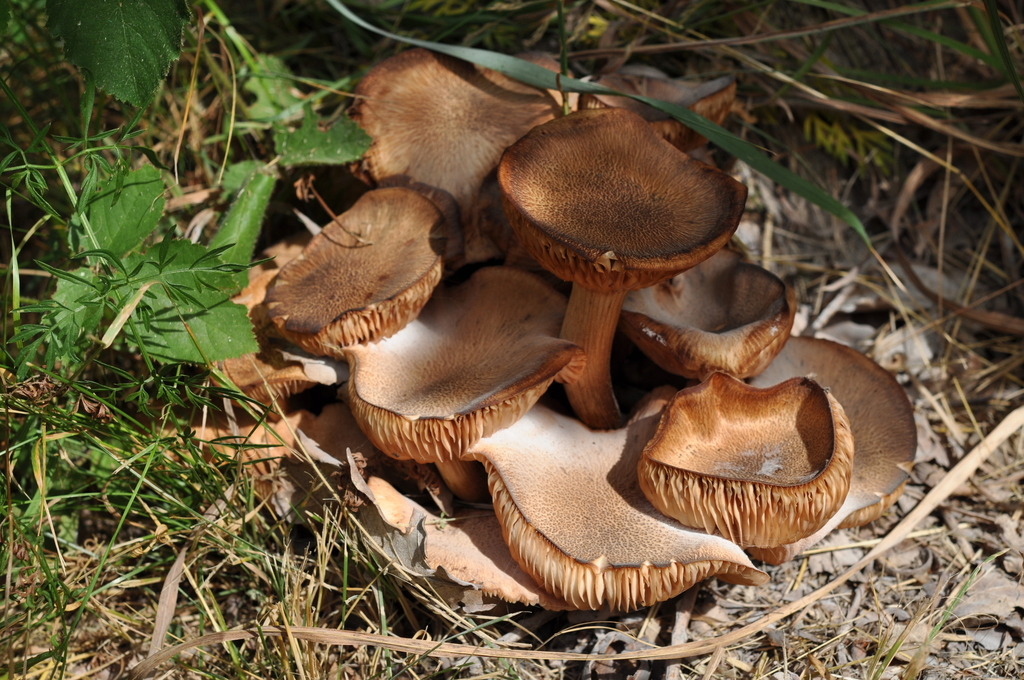
—observations
—countries
—peak records
Not EvaluatedConservation statusIUCN Red List categoriesLCNTVUENCREWEXNot Evaluated — not placed on the risk ladderRed List categories, explained →
Diet & preyHardwood root tissue, Cellulose, Lignin
Predators
- Fungus gnat larvae
- Rove beetles
- Slugs
ThreatsFungicide application and clearcutting of mature host trees
HabitatsDeciduous forests, wooded parks, and suburban lawns
Life spanMycelium persists for decades; caps last 1–2 weeks
Classification
- FamilyPhysalacriaceae
- SpeciesDesarmillaria tabescens
Range data is not available yet.
Interaction riskLow
- Low
- Moderate
- High
- Very high
- Why interaction risk is low
- Many edible mushrooms have toxic look-alikes; never eat wild fungi based on app identification alone.
Responsible observation
- Cluster Examination: Check for dense growth radiating directly from buried tree roots or stumps.
- Stem Inspection: Confirm the complete absence of an annulus or ring along the fibrous stem.
- Spore Print: Leave a cap gill-down on dark paper to confirm its pale white spore deposit.
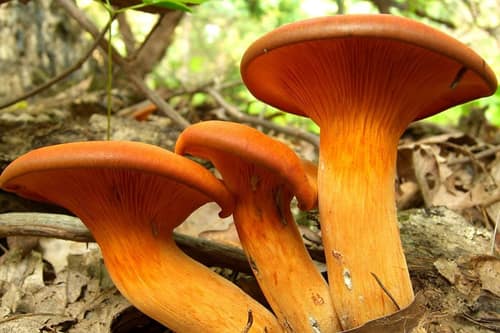
Toxic Look-alike (c) Jason Hollinger, some rights reserved (CC BY) · cc-by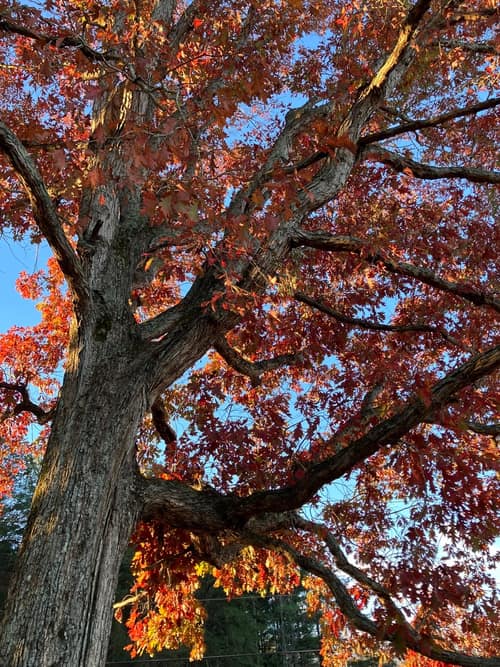
Host Tree (c) Alicia Ballard, some rights reserved (CC BY) · cc-by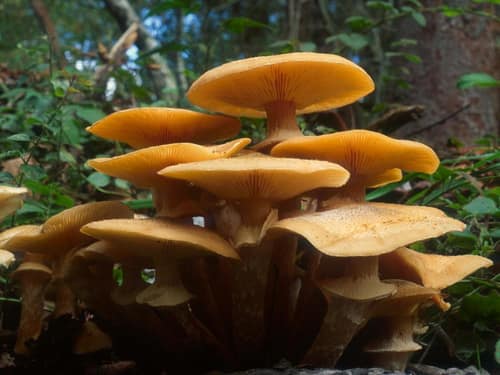
Close Relative (c) Nathan Wilson, some rights reserved (CC BY-SA) · cc-by-sa
Help improve the field guideSomething wrong?
Checking your Fauna account…Report a name, category, or profile issue for review.