
Bird
Northern Pygmy-Owl
Glaucidium gnomaAlso known as Mountain Pygmy Owl
Northern pygmy-owls are pint-sized woodland raptors active mainly during dawn, dusk, and overcast days rather than deep night. They routinely tackle songbirds and rodents up to twice their own body weight, caching surplus kills on tree forks or inside tree hollows for cold-weather meals. Pairs announce territories with steady, hollow toots that frequently trigger furious mobbing displays from chickadees, warblers, and nuthatches.
RaptorDiurnalWoodland
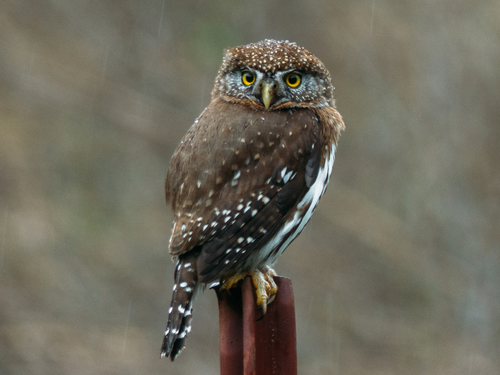
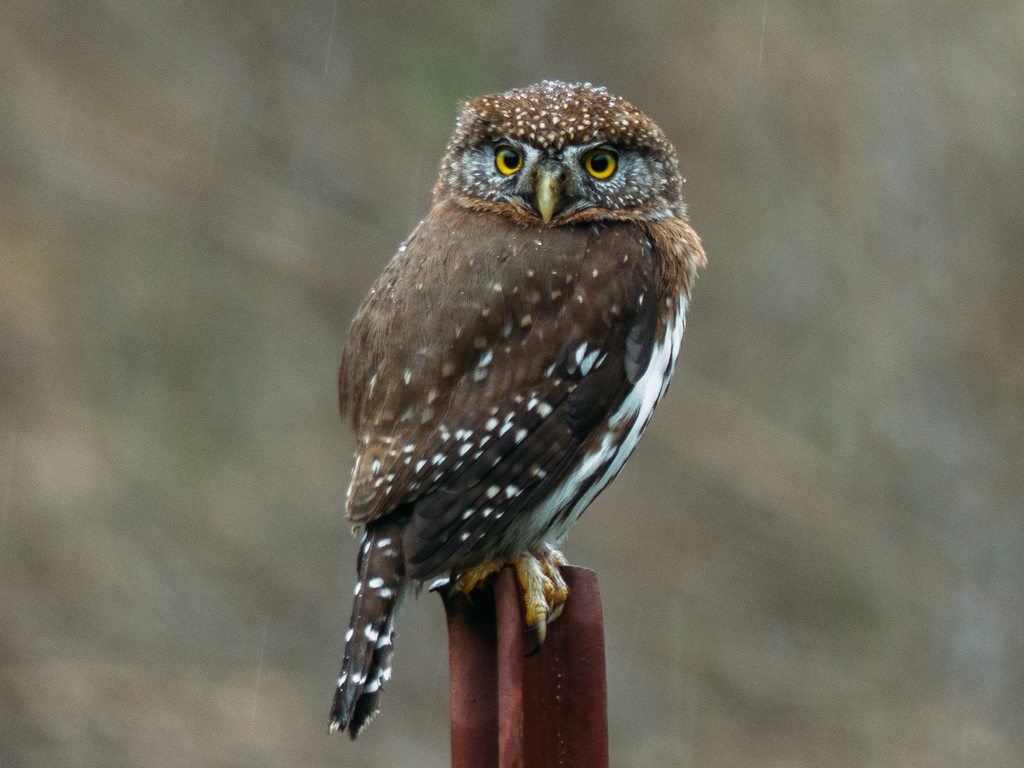
—observations
—countries
—peak records
Least ConcernConservation statusIUCN Red List categoriesLCNTVUENCREWEXLeast ConcernRed List categories, explained →
Diet & preyDark-eyed Junco, Deer Mouse, Mountain Chickadee
Predators
- Cooper's Hawk
- Great Horned Owl
- Northern Goshawk
ThreatsHabitat fragmentation, logging of old-growth timber, and loss of nesting snags
HabitatsConiferous and mixed montane forests, wooded canyons, and forest edges
Life span6–7 years in the wild
Classification
- FamilyStrigidae
- SpeciesGlaucidium gnoma
Range data is not available yet.
Interaction riskLow
- Low
- Moderate
- High
- Very high
- Why interaction risk is low
- Safe to observe at a normal distance.
Responsible observation
- Listen for Mobbing: Locate small songbirds giving agitated alarm calls around a single tree to spot the owl.
- Scan the Nape: Look for the pair of black, white-bordered spots on the back of the head that mimic eyes.
- Check Open Perches: Search exposed snags or mid-canopy perches during overcast mornings when hunting peaks.
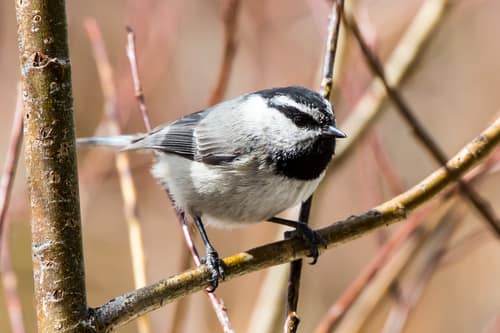
Prey (c) Ron Knight, some rights reserved (CC BY) · cc-by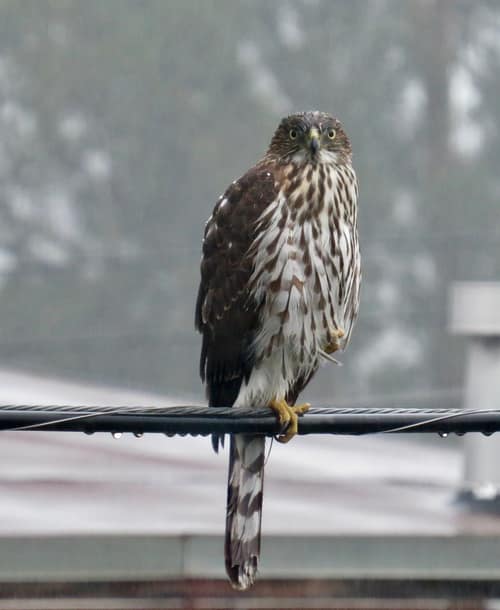
Predator "Cooper's Hawk - immature" by Kaaren Perry is licensed under CC BY 2.0. To view a copy of this license, visit https://creativecommons.org/licenses/by/2.0/. · cc-by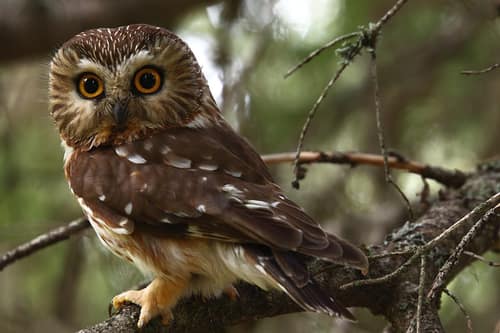
Competitor Kameron Perensovich / CC BY-SA 2.0 · cc-by-sa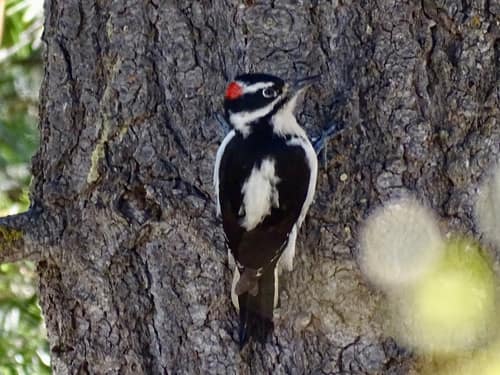
Nest Provider (c) CK2AZ, some rights reserved (CC BY), uploaded by CK2AZ · cc-by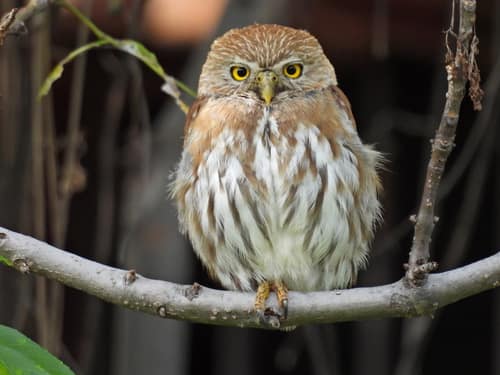
Close Relative (c) Oscar Alejandro Morales Juárez, some rights reserved (CC BY-SA), uploaded by Oscar Alejandro Morales Juárez · cc-by-sa
Help improve the field guideSomething wrong?
Checking your Fauna account…Report a name, category, or profile issue for review.