
Bird
Northern Saw-whet Owl
Aegolius acadicusAlso known as Acadian Owl, Saw-whet Owl
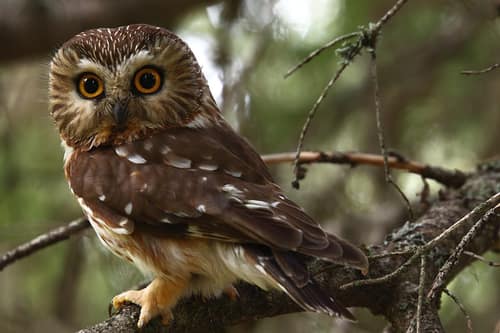
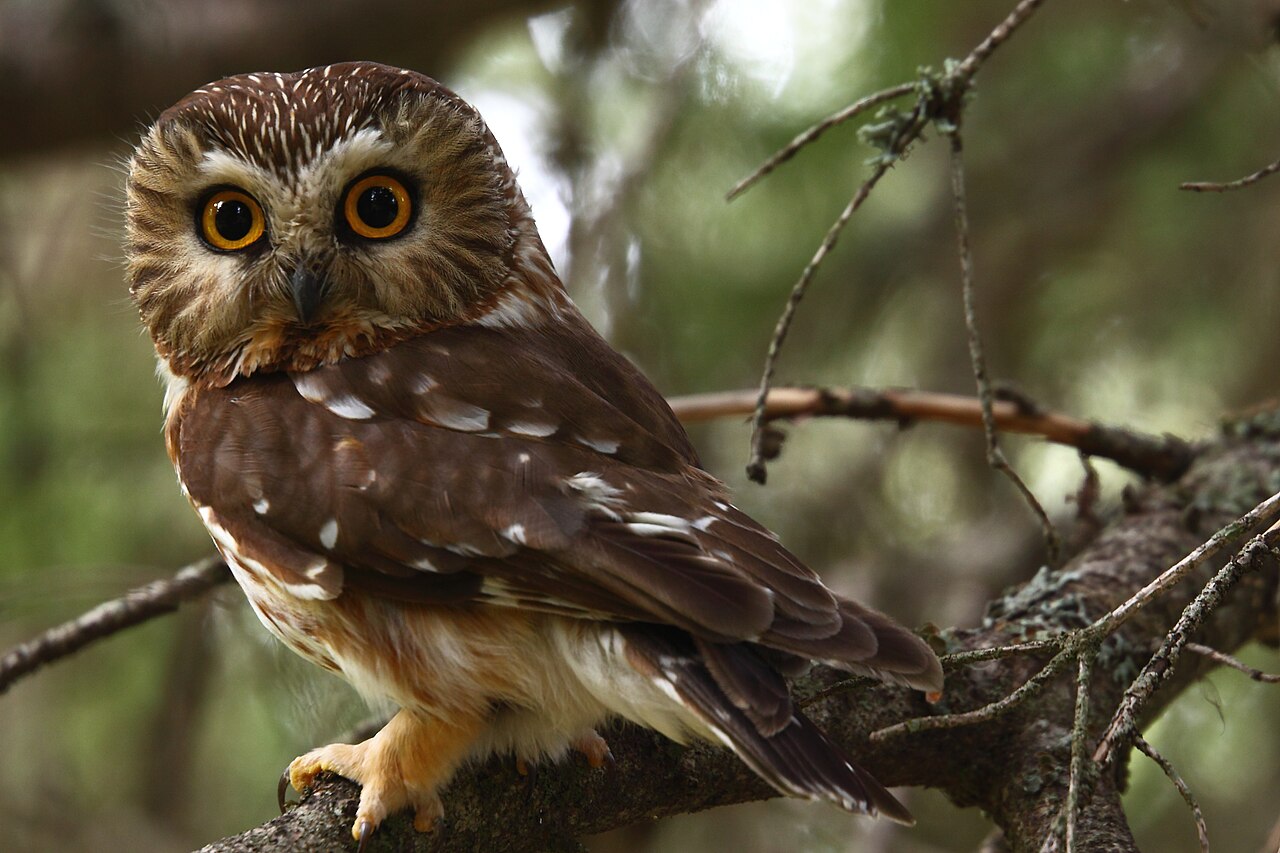
Northern saw-whet owls are among the smallest raptors in North America, roughly the size of an American robin, with oversized round heads and piercing yellow eyes. By day, they roost motionlessly in dense conifers or thickets close to the trunk, relying on their mottled brown and white plumage for camouflage. At night, they hunt small rodents by sound alone, navigating thick branches with remarkable agility.
NocturnalRaptorMigratory
—observations
—countries
—peak records
Least ConcernConservation statusIUCN Red List categoriesLCNTVUENCREWEXLeast ConcernRed List categories, explained →
Diet & preyDeer Mouse, Meadow Vole, Northern Short-tailed Shrew
Predators
- Great Horned Owl
- Barred Owl
- Cooper's Hawk
ThreatsHabitat loss, forest fragmenting, collisions, climate change
HabitatsDense coniferous forests, mixed woodlands, thickets
Life span7 to 10 years
Classification
- FamilyStrigidae
- SpeciesAegolius acadicus
Range data is not available yet.
Interaction riskLow
- Low
- Moderate
- High
- Very high
- Why interaction risk is low
- Sharp talons and beak can cause scratches; observe roosting owls silently from a distance.
- What to notice
- Recognized by a small body, dark beak, facial disc without ear tufts, and white radial streaks on the forehead.
- Support conservation
- Maintain a respectful distance, keep quiet, and avoid flash photography or audio lures near known roosts.
Responsible observation
- Roost Spotting: Scan dense evergreen foliage near eye level along forest edges during late autumn.
- Listening at Night: Listen for a rhythmic, single-pitch toot repeated continuously in early spring.
- Ethical Viewing: Keep a generous distance to avoid flushing roosting birds into open danger.
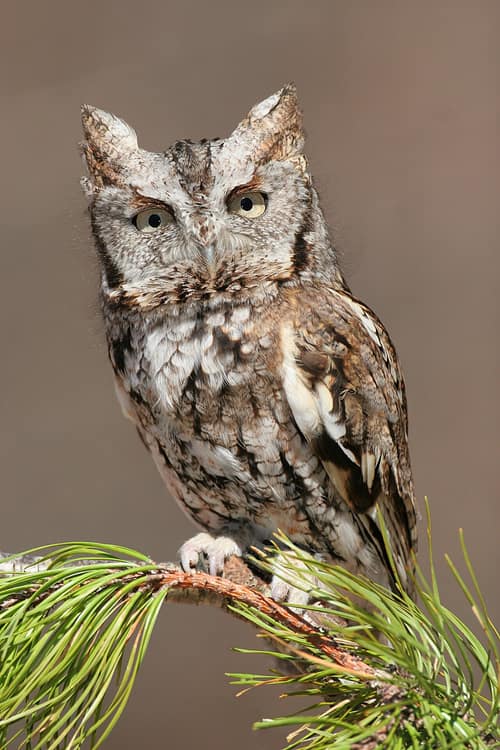
Competitor Wolfgang Wander / CC BY-SA 3.0 · cc-by-sa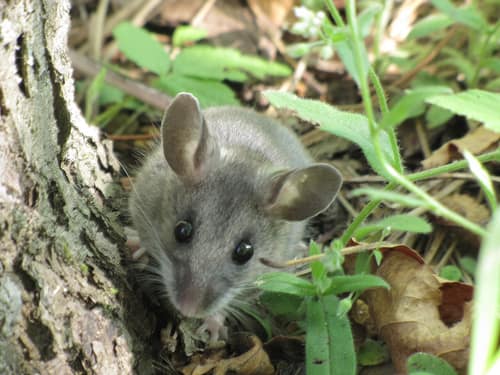
Primary Prey Seney Natural History Association / CC BY-SA 2.0 · cc-by-sa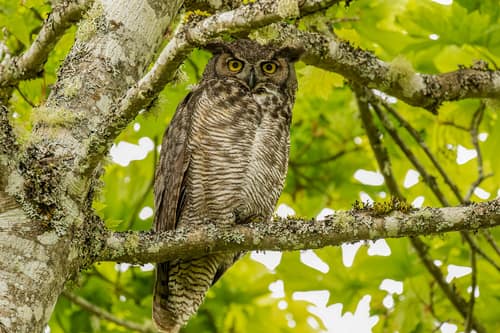
Predator "Great Horned Owl, the first I've seen in decent light this year. Didn't want to disturb it for too long so we continued along the trail" by island deborah- is licensed under CC BY-SA 2.0. To view a copy of this license, visit https://creativecommons.org/licenses/by-sa/2.0/. · cc-by-sa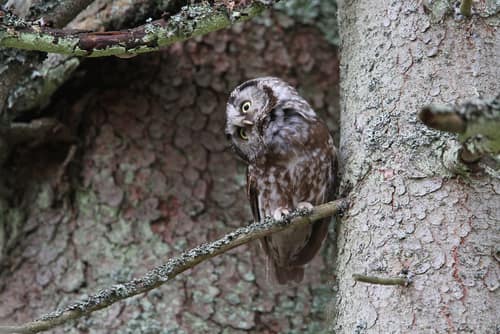
Close Relative (c) Christoph Moning, some rights reserved (CC BY), uploaded by Christoph Moning · cc-by
Help improve the field guideSomething wrong?
Checking your Fauna account…Report a name, category, or profile issue for review.