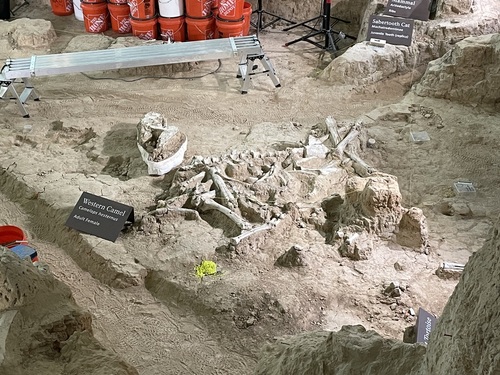
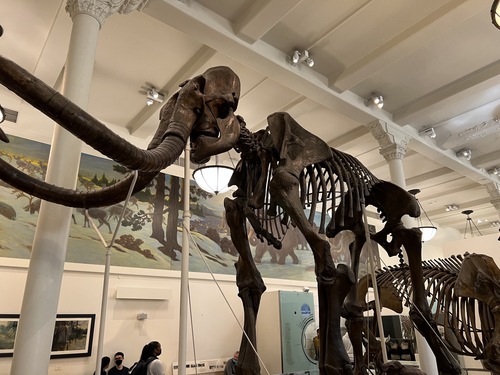
Also known as Pygmy Mammoth, Channel Islands Pygmy Mammoth, Santa Rosae Mammoth
Pygmy mammoths evolved through insular dwarfism on the prehistoric super-island of Santa Rosae off the coast of Southern California, shrinking to a fraction of the size of their ancestral mainland stock. Their reduced stature, shortened limbs, and agile build allowed them to traverse steep coastal bluffs, rocky ravines, and dense scrub with remarkable ease. They vanished at the end of the Pleistocene, roughly 13,000 years ago, coinciding with rising sea levels, changing vegetation, and the arrival of the earliest human hunters.
ThreatsAbrupt climate warming, shrinking island landmass, vegetation shifts, and human predation
HabitatsCoastal scrub, grasslands, and chaparral of the prehistoric Channel Islands
Life span40–60 years
Classification
FamilyElephantidae
SpeciesElephas exilis
Range & activity
Range data is not available yet.
Safe observation
Interaction riskHigh
Low
Moderate
High
Very high
Why interaction risk is high
Extinct prehistoric species known exclusively from fossil remains.
Responsible observation
Museum Viewing: Examine exceptionally preserved fossil skeletons at the Channel Islands National Park visitor centers or the Santa Barbara Museum of Natural History.
Fossil Etiquette: Federal law strictly protects all paleontological specimens discovered on public lands and national park grounds.