
Reptile · GBIF taxon 9577440
Florida Cottonmouth
Agkistrodon conantiAlso known as Florida Water Moccasin, Water Moccasin, Cottonmouth
Florida cottonmouths inhabit cypress swamps, marshes, and slow-moving waterways throughout Florida and southern Georgia. When threatened, these heavy-bodied pit vipers coil tightly, vibrate their tails, and gape open their jaws to expose a stark white mouth lining as a warning. They are opportunistic predators that hunt underwater, along muddy banks, and occasionally on dry land far from water.
VenomousSemi-aquaticPit Viper
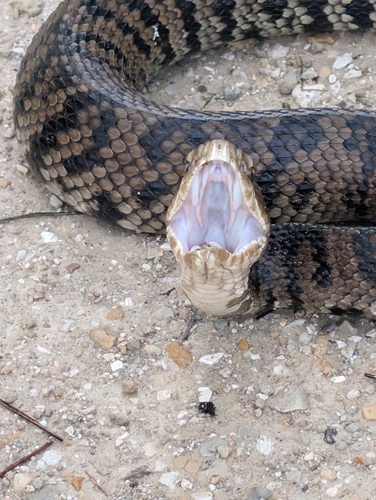
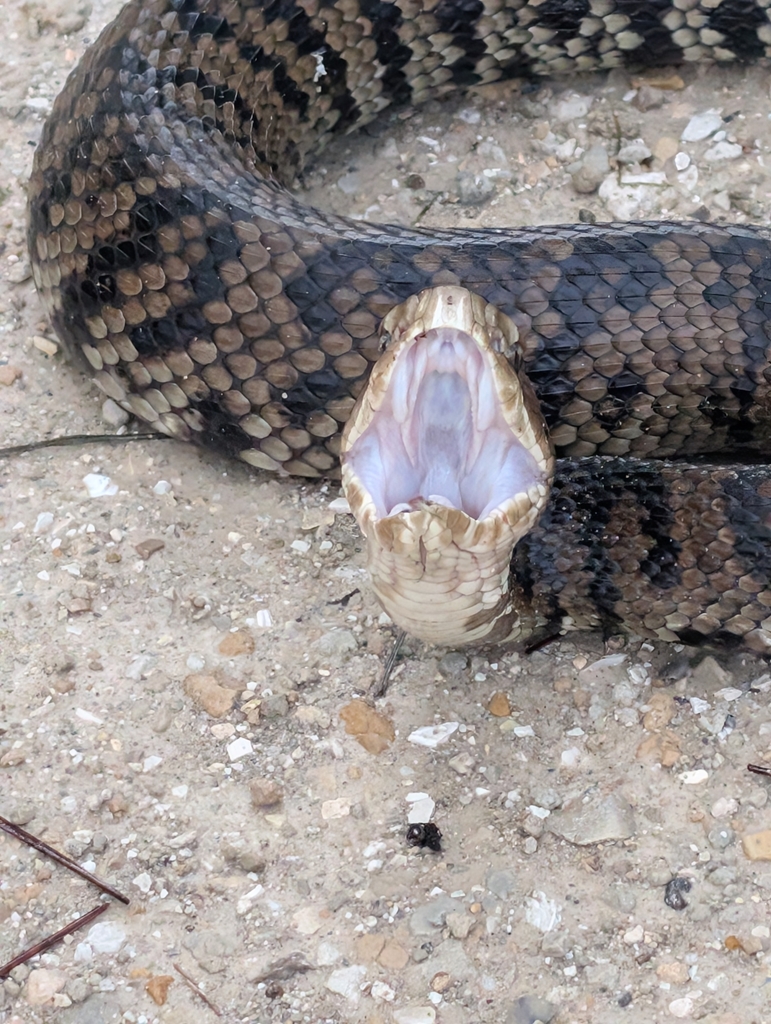
—observations
—countries
—peak records
Least ConcernConservation statusIUCN Red List categoriesLCNTVUENCREWEXLeast ConcernRed List categories, explained →
Diet & prey
- Frogs
- Fish
- Small Mammals
Predators
- Eastern Kingsnake
- American Alligator
- Great Blue Heron
ThreatsPersecution, wetland loss, road mortality
HabitatsSwamps, marshes, streams, brackish waters, adjacent uplands
Life span10–20 years
Size / weightNot available
Classification
- FamilyViperidae
- SpeciesAgkistrodon conanti
Range data is not available yet.
Interaction riskVery high
- Low
- Moderate
- High
- Very high
- Why interaction risk is very high
- Delivers dangerous hemotoxic venom through a painful bite; maintain a distance of at least two meters.
- Why it is dangerous
- Venom contains potent hemotoxins and cytotoxins that break down tissues, causing extensive necrosis, severe pain, and potential systemic damage.
- How to recognize a risky encounter
- Look for a thick body, distinct dark facial stripe through the eye, broad triangular head, and vertical slit pupils.
- What to do
- Freeze and slowly back away if encountered, never attempt to pick up or corner the snake, and seek immediate medical care if bitten.
Responsible observation
- Keep Distance: Maintain at least two meters of space from any semi-aquatic snake in its range.
- Watch Footing: Step carefully near water edges, thick vegetation, and fallen logs where snakes rest.
- Avoid Confusion: Learn to distinguish venomous pit vipers from non-venomous watersnakes by head shape and facial heat pits.

Harmless Look-alike (c) Andrew Durso, some rights reserved (CC BY) · cc-by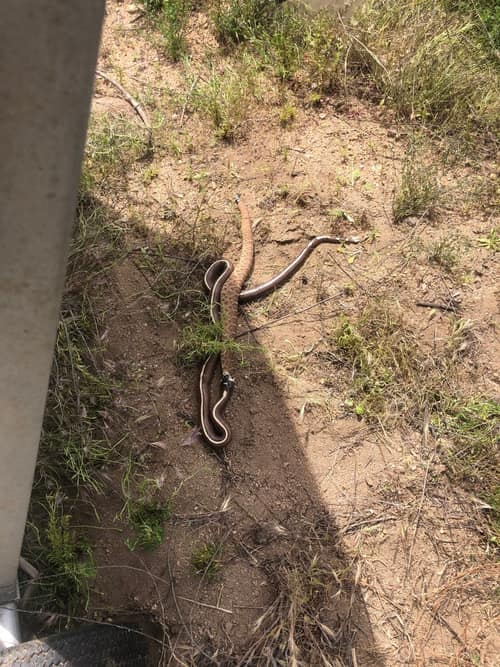
Predator (c) Amy Huie, some rights reserved (CC BY) · cc-by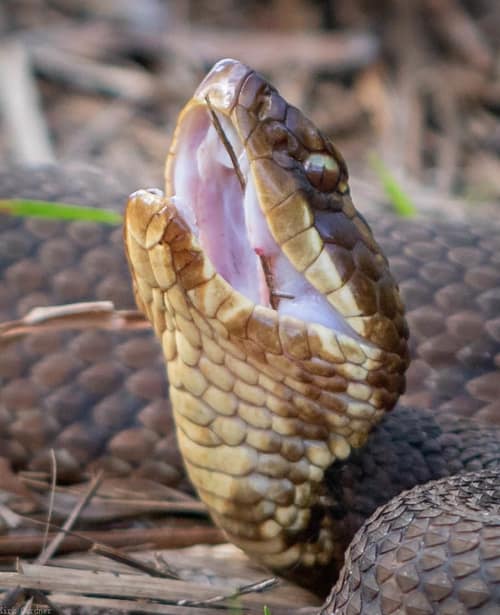
Close Relative (c) kirk gardner, some rights reserved (CC BY), uploaded by kirk gardner · cc-by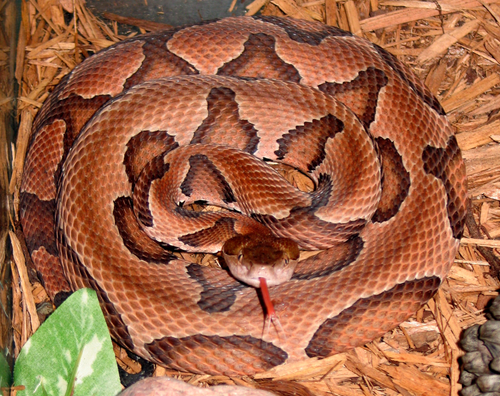
Close Relative Wikimedia Commons / Public domain · cc0
Help improve the field guideSomething wrong?
Checking your Fauna account…Report a name, category, or profile issue for review.