
Reptile · GBIF taxon 9223124
Eastern Massasauga
Sistrurus catenatusAlso known as Massasauga Rattlesnake, Swamp Rattler, Black Massasauga
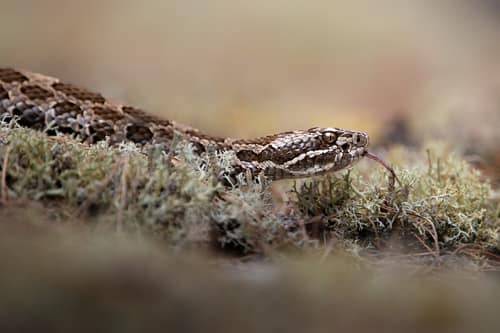
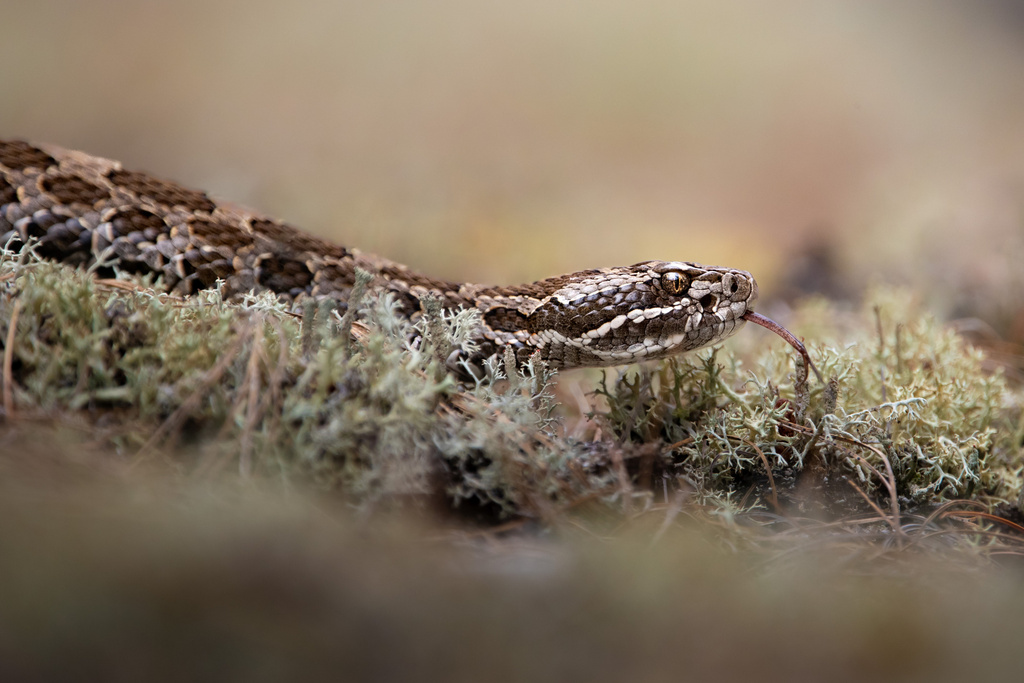
Eastern massasaugas are small, secretive pit vipers that spend their spring and summer hunting in sunny wetlands and peat bogs before retreating to dry upland crayfish burrows to hibernate. They communicate distress through a high-pitched buzz produced by a tiny tail rattle, warning larger animals to keep their distance. As the only venomous snake in Ontario and much of the upper Midwest, these gentle reptiles play a vital role in controlling rodent populations across Great Lakes ecosystems.
VenomousReptileRattlesnake
 1 / 7
1 / 7—observations
—countries
—peak records
Least ConcernConservation statusIUCN Red List categoriesLCNTVUENCREWEXLeast ConcernRed List categories, explained →
Diet & prey
- Meadow Voles
- Deer Mice
- Garter Snakes
Predators
- Hawks
- Herons
- Racers
ThreatsHabitat loss, wetland drainage, road mortality, and human persecution
HabitatsWetlands, fens, peatlands, wet prairies, and upland forests
Life span10–14 years
Size / weightNot available
Classification
- FamilyViperidae
- SpeciesSistrurus catenatus
Range data is not available yet.
Interaction riskVery high
- Low
- Moderate
- High
- Very high
- Why interaction risk is very high
- Venomous pit viper that can deliver a painful bite; keep a safe distance and never handle.
- Why it is dangerous
- Injects cytotoxic and hemotoxic venom that causes tissue damage, swelling, and severe pain requiring immediate antivenom treatment.
- How to recognize a risky encounter
- Look for dark saddle-shaped blotches on a greyish background, heat-sensing pits between eye and nostril, and a small tail rattle.
- What to do
- Give the snake plenty of space and back away slowly if encountered on trails or near wetlands.
- What to notice
- Recognized by its thick body, dark brown blotches on grey, and small rattle at the tip of the tail.
- Support conservation
- Keep dogs on leash, remain on designated trails, and report sightings to local conservation authorities.
Responsible observation
- Observe from Distance: Keep at least two meters away to avoid provoking a defensive strike.
- Watch Underfoot: Look carefully when walking through tall grass or dense vegetation near wetlands.
- Listen for the Rattle: A high-pitched buzz indicates the snake feels threatened and needs space.
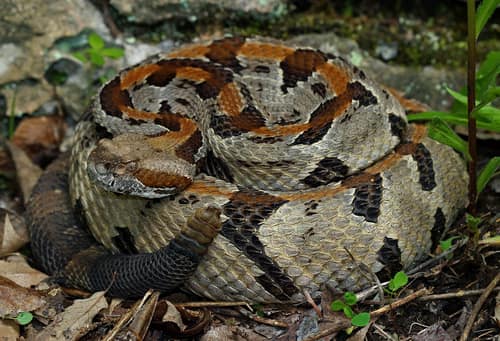
Sympatric Pit Viper Peter Paplanus from St. Louis, Missouri / CC BY 2.0 · cc-by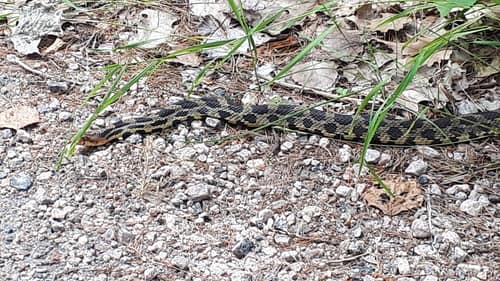
Look-alike (c) Jennifer Aitkens, some rights reserved (CC BY) · cc-by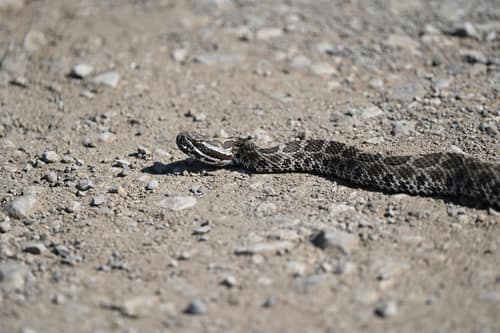
Close Relative (c) Jody Shugart, some rights reserved (CC BY) · cc-by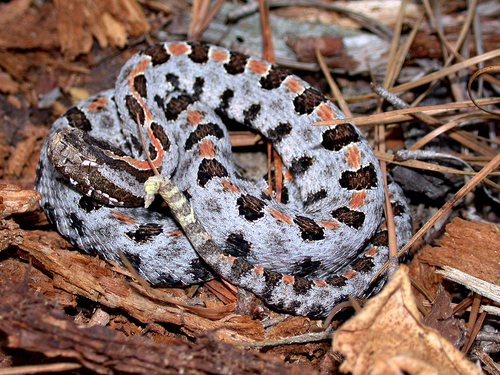
Close Relative Wikimedia Commons / Public domain · cc0
Help improve the field guideSomething wrong?
Checking your Fauna account…Report a name, category, or profile issue for review.