
Invertebrate
Ocellate Phyllidia
Phyllidia ocellataAlso known as Eyespot Phyllidia, Target Phyllidia
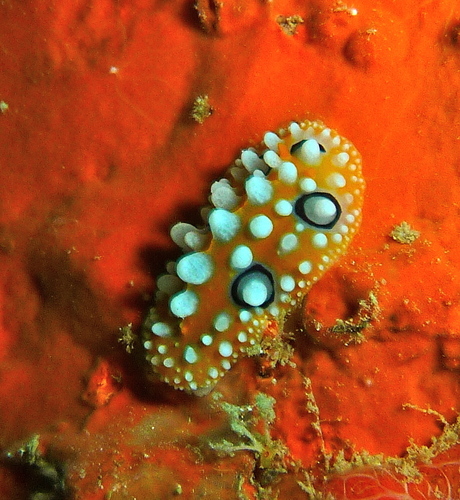
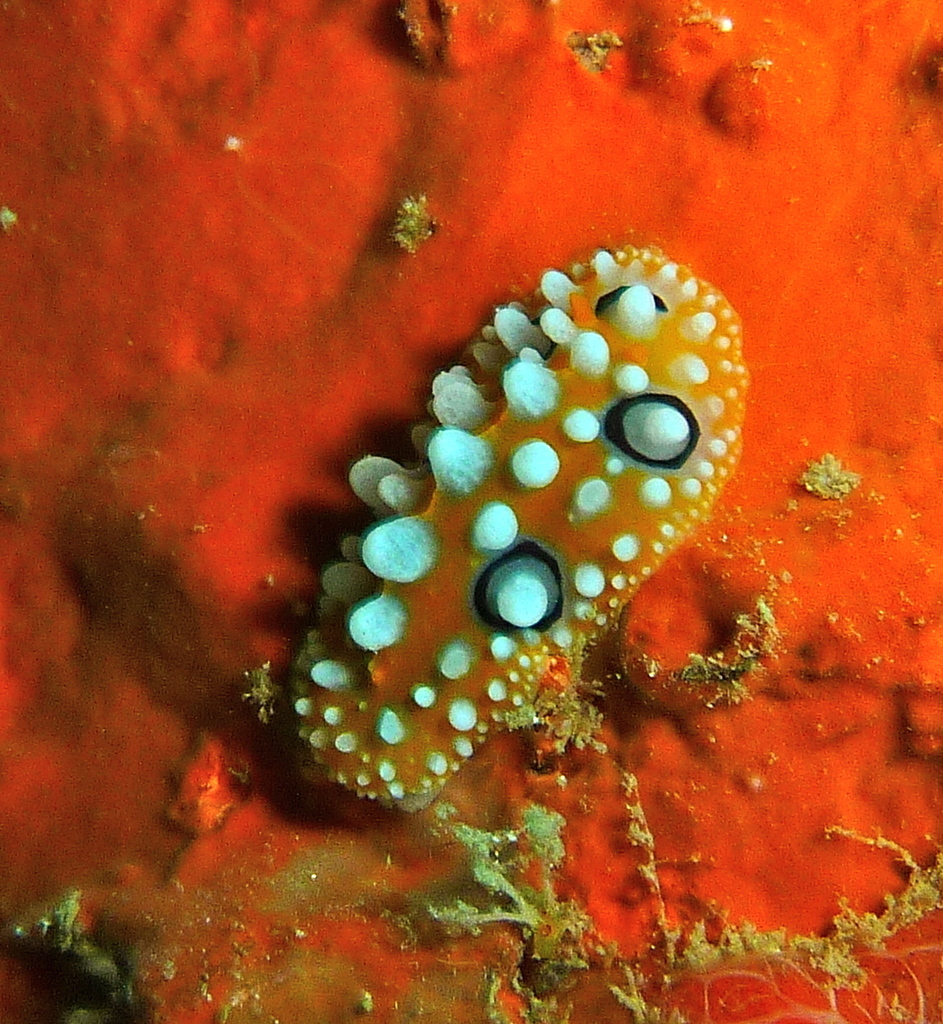
Ocellate phyllidias crawl slowly across shallow coral reefs throughout the tropical Indo-West Pacific, displaying bright yellow mantles embossed with eye-like black rings. Lacking the feathery dorsal gills found on many other dorid nudibranchs, they breathe via delicate gill leaflets tucked into the groove beneath their mantle edge. When harassed by curious reef fish, their skin glands exude pungent terpene chemicals that deter nearly all would-be predators.
MarineReef DwellerColorful
—observations
—countries
—peak records
Not EvaluatedConservation statusIUCN Red List categoriesLCNTVUENCREWEXNot Evaluated — not placed on the risk ladderRed List categories, explained →
Diet & preyDemosponges, Halichondrid sponges, Suberitid sponges
Predators
- Specialized sea spiders
- Swimming crabs
ThreatsCoral bleaching, reef habitat degradation, and ocean warming
HabitatsTropical coral reefs and rocky reef flats
Life span1–2 years
Classification
- FamilyPhyllidiidae
- SpeciesPhyllidia ocellata
Range data is not available yet.
Interaction riskLow
- Low
- Moderate
- High
- Very high
- Why interaction risk is low
- Safe to observe at a normal distance.
Responsible observation
- Diving Etiquette: Maintain neutral buoyancy to avoid crushing delicate reef substrate while viewing.
- Look Closely: Search for the small sensory rhinophores protruding from the front of the mantle.
- Do Not Touch: Handling stresses the slug and can cause it to release foul chemical secretions.
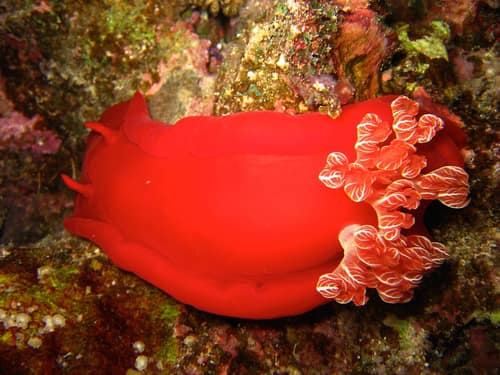
Neighbor "Spanish Dancer" by DrTH80 is licensed under CC BY 2.0. To view a copy of this license, visit https://creativecommons.org/licenses/by/2.0/. · cc-by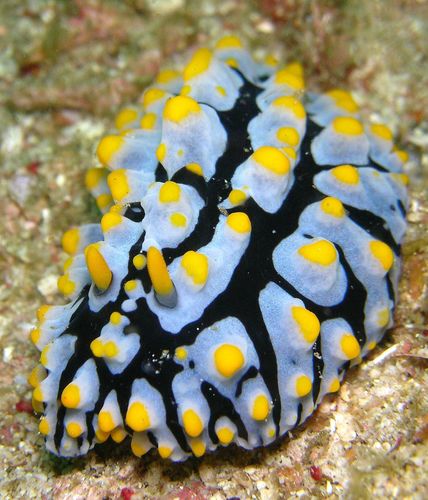
Close Relative (c) Steve Childs, some rights reserved (CC BY) · cc-by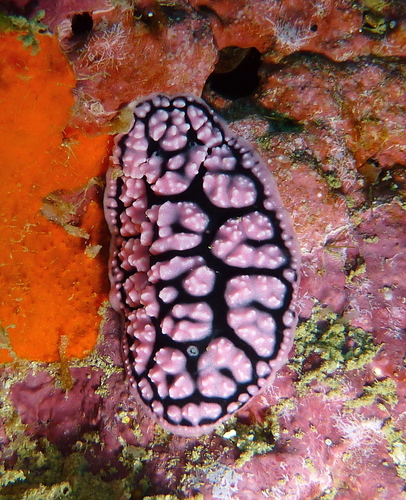
Same Family (c) Tine Kinn Kvamme, some rights reserved (CC BY), uploaded by Tine Kinn Kvamme · cc-by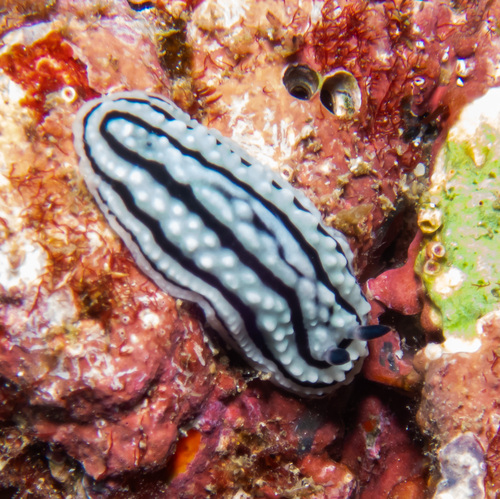
Same Family (c) portioid, some rights reserved (CC BY) · cc-by
Help improve the field guideSomething wrong?
Checking your Fauna account…Report a name, category, or profile issue for review.