
Reptile · GBIF taxon 7982719
Blue Iguana
Cyclura lewisiAlso known as Grand Cayman Ground Iguana, Grand Cayman Blue Iguana, Cayman Island Rock Iguana
Grand Cayman blue iguanas rank among the world's largest lizards, turning a vibrant turquoise blue when basking in warm sunlight or defending territory. These heavy-bodied reptiles act as vital seed dispersers in dry forest and coastal scrub ecosystems by consuming dozens of native plant species. Once driven to fewer than two dozen wild individuals, intensive captive breeding and island conservation programs have saved them from imminent extinction.
EndemicReptileHerbivorous
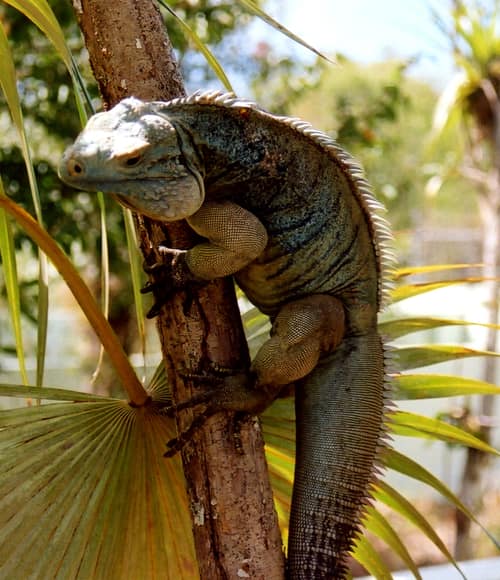
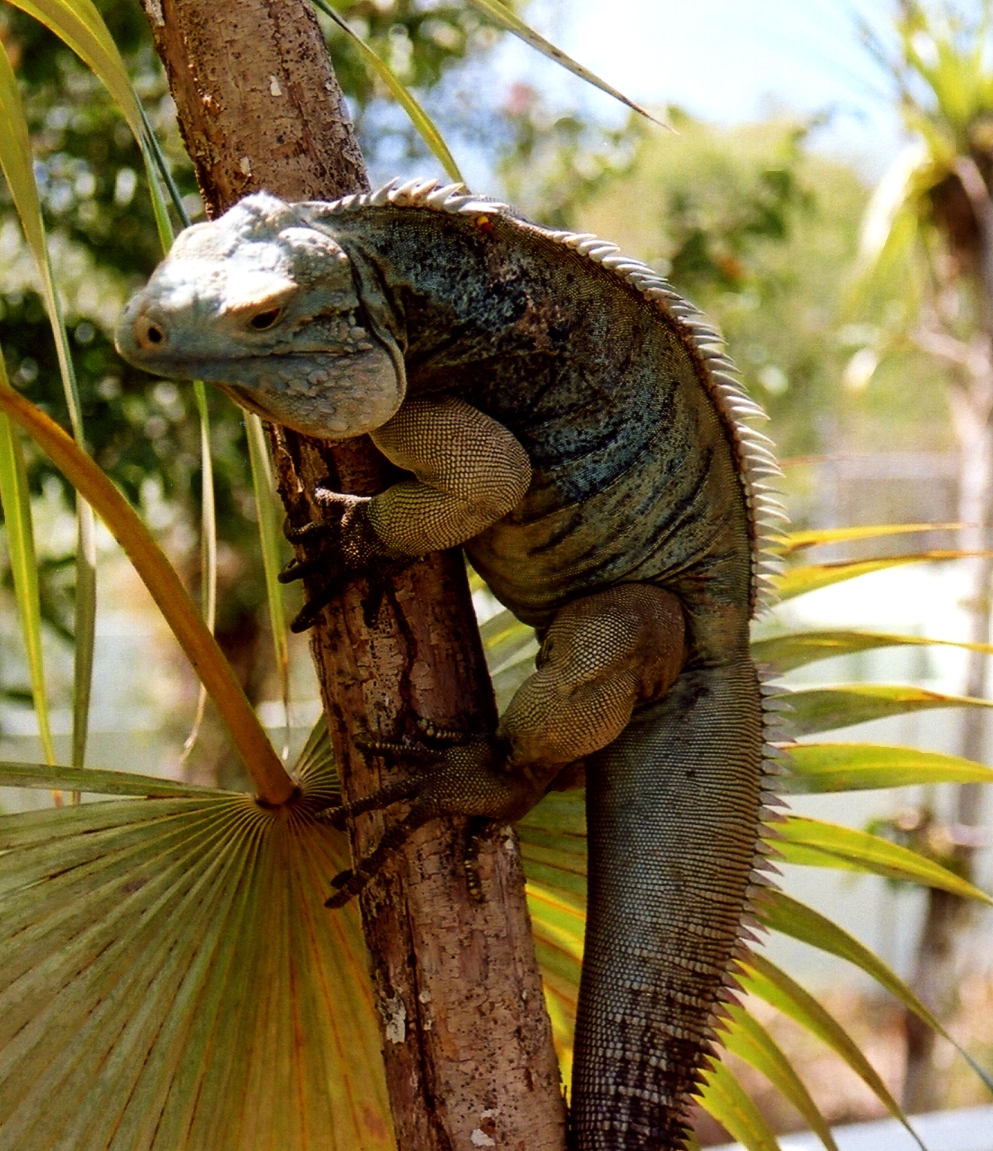
Licensed referenceLuke from Oxford, MS / CC BY-SA 2.0 · cc-by-sa
—observations
—countries
—peak records
EndangeredConservation statusIUCN Red List categoriesLCNTVUENCREWEXEndangeredRed List categories, explained →
Diet & prey
- Leaves
- Flowers
- Wild Fruits
Predators
- Feral Dogs
- Feral Cats
- Rats
ThreatsInvasive predators (feral dogs and cats), vehicle strikes, and habitat fragmentation
HabitatsDry forests, coastal scrubland, and rocky limestone clearings
Life spanup to 69 years in captivity; 25–50 years in the wild
Size / weightNot available
Classification
- FamilyIguanidae
- SpeciesCyclura lewisi
Range data is not available yet.
Interaction riskHigh
- Low
- Moderate
- High
- Very high
- Why interaction risk is high
- Large adults can inflict severe bites or claw lacerations if cornered; observe from a respectful distance.
- Why it is dangerous
- Powerful jaw muscles and sharp sharp claws can inflict deep puncture wounds or lacerations if the animal feels cornered or threatened.
- How to recognize a risky encounter
- Recognized by striking turquoise blue skin when active, dark dorsal crest spines, and massive jaw muscle bulges on males.
- What to do
- Never corner, grab, or restrain wild iguanas; maintain at least three meters distance to ensure safety for both humans and lizards.
- What to notice
- Large terrestrial lizard with turquoise skin, spiky dorsal crest, and heavy body active during hot daylight hours.
- Support conservation
- Always remain on established public trails, keep pets leashed or off sanctuary grounds, and never touch wild individuals.
Responsible observation
- Observe from Distance: Stay on marked trails at protected sites like Queen Elizabeth II Royal Botanic Park.
- Watch Body Language: Male iguanas darken in color and perform rapid head-bobs when territorial or stressed.
- Do Not Feed: Offering food alters wild foraging behavior and increases human conflict risks.
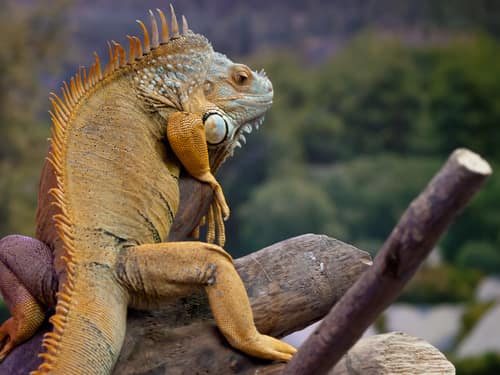
Invasive Competitor "Green Iguana" by wwarby is licensed under CC BY 2.0. To view a copy of this license, visit https://creativecommons.org/licenses/by/2.0/. · cc-by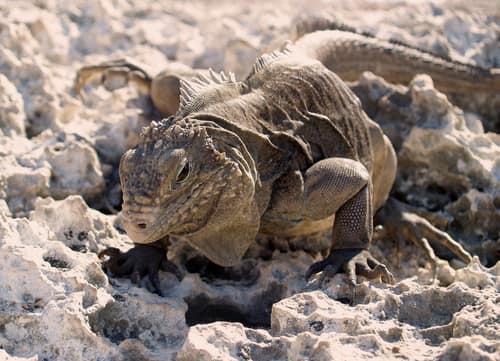
Close Relative Staselnik / CC BY-SA 3.0 · cc-by-sa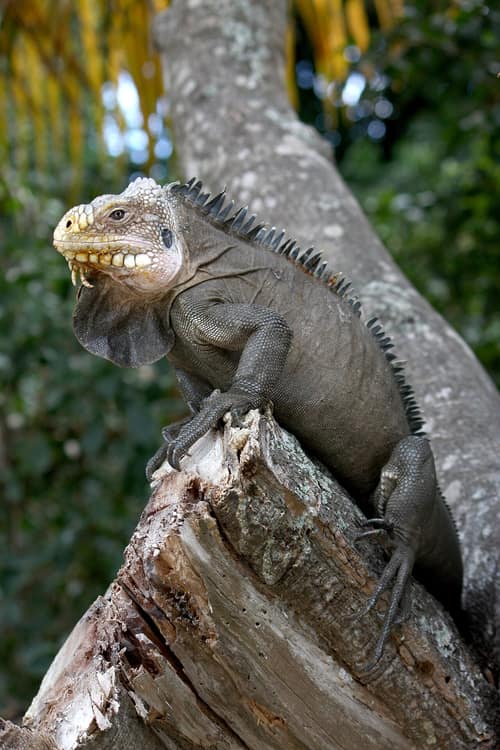
Caribbean Relative Postdlf / CC BY-SA 3.0 · cc-by-sa
Help improve the field guideSomething wrong?
Checking your Fauna account…Report a name, category, or profile issue for review.